You have not yet added any article to your bookmarks!
Join 10k+ people to get notified about new posts, news and tips.
Do not worry we don't spam!
Post by : Sameer Farouq
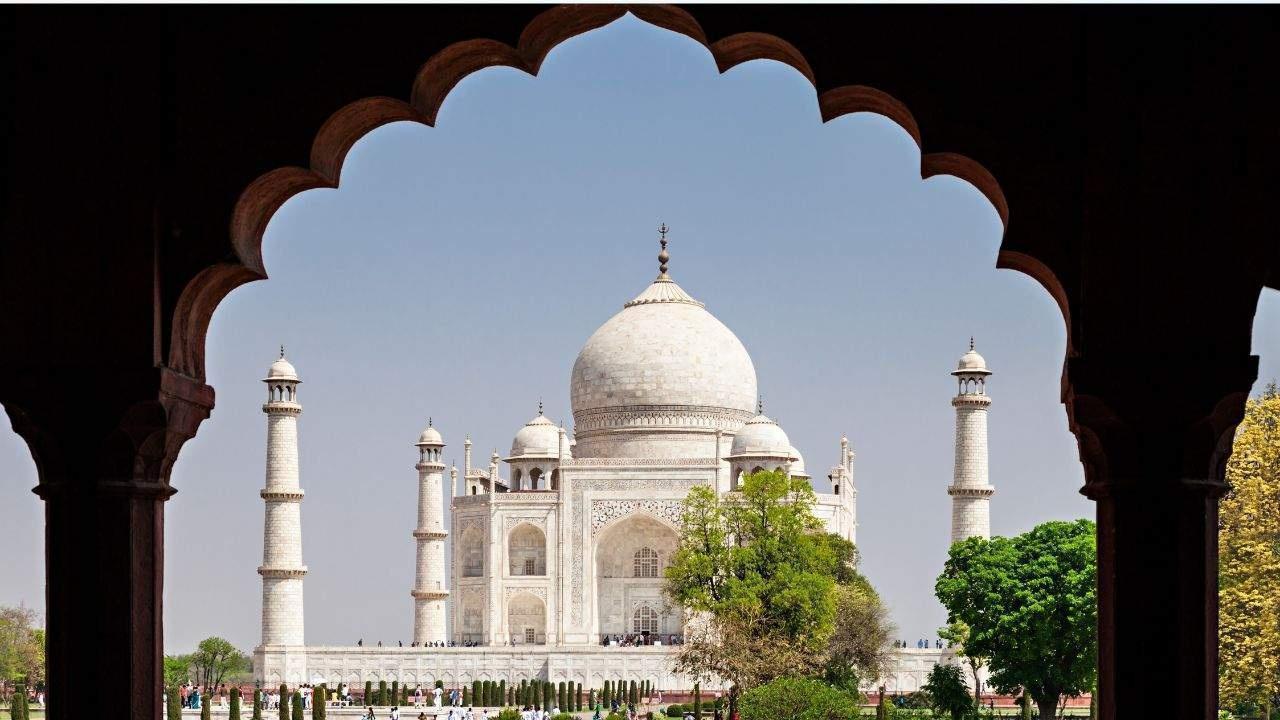
The Taj Mahal stands as one of the most revered monuments globally, captivating hearts along the shores of the Yamuna River in Agra, India. This exquisite white marble mausoleum isn’t just a structure; it embodies a profound expression of love and artistic creativity. Constructed by Emperor Shah Jahan in honor of his cherished wife, Mumtaz Mahal, it continues to enchant visitors with its rich narrative and stunning aesthetic.
Its lasting appeal draws admirers not just for its architectural splendor but also for the cultural significance it represents.
Shah Jahan and Mumtaz Mahal: A Saga of Devotion
The romance between Shah Jahan and Mumtaz Mahal reads like a fairy tale. Their union began in 1612, with Mumtaz serving as both wife and confidante as he ruled. Upon her untimely demise in 1631, Shah Jahan was overwhelmed with sorrow. Driven to eternalize her legacy, he laid the foundation for the Taj Mahal, a monument destined to endure through ages.
Transforming Grief into Grandeur
The Taj Mahal epitomizes the notion that grief can inspire unmatched beauty. Every facet of its design—from the grand domes to the delicate inlay—mirrors Shah Jahan's unwavering dedication to Mumtaz. This edifice transcends mere mortality; it serves as an emotion-laden testament carved in marble.
Celebrated as one of the world’s finest architectural achievements, the Taj Mahal’s design reflects a blend of Mughal, Persian, and Indian styles, resulting in a harmonious and breathtaking masterpiece.
The monument's symmetry is a striking characteristic, with a central dome rising elegantly, flanked by four slender minarets.
Arches, calligraphy, and intricate geometric motifs showcase Persian artistry, seamlessly integrated with Indian aesthetics.
The gardens, designed in the Charbagh style, represent paradise in Mughal culture, elevating the spiritual essence of the Taj Mahal.
Crafted from breathtaking white Makrana marble, the structure serves as a canvas for exquisite pietra dura artistry. This inlay features semi-precious stones such as lapis lazuli and turquoise, forming beautiful floral and geometric patterns that mesmerize all who gaze upon them.
Noteworthy aspects include:
Each stone has been meticulously hand-cut and fitted.
The floral designs embody Mughal reverence for nature's elegance.
Calligraphic verses from the Quran enhance the spiritual depth of the masterpiece.
The Taj Mahal’s inception was no swift endeavor. Its construction kicked off in 1632 and spanned over 22 years, involving approximately 20,000 craftsmen, artists, and laborers.
Innovative Engineering Efforts
The foundation of the Taj Mahal incorporated advanced hydraulic systems to avert flooding from the Yamuna River.
The grand dome stands 73 meters high, perfectly harmonized with its adjacent minarets for visual balance.
Marble slabs were carefully aligned to ensure total symmetry, demonstrating advanced geometric mastery.
Facing Challenges with Ingenuity
Transporting marble from remote Rajasthan quarries required the strength of hundreds of elephants.
Coordinating thousands of craftsmen necessitated meticulous oversight and planning.
Notwithstanding the hurdles, the project was completed with stunning precision, resulting in a monument that has withstood the test of time.
The Taj Mahal transcends mere architecture; it serves as a deep emblem of India’s cultural heritage and the everlasting nature of love.
The flowing gardens and serene reflection pools symbolize heavenly beauty and eternal harmony. This monument encapsulates the Mughal interpretation of paradise, marrying spiritual aspirations with architectural artistry.
Its majestic beauty has inspired countless artists, poets, and filmmakers across the globe.
Recognized as a UNESCO World Heritage Site since 1983, it draws millions of visitors each year.
The Taj Mahal’s influence reaches beyond borders, inspiring modern architecture, artistic styles, and even fashion.
Shifting Colors: The marble exhibits beautiful color changes from sunrise to sunset, appearing soft pink in the morning, radiant white at noon, and golden at dusk.
Final Resting Place: Although Shah Jahan was the architect of this wonder, he was later interred within its walls alongside Mumtaz Mahal.
Elephant Workforce: Over 1,000 elephants were utilized to help transport materials for construction.
Global Inspiration: The Taj Mahal’s architectural style has inspired numerous replicas and artistic forms worldwide.
These elements illustrate that the Taj Mahal is far more than a mere building; it’s a narrative woven from human passion, artistry, and love.
A visit to the Taj Mahal offers an unforgettable exploration of history, emotion, and creativity. Here’s how visitors can truly appreciate its beauty and significance:
Visit Timing: Early morning or late afternoon presents the ideal lighting for stunning photographs and a tranquil atmosphere.
Stroll Through the Gardens: The Charbagh layout enhances the sense of walking through a paradise.
Examine the Details: Take time to engage with the intricate inlays, calligraphy, and overall symmetry.
Cultural Respect: Follow local guidelines to ensure the preservation of this monument for generations to come.
Experiencing the Taj Mahal is far more than simple tourism; it’s about immersing oneself in a tale of love and legacy.
The Taj Mahal conveys timeless teachings regarding life and creativity:
Love Endures: Passion and devotion can inspire creations that long outlast the individuals themselves.
Detail Matters: Each element was crafted with intention, showcasing the importance of precision and care.
Legacy Requires Care: True artistry merges vision, skill, and emotional depth.
Harmony is Beautiful: Aesthetic balance reflects deeper spiritual and philosophical beliefs.
The Taj Mahal reminds us that when human emotions are expressed with thoughtfulness, they can leave a profound imprint on the world.
The Taj Mahal represents more than mere architecture; it is a demonstration of dedication, artistry, and the significance of legacy. This monument illustrates how the fusion of emotion with craftsmanship can create timeless beauty.
Responsibility Notice
This article aims for cultural and educational purposes. While recognizing the history and craftsmanship of the Taj Mahal, readers are encouraged to visit responsibly and honor local traditions. The information presented is for general knowledge and inspiration.
This article is structured for educational, cultural, and informational intents only. While discussing the Taj Mahal's history, design, and legacy, readers should independently verify facts and engage with local customs and preservation efforts. The content is not intended to substitute professional travel or legal counsel.










George Russell Wins Dutch GP Sprint, Boosts Mercedes Morale
George Russell wins the Dutch GP Sprint from pole as Mercedes teammate Kimi Antonelli extends his F1

Australia 50/3 After Bangladesh Bowled Out for 64 in Second Test
Australia reached 50/3 after Bangladesh were bowled out for 64 in the second Test, with Mitchell Sta

Jordan Burroughs Returns to Wrestling with 2028 Olympic Dream
Jordan Burroughs returns to wrestling with Real American Freestyle as the Olympic champion eyes a po

Lamborghini Catches Fire on Singapore's ECP, Causing Heavy Traffic
A Lamborghini caught fire on Singapore's ECP, causing heavy traffic and bus delays. No injuries were

Bangkok Airport Duty-Free Area Flooded by Pipe Burst
A burst water pipe flooded the duty-free shopping area at Bangkok's Suvarnabhumi Airport on July 16,

Nine Monks Killed in Thailand Pickup Truck Tragedy
An 11-year-old boy driving a pickup truck crashed into monks during a pilgrimage in northeastern Tha