You have not yet added any article to your bookmarks!
Join 10k+ people to get notified about new posts, news and tips.
Do not worry we don't spam!
Post by : Anis Farhan
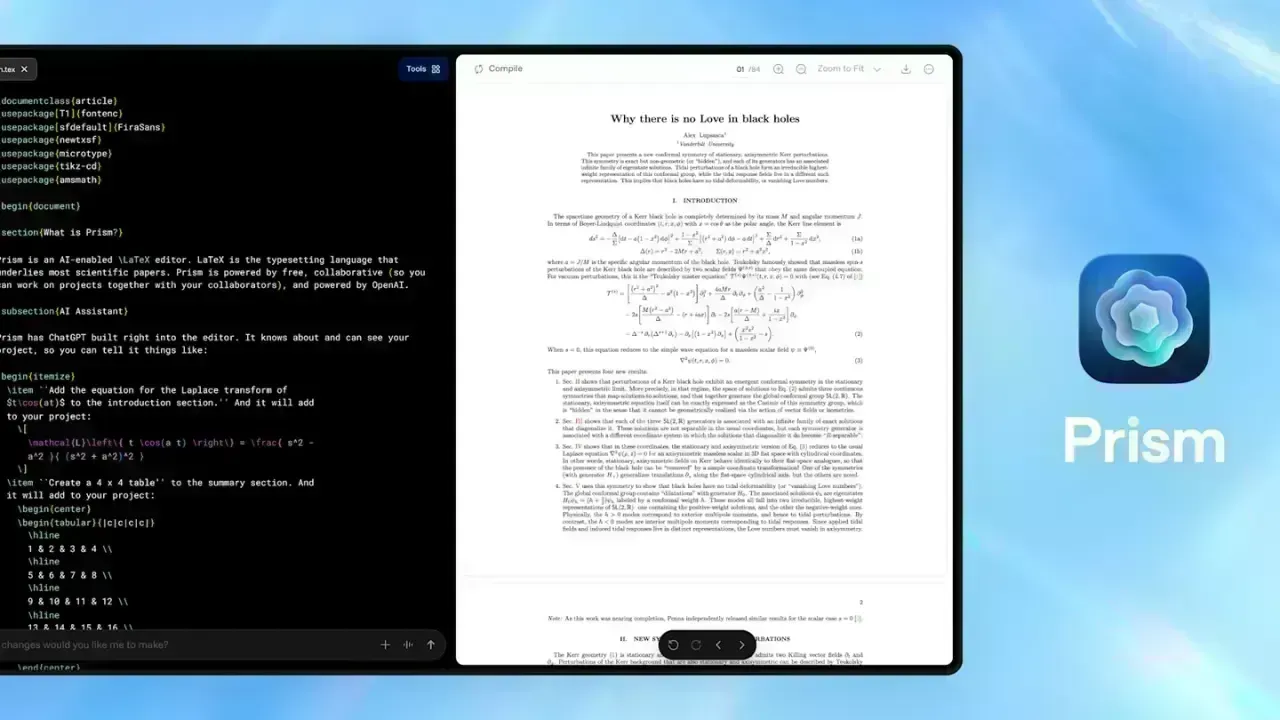
OpenAI has officially introduced Prism, a new artificially intelligent workspace designed specifically for scientific writing and collaboration. Termed an AI-native platform, Prism represents a significant evolution in the way researchers draft, refine, and coordinate scientific content, especially research papers and academic manuscripts. The tool is powered by OpenAI’s advanced GPT-5.2 model, which provides deep reasoning capabilities alongside integration with LaTeX, the standard formatting language in academia. This launch is poised to reshape scientific workflows by bringing together drafting, citation management, real-time collaboration, and advanced AI assistance into a unified environment.
Unlike traditional research tools that address individual parts of the research process — such as writing, citation, or version control — Prism consolidates these functions into a cloud-based workspace that researchers can access from anywhere. It aims to eliminate the friction caused by switching between different platforms and manual formatting steps that often slow progress in scientific writing. Available immediately to anyone with a personal ChatGPT account, and later to institutional users on enterprise plans, Prism is offered free of charge with unlimited collaborators and projects, making it accessible to scientists at all stages of their careers.
Scientific research workflows have historically been fragmented. Many researchers report spending more time managing citations, formatting documents, or reconciling collaborative edits than progressing with the actual scientific content of their work. Drafting research manuscripts often involves juggling multiple tools: version control systems, reference managers, text editors, equation editors, and file hosting platforms. Even when advanced tools exist for individual tasks, their lack of seamless integration increases cognitive load and reduces efficiency for teams.
A typical scientific article goes through multiple rounds of revision and editing, often with numerous collaborators located across institutions and time zones. Real-time co-editing, tracking changes, integrating comments, and managing different versions of the same document are persistent challenges. Moreover, drafting complex content like equations, tables, figures, and citations using conventional tools adds hours of manual formatting for researchers already pressed for time. This context has paved the way for AI-augmented solutions like Prism, which seek to streamline these fundamental aspects of scientific workflows.
Prism is fundamentally a cloud-based LaTeX workspace that seamlessly integrates advanced AI with the familiar document structure of scientific writing. LaTeX is widely used in STEM fields due to its robust handling of equations, tables, figures, and formatting standards, making it the preferred choice for drafting academic papers. Prism embeds this environment in the cloud while overlaying AI capabilities that understand the full context of an active manuscript.
One of Prism’s core strengths lies in its AI-assisted drafting and revision functionality. Using GPT-5.2 as a reasoning engine, the platform can help users with tasks such as summarizing sections, refining language for clarity and precision, identifying areas needing citation support, converting whiteboard sketches or handwritten formulas into LaTeX code, and suggesting structural improvements. The AI also assists with exploring ideas, reasoning through complex problems, and dynamically adjusting content based on user feedback.
Prism’s project-aware AI understands the full history of a document, including past drafts and revisions, enabling more coherent suggestions and context-sensitive editing. For instance, when refining a discussion section, the AI can reference earlier parts of the same paper rather than treating the section in isolation. This capability reduces repetitive manual checks for consistency across different parts of a manuscript.
A distinguishing feature of Prism is its support for unlimited collaborators, allowing research teams of any size to work together in real time without seat limits or additional fees. This functionality addresses a critical bottleneck in collaborative research, where traditional edit-share models often restrict access or create version conflicts that complicate workflow. In Prism, collaborators can see edits, comments, and annotations live, reducing miscommunication and ensuring that all team members contribute to the latest version of a document concurrently.
Unlimited projects and collaborators translate into flexibility for research groups that span institutions, disciplines, and geographic locations. Graduate students, advisors, co-authors, and external reviewers can participate in the writing process without encountering licensing or permission hurdles that are common in paid workspace environments. By lowering these barriers, Prism aims to democratize access to high-quality research tools and foster more inclusive collaboration.
LaTeX remains the gold standard for scientific typesetting because of its precise control over content formatting and its ability to handle complex mathematical expressions. Prism’s deep integration with LaTeX – embedded directly within the workspace – means researchers do not need separate LaTeX installations or offline editing systems. Prism handles compilation, formatting, and previewing automatically, offering a real-time rendering of documents without the latency or technical overhead of traditional LaTeX workflows.
In addition to basic LaTeX support, Prism offers features like equation conversion, citation management, and automated error-checking, which significantly reduce manual workload. Instead of manually locating formatting errors or broken references, the AI assists in identifying and correcting these issues as part of the drafting process. This integration preserves the rigour of LaTeX formatting while substantially enhancing usability for scientists who may not be LaTeX experts.
While Prism’s primary focus is on drafting and formatting scientific content, its AI-assisted reasoning features extend its utility beyond simple text editing. Researchers can engage with the platform to clarify complex arguments, refine hypotheses, validate logical consistency, or search and incorporate relevant prior literature. Unlike conventional text editors, Prism’s AI understands the semantic context of scientific claims and can provide suggestions rooted in the broader narrative of a document.
The platform’s ability to assist in literature searches directly within the workspace enables users to discover and integrate citations without switching tools. This feature streamlines the often tedious task of tracking down and formatting references. Moreover, Prism’s reasoning power can help scientists explore ideas and test conceptual relationships – for example, by comparing competing models or checking logical continuity between hypothesis and conclusion.
OpenAI has made Prism available to students, independent researchers, and established scientists alike, requiring only a ChatGPT personal account for initial access. This accessibility lowers traditional barriers tied to paywalls, subscription costs, and institutional licenses. Early access positions Prism as a potential equalizer in academic research, enabling smaller or underfunded teams to access powerful scientific writing and collaboration tools previously limited to those with paid software subscriptions.
The company also indicated that organizational access — including business, enterprise, and education plans — will be rolled out to broader groups, facilitating institutional adoption of Prism’s features on a larger scale. By supporting both individual creativity and large-team coordination, the platform is designed to serve the full spectrum of academic users and research professionals.
Prism arrives at a time when AI-driven tools are increasingly influencing scientific inquiry, publication timelines, and interdisciplinary collaboration. With rapid growth in global research output, the need for tools that reduce friction in manuscript preparation and teamwork has become more pronounced. Academic publishers, research institutions, and individual scientists alike may find value in Prism’s unified workspace, particularly as it removes the need to juggle multiple software and data management systems.
Beyond manuscript drafting, Prism’s reasoning features could accelerate iterative thinking and hypothesis refinement, potentially shortening the time between experimentation and publication. By offering a platform that reduces redundant administrative effort, scientists can dedicate more focus to core intellectual challenges, conceptual exploration, and innovation.
Any disruptive tool invites scrutiny, and Prism is no exception. Some observers note that while Prism excels in helping with writing and formatting, it does not replace the deeper, domain-specific analytical processes central to scientific discovery. Researchers still need to conduct experiments, analyze data, and apply critical judgment to findings — aspects that AI tools assist but do not autonomously perform.
Looking ahead, future versions of Prism may integrate more advanced features such as automatic data visualization, deeper semantic search across scientific literature databases, or integration with experimental design tools. These possibilities suggest ongoing evolution toward more comprehensive research platforms that support the full lifecycle of scientific discovery, not just drafting and formatting.
OpenAI’s launch of Prism marks a significant milestone in the integration of artificial intelligence into scientific research workflows. By providing a unified space for writing, collaboration, formatting, citation management, and advanced AI assistance — all infused with the power of GPT-5.2 — Prism offers a transformative alternative to traditional research tools. Its free availability and unlimited collaboration model democratize access, potentially empowering a broader range of researchers around the world to contribute to scientific progress.
With Prism, OpenAI is not just releasing a tool; it is helping redefine how scientific ideas are recorded, refined, and shared. As adoption grows, Prism may well influence the pace of scientific writing, interdisciplinary collaboration, and innovation across fields.
Disclaimer: This article is based on current information available from public reporting and official announcements at the time of writing. It is provided for informational purposes only and does not constitute technical or professional advice.









Lamborghini Catches Fire on Singapore's ECP, Causing Heavy Traffic
A Lamborghini caught fire on Singapore's ECP, causing heavy traffic and bus delays. No injuries were

Bangkok Airport Duty-Free Area Flooded by Pipe Burst
A burst water pipe flooded the duty-free shopping area at Bangkok's Suvarnabhumi Airport on July 16,
Nine Monks Killed in Thailand Pickup Truck Tragedy
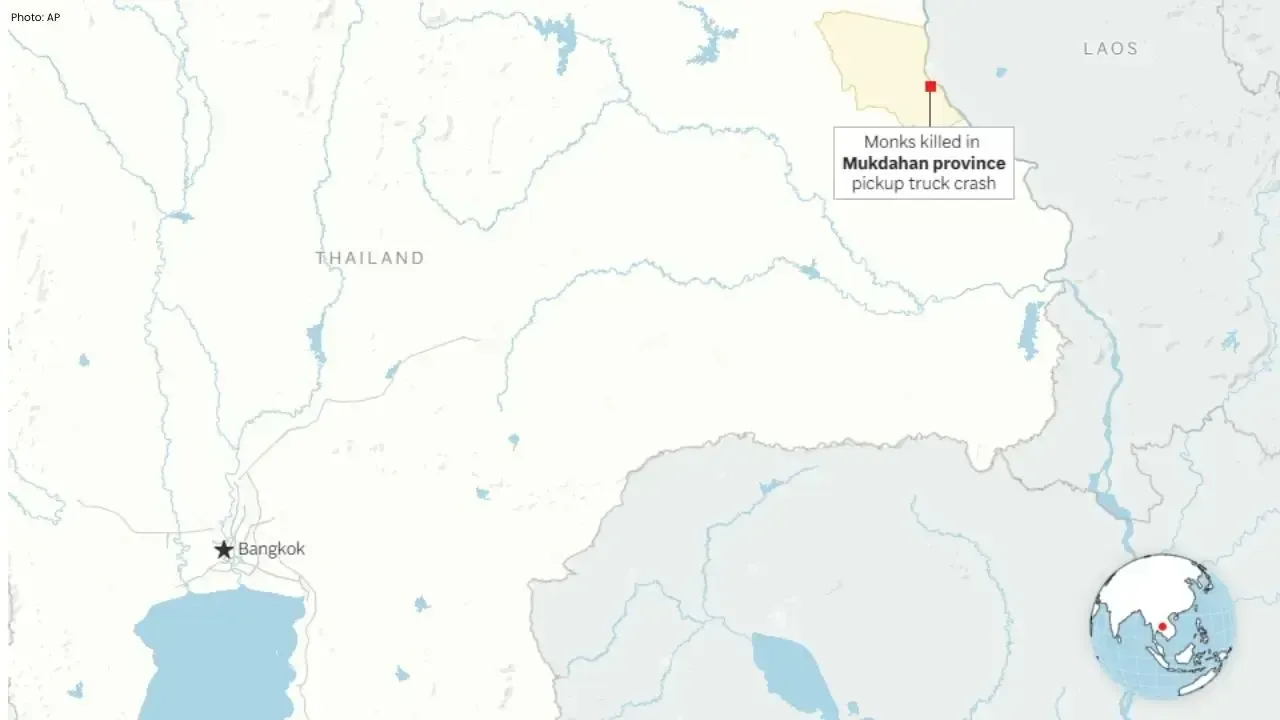
An 11-year-old boy driving a pickup truck crashed into monks during a pilgrimage in northeastern Tha

Anwar Congratulates Xi on CPC's 105th Anniversary
Malaysia reaffirms strong ties with China as PM Anwar Ibrahim sends a congratulatory letter to Presi

Thai Agriculture Team Reviews 2026 Farm Development Plans
Agriculture Ministry officials inspected livestock and organic rice projects in Nakhon Sawan to moni

Thailand, Canada Boost Ties in PM-Level Phone Talks
Thailand and Canada agreed to strengthen trade, security, OECD cooperation and ASEAN-Canada FTA talk