You have not yet added any article to your bookmarks!
Join 10k+ people to get notified about new posts, news and tips.
Do not worry we don't spam!
Post by : Anis Farhan
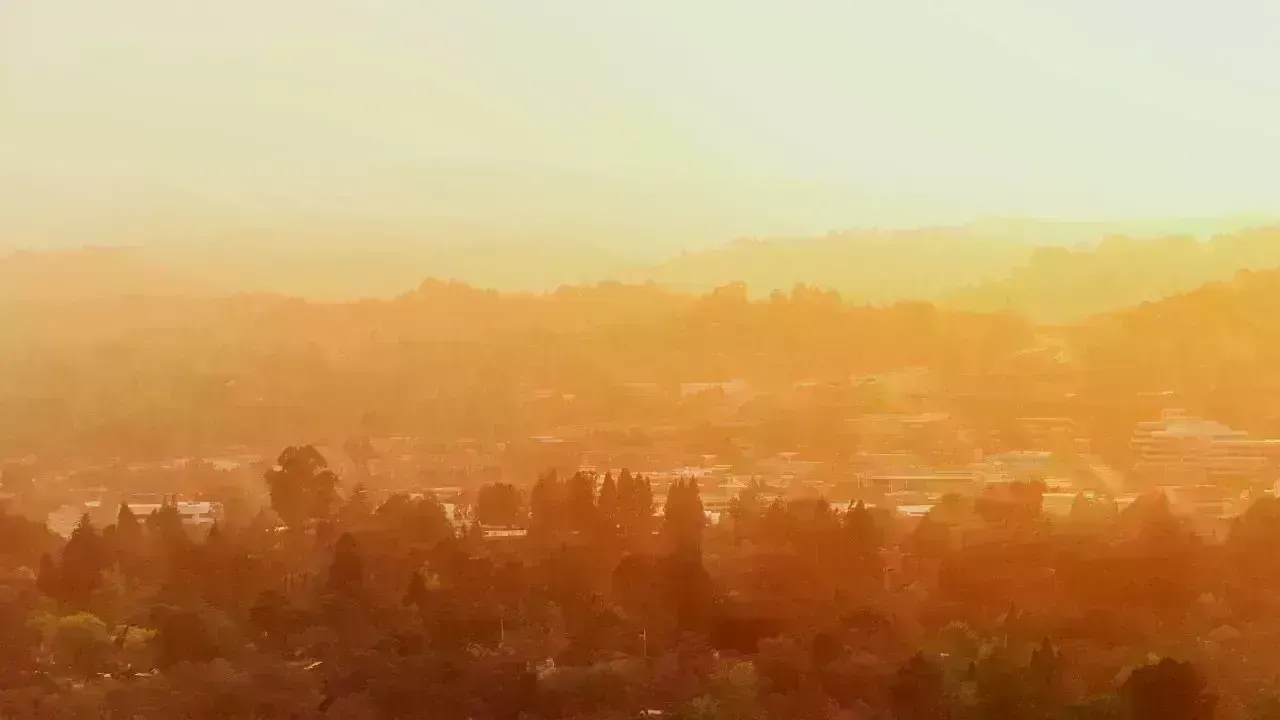
In recent days, alarming spikes in smog levels across major urban areas have reignited a pressing conversation: can we continue to live in cities? What started as concerns on social media about deteriorating air quality has escalated into a public debate surrounding the safety and viability of urban life.
For many, this recent bout of smog was more than just a regular pollution cycle—it served as a catalyst for re-evaluation. Daily routines, health ramifications, financial habits, and the urban ideal have all come into question. As air quality monitoring revealed distressing figures, the notion of leaving the city gained traction both online and offline, influencing public sentiment and local government discussions.
While city planners often rely on statistics rather than societal sentiment, this current crisis has compelled many municipalities to reassess their priorities at an unprecedented pace. The widespread alarm regarding temporary smog has begun to reshape perspectives on urban living.
Although smog isn't new to urban areas, various factors have intensified its impact this time. It appeared sooner than usual, catching many off guard—commuters, schools, and workplaces alike. Reports from health agencies indicated a surge in complaints regarding respiratory issues, particularly among vulnerable populations like children and the elderly. Furthermore, the rise of real-time air-quality apps made this crisis impossible to overlook.
Families are engaging in discussions about temporary getaways, while middle-aged workers rethink long commutes. Students are expressing worries about outdoor activities. Even those accustomed to annual smog episodes agree that this spike feels particularly oppressive.
The psychological impact is equally striking. The visible thick haze that disrupts city skylines has created a sense of discomfort. Many urbanites now question if their environments remain livable, provoking broader conversations around mental health, quality of life, and the challenges of city existence.
As pollution reports spread, households across various demographics found themselves engaged in similar dialogues. Some contemplated temporary retreats to nearby small towns, while others considered long-term moves to tier-2 or tier-3 cities, drawn by cleaner air and a slower pace of life.
Family discussions have revealed three prevalent themes:
Parents are increasingly concerned about their children’s exposure to harmful air during school. Many are advocating for temporary remote learning to limit outdoor exposure.
The recent smog event has led families to reconsider if the high expenses associated with urban living are justifiable given the unpredictable environmental conditions.
People are beginning to weigh whether the convenience and opportunities presented by urban life are worth the price of congestion, noise, and pollution.
Though immediate relocations may not be feasible for all, the collective aspiration for cleaner surroundings has gained notable traction in a matter of days.
City planning agencies, often seen as slow to tackle environmental issues, are now feeling intense pressure. Severe smog spikes create significant logistical issues such as restricted movement, decreased productivity, cancelled events, and increased healthcare demands.
This week’s situation has rapidly advanced discussions within planning boards about:
Revising green zoning regulations
Enhancing clean-transport options
Enforcing stricter industrial regulations
Accelerating electric vehicle support
Introducing seasonal pollution control measures
Municipalities have begun to revisit long-stalled projects aimed at increasing green spaces. Ambitious proposals—such as large-scale solar initiatives and traffic systems redesign—are now being prioritized as essential.
Realtors in suburban areas have experienced a surge in inquiries as news of smog spreads. Many families who once overlooked the suburbs due to commute challenges are now reassessing their priorities.
What accounts for this pronounced shift?
Smaller towns typically suffer from less industrial pollution, contributing to a more breathable atmosphere.
Many reported feeling drained by the recent smog events, increasing their interest in calmer environments.
With hybrid work becoming more common, residing further from busy hubs is increasingly viewed as feasible.
While not everyone will relocate, the desire itself is likely to influence regional housing and planning trends.
Businesses reacted faster than anticipated. Various organizations relaxed attendance rules, promoted hybrid workdays, or encouraged flexible hours to avoid peak pollution times. Air purifiers have surged in importance, and companies have even distributed masks to those commuting.
HR departments are reassessing wellness strategies, including:
Permitting work-from-home days during severe pollution
Introducing air-quality stipends
Offering respiratory health evaluations
Providing counseling for stress related to environmental discomfort
Workplace policies have unexpectedly become a crucial part of the larger dialogue about urban readiness for future pollution challenges.
Many young adults, particularly those in their 20s, have reacted strongly to the recent smog issue. Many are considering a move to smaller towns with rising employment prospects. This demographic places a premium on mental well-being, flexible working options, and outdoor activities—all of which have been compromised during smog episodes.
Students, too, have expressed frustration as outdoor recreational activities were curtailed due to hazardous air conditions. Forced indoor confinement has felt especially restrictive for a generation reliant on social interaction.
These sentiments, amplified online, are transforming how urban authorities think about public health and recreational infrastructure.
Smog is subtly altering daily habits in ways that are significant:
Early morning joggers steering clear of local parks
Public transport users resuming mask-wearing
Parents reorganizing pick-up and drop-off routines
Shoppers opting for less crowded markets
Restaurants experiencing lower footfall in outdoor sections
When these incremental changes aggregate across populations, they exert a tangible influence on economic and social dynamics.
This week's events have underscored a critical reality: citizens no longer prioritize urban convenience over their health. The "leave the city" debate might not spark a mass exit immediately, but it has undeniably impacted how city authorities view urban living.
The pressing questions for city planners are:
How can cities promote lasting health and safety?
What strategies will genuinely mitigate pollution rather than merely cover it up?
Will sustainable development and green mobility become standard practices?
These inquiries will dictate whether smog incidents continue to generate anxiety or present unique opportunities for urban rejuvenation.
While the urge to leave is palpable, actual relocation necessitates considerable adjustments in finances, social ties, and career trajectories. Though many may remain in cities, their expectations will have transformed. Clean air, effective policies, green spaces, and transparent communication from officials will be essential.
Cities that refuse to evolve risk falling from grace, while those willing to innovate may emerge from this crisis even stronger.
This week's surge in smog has indelibly shaped the outlook of millions, steering them toward a future where health and sustainability reign supreme in urban planning.
The recent uptick in smog was not just a fleeting phenomenon—it unveiled deep-seated anxieties about contemporary metropolitan living. Citizens, planners, and lawmakers have been prompted to transcend short-term solutions and confront the pressing reality of environmental decline. The "leave the city" discourse, once niche, has stepped into the mainstream, charting the future of urban planning for years ahead.
DISCLAIMER:
This article is based on current observations, expert opinions, and recent environmental developments. It is intended for informational purposes only and should not be taken as medical or legal advice.









Hyundai raises profit target, expands hybrid lineup in the US
Hyundai hybrid cars get a major boost as the automaker raises its profit margin target and plans new

Josh Kerr and Jakob Ingebrigtsen Set for 1,500m Rivalry Rematch
Josh Kerr and Jakob Ingebrigtsen will renew their 1,500m rivalry at the Ultimate Championship in Bud

PSG Coach Luis Enrique Urges Players to Step Outside Comfort Zone
PSG coach Luis Enrique says players must leave their comfort zone and keep improving as the club tar

China’s Tiangong Sets New 400m Record at Robot Olympics
China’s Tiangong robot sets a new 400m record at the Robot Olympics, beating a South African robot i

George Russell Wins Dutch GP Sprint, Boosts Mercedes Morale
George Russell wins the Dutch GP Sprint from pole as Mercedes teammate Kimi Antonelli extends his F1

Australia 50/3 After Bangladesh Bowled Out for 64 in Second Test
Australia reached 50/3 after Bangladesh were bowled out for 64 in the second Test, with Mitchell Sta