
You have not yet added any article to your bookmarks!
Join 10k+ people to get notified about new posts, news and tips.
Do not worry we don't spam!
Post by : Anis Farhan
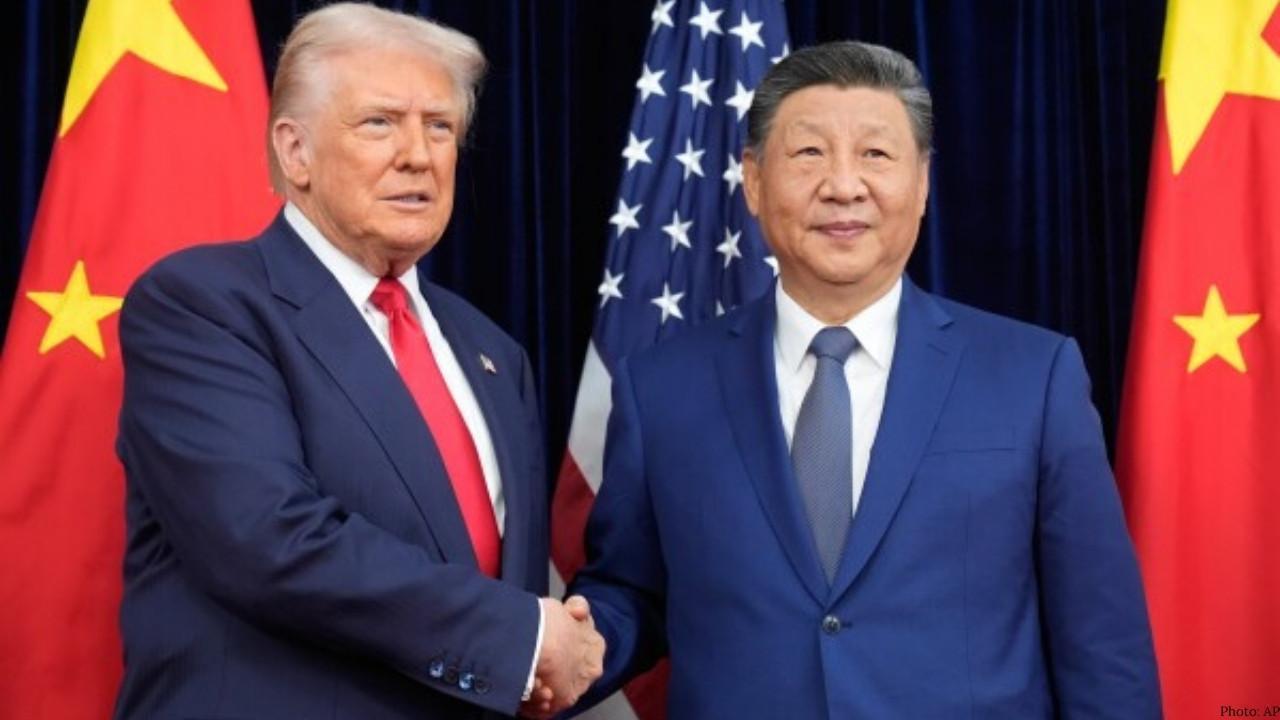
U.S. President Donald J. Trump revealed in early February that Chinese President Xi Jinping is expected to visit the United States toward the end of 2026, underscoring a renewed phase in diplomatic engagement between the world’s two largest economies. Trump made these remarks during an interview with NBC News, emphasizing the constructive nature of recent discussions and framing the prospective visit as a continuation of ongoing efforts to recalibrate bilateral relations. This announcement follows Trump’s own planned visit to China in April, signaling a reciprocal diplomatic approach that aims to ease longstanding tensions and build a more stable framework for cooperation.
This prospective visit carries deep significance, given the complex history of U.S.-China relations over the past decade — including trade disputes, geopolitical rivalries, and strategic competition across multiple global arenas. If the visit materializes as suggested, it would represent one of the most high-profile engagements between the two leaders since Xi’s last trip to the United States in 2023.
Trump’s statement about Xi’s planned visit did not emerge in isolation. It coincides with a series of high-level exchanges between the two leaders, including a wide-ranging phone call that touched on key geopolitical issues such as trade, the situation in Iran, Russia’s war in Ukraine, and the sensitive matter of Taiwan. In describing that conversation as “excellent,” Trump underscored intentions to sustain positive momentum in diplomatic talks and find areas of mutual interest despite deep strategic differences.
However, Chinese interlocutors have placed emphasis on framing discussions cautiously, especially when contentious issues such as U.S. arms sales to Taiwan are on the table. Beijing has repeatedly stressed that Taiwan remains a core interest and has urged the United States to act prudently to avoid escalation. Such disparities highlight the delicate balance both nations must navigate as they seek to engage without compromising core strategic positions.
Economically, the United States and China remain deeply intertwined, even as both governments pursue policies designed to reduce strategic vulnerabilities. Trump’s administration has implemented tariffs on a range of Chinese goods and advocated for reduced reliance on Chinese manufacturing, yet trade flows between the two economies persist at massive scale. The bilateral economic relationship — encompassing everything from agricultural exports to high-tech components — remains a cornerstone of global trade dynamics.
During the recent dialogue between Trump and Xi, trade relations and market access issues were central themes, indicating that economic cooperation remains a priority for both capitals, even when broader security and geopolitical concerns complicate bilateral ties.
The announcement of Xi’s prospective visit reflects a nuanced recalibration in U.S.-China relations. Both sides are seeking to manage rivalry without allowing competition to slide into open conflict. While Trump’s rhetoric has historically included critical stances toward China — particularly during his first presidential term, which saw a prolonged trade war — his current approach includes open avenues for dialogue and reciprocal state visits.
Such diplomatic gestures are not merely symbolic; they serve as foundational mechanisms through which complex bilateral issues can be negotiated. State visits provide structured forums for direct engagement on issues ranging from economic policy to crisis management and global security.
Yet, even as both governments extend diplomatic courtesies, underlying strategic tensions remain — especially on matters such as Taiwan, where Beijing’s red lines are firm and U.S. commitments to Taiwan’s security provoke sharp reactions from China. Trump’s acknowledgment of Xi’s stance on sensitive issues underscores the ongoing difficulty of reconciling divergent national priorities.
An important dimension of the renewed engagement is Trump’s own planned visit to China scheduled for April 2026. This trip — discussed during recent conversations with Xi — is expected to further set the stage for deeper dialogues and may help formalize the framework for Xi’s later visit to the United States. The trust and continuity between successive state engagements often bolster diplomatic predictability and reduce risks associated with misunderstandings or abrupt policy shifts.
Historically, high-level exchanges between the U.S. and China have served to establish norms and manage conflict, from trade negotiations to cooperative efforts on global challenges. This reciprocal sequence of visits can be viewed as part of a broader strategy to establish regular channels of communication and ensure continuity in dialogue even amid systemic rivalry.
If Xi’s visit to the United States occurs as outlined, key areas of focus are likely to include:
Trade and Economic Cooperation: Discussions are expected to center around stabilizing tariff regimes, enhancing market access, and potentially expanding bilateral investment frameworks.
Security and Strategic Competition: Taiwan, military posturing in regional hotspots, and cooperative mechanisms for crisis prevention will be critical talking points.
Global Issues: Both leaders are likely to address issues beyond bilateral concerns, including global initiatives on nuclear arms control, climate commitments, and economic development strategies.
Diplomatic Confidence Building: State visits often include cultural and ceremonial components that can help foster mutual understanding at a non-technical level, contributing to long-term diplomatic rapport.
Taiwan remains one of the most sensitive subjects in U.S.-China relations. Beijing insists that the island is an integral part of Chinese territory, and it views foreign involvement — especially arms sales — as a direct challenge to its sovereignty. U.S. policy of providing defensive capabilities to Taiwan has repeatedly triggered strong reactions from China, forcing both sides to engage in cautious diplomacy to prevent escalation.
During recent discussions, Xi urged the United States to exercise prudence regarding Taiwan, reinforcing the gravity with which China views the issue. Trump, while promoting dialogue, has also reaffirmed broader U.S. commitments to regional security, illustrating the persistent divergence of strategic priorities that will shape future engagements.
The evolving relationship between the United States and China is not contained within bilateral boundaries. It influences broader global alliances, regional security architectures, and economic partnerships. Both nations engage with multiple global actors, from European partners to key players in the Indo-Pacific, shaping a multipolar environment where cooperation and competition coexist.
For instance, issues such as the war in Ukraine, evolving Middle East dynamics, and regional alliances in Asia are all influenced, directly or indirectly, by the tenor of U.S.-China relations. This interconnected web means that diplomatic gestures such as state visits have ripple effects beyond the immediate bilateral context.
For the Trump administration, securing a commitment from Xi to visit the United States represents a significant diplomatic achievement. It sends a message of engagement rather than isolation, and positions the U.S. as willing to engage its principal strategic competitor through structured dialogue.
Domestically, such high-profile engagements can be used to reinforce narratives of strong leadership and global influence, especially in debates over foreign policy direction and national security strategy.
For Beijing, participating in reciprocal state engagements — even amid strategic competition — reinforces China’s role as a central global actor whose cooperation is essential on many fronts. Xi’s potential visit to the U.S. later in the year would serve as an affirmation of China’s diplomatic agency and its interest in maintaining stability in global arenas where both cooperation and competition with the United States are unavoidable.
President Trump’s confirmation that Chinese President Xi Jinping is likely to visit the United States toward the end of 2026 represents a potentially pivotal moment in U.S.-China relations. The prospective visit — framed by recent high-level interactions and reciprocal diplomatic planning — suggests a renewed willingness on both sides to engage directly and manage complex bilateral and global issues.
Yet, the challenges inherent in the U.S.-China strategic relationship — from trade disputes and geopolitical rivalry to core issues like Taiwan — ensure that significant obstacles remain. State visits can provide structured platforms for dialogue, but the substance of negotiations and the willingness to compromise on contentious issues will ultimately determine whether such engagements yield sustainable progress.
As the world watches the unfolding sequence of diplomatic interactions, the international community will closely observe whether this series of visits can foster a climate of measured cooperation and responsible competition between the two dominant powers of the 21st century.
Disclaimer: This article has been compiled and rephrased based on verified news reports and credible sources. Efforts have been made to ensure accuracy and clarity in presenting ongoing developments in international diplomacy.





George Russell Wins Dutch GP Sprint, Boosts Mercedes Morale
George Russell wins the Dutch GP Sprint from pole as Mercedes teammate Kimi Antonelli extends his F1

Australia 50/3 After Bangladesh Bowled Out for 64 in Second Test
Australia reached 50/3 after Bangladesh were bowled out for 64 in the second Test, with Mitchell Sta

Jordan Burroughs Returns to Wrestling with 2028 Olympic Dream
Jordan Burroughs returns to wrestling with Real American Freestyle as the Olympic champion eyes a po

Lamborghini Catches Fire on Singapore's ECP, Causing Heavy Traffic
A Lamborghini caught fire on Singapore's ECP, causing heavy traffic and bus delays. No injuries were

Bangkok Airport Duty-Free Area Flooded by Pipe Burst
A burst water pipe flooded the duty-free shopping area at Bangkok's Suvarnabhumi Airport on July 16,

Nine Monks Killed in Thailand Pickup Truck Tragedy
An 11-year-old boy driving a pickup truck crashed into monks during a pilgrimage in northeastern Tha

