
You have not yet added any article to your bookmarks!
Join 10k+ people to get notified about new posts, news and tips.
Do not worry we don't spam!
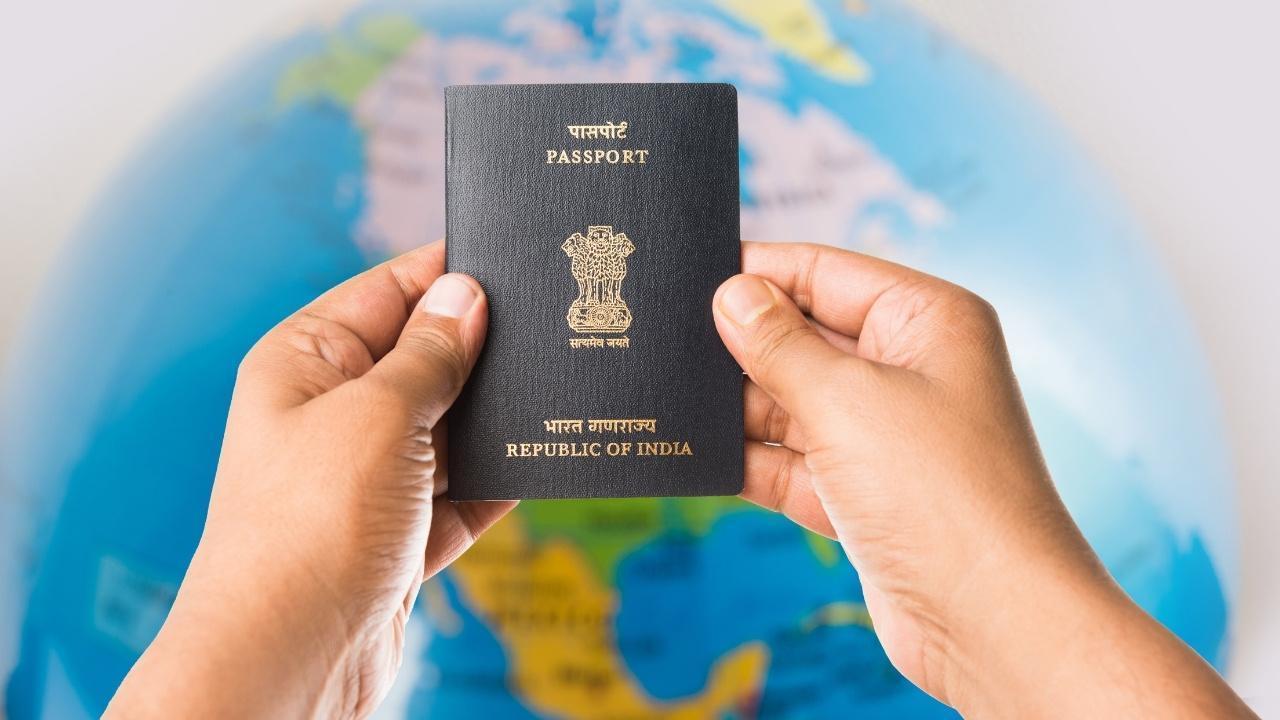
Post by : Anis Farhan
In the 2026 Henley Passport Index, India’s passport saw a notable improvement, climbing ten places from its previous ranking. The Henley Passport Index is widely considered an authoritative benchmark of global passport strength — measuring how many destinations a passport holder can access without having to obtain a visa beforehand. This year, Indian passport holders can travel to more countries without prior visa formalities, reflecting broader diplomatic progress and evolving global travel norms.
For Indian travellers — whether tourists, businesspeople, students or professionals — the Henley Passport Index ranking is more than just a number. It translates to ease of international movement, reduced paperwork, potentially lower travel costs, and expanded opportunities for cultural, professional and economic engagements. Against a backdrop of fluctuating global mobility over the past decade, the recent rise hints at renewed momentum in travel partnerships and bilateral arrangements around the world.
The Henley Passport Index evaluates the strength of passports from countries around the world by counting how many destinations their holders can enter without obtaining a visa in advance. The core idea is simple: the greater the number of destinations that allow visa-free, visa-on-arrival or e-visa entry, the stronger and more powerful the passport is considered.
To compile the index, researchers use data from the International Air Transport Association (IATA), which maintains one of the world’s most comprehensive repositories of global travel information. The index covers nearly 199 passports and more than 227 destinations, making it a definitive resource for global travel freedom and passport strength comparisons.
Passport strength carries practical implications beyond tourism. A powerful passport enables smoother entry into foreign countries for leisure, business and educational purposes. It can reduce administrative burden, lower travel costs and even influence international perceptions of a nation’s diplomatic and security standing. The measure is also a symbolic indicator of how countries engage with one another; visa waivers or simplified access often reflect trust, reciprocal cooperation, and strong bilateral ties.
In the 2026 Henley Passport Index, India has climbed to the 75th spot, marking a significant recovery from last year’s 85th place. This jump — a ten-place rise — symbolises stronger global travel access for Indian citizens after several years of volatility in international travel norms.
According to the latest ranking, Indian passport holders now enjoy visa-free or visa-on-arrival access to 56 destinations worldwide. This means that for these 56 countries, travellers from India do not need to apply for a visa before departure, whether through traditional visa-free agreements, on-arrival options or electronic travel authorisations (e-visas).
India’s passport power has seen varied fortunes over the last two decades. At its peak in 2006, India’s passport was ranked 71st in the Henley Passport Index, offering broader travel access than in recent years. Since then, international rankings fluctuated due to multiple factors — changes in bilateral agreements, shifting visa policies, and global events influencing mobility.
While the current ranking of 75th falls short of that historical high, the upward movement marks progress after periods of decline. It reflects renewed diplomatic focus on facilitating travel partnerships with countries in Asia, Africa, the Caribbean and beyond.
Indian passport holders now have easier access to a varied list of countries. This includes nations across continents — from Asia and Africa to the Caribbean and Oceania — providing a mix of visa-free entry and visa-on-arrival facilities.
Some notable destinations that Indian travellers can access without prior visa arrangements include:
Asia: Bhutan (visa-free), Nepal (visa-free), Sri Lanka (visa on arrival), Thailand (visa on arrival), Indonesia (visa on arrival)
Africa: Mauritius (visa-free), Senegal (visa-free), Tanzania (visa on arrival), Rwanda (visa on arrival)
Oceania: Fiji (visa-free), Micronesia (visa-free), Vanuatu (visa-free)
Caribbean: Barbados (visa-free), Jamaica (visa-free), St. Lucia (visa on arrival)
These destinations represent a broad spectrum of travel options — from beach holidays and island getaways to cultural and nature-based exploration opportunities.
Besides visa-free and visa-on-arrival arrangements, several countries also offer e-visas or electronic travel authority systems to Indian passport holders. These streamlined digital authorisations can often be obtained quickly online before departure, facilitating smoother travel experiences without the need for traditional embassy visits.
E-visas provide added flexibility for Indian travellers, especially those planning last-minute trips or business excursions, as the approval process tends to be faster and less bureaucratic than standard visa applications.
While India’s passport has made noteworthy progress, several countries still dominate global travel access. According to the 2026 Henley Passport Index, the top-ranked passports — with far broader mobility — include:
Singapore: Holds the number one position with visa-free access to 192 destinations
Japan and South Korea: Both rank second with access to 187 destinations each
Sweden and United Arab Emirates: Positioned closely with access to 186 destinations
These passports reflect countries with strong diplomatic relations and extensive global reach, enabling holders to travel with minimal visa restrictions across multiple continents.
Passport rankings vary widely worldwide based on historical relationships, bilateral agreements, and regional policies. While India has improved, many European and some Asia-Pacific nations maintain upper-tier positions due to longstanding visa-free arrangements, strong diplomatic engagement, and reciprocal travel agreements.
For Indian tourists, the improved passport ranking translates to expanded travel choices. Greater visa-free and visa-on-arrival access makes holiday planning easier, cuts down on documentation delays, and reduces travel costs associated with visa applications. This can boost outbound tourism, allowing more Indians to explore global destinations with fewer travel barriers.
Easier travel access also benefits Indian professionals and entrepreneurs. Business executives and small-business owners alike can now visit partner countries with reduced visa processing time, facilitating smoother networking, deal-making and cross-border collaboration.
Facilitated mobility could positively affect trade relations and investment opportunities as well, encouraging deeper economic engagement between India and partner nations.
Students, scholars and cultural ambassadors stand to gain from improved global access. Visa-free travel opportunities expand the options for educational visits, academic collaborations, and cultural exchanges. This can broaden cross-cultural understanding and enhance India’s global footprint in academic and creative spheres.
Despite this progress, India’s passport still lies outside the upper echelons of global rankings. Many advanced economies and key global hubs — including most of Europe, the United States, China and parts of East Asia — continue to maintain stricter visa requirements for Indian citizens.
This reality underscores that while improvements are happening, there is more ground to cover if India aims to secure broader travel freedom comparable to top-ranked passport holders.
The upward movement in the Henley Passport Index could act as a catalyst for further diplomatic engagement. Continued negotiations for mutual visa waiver agreements, expanded e-visa programmes, and strategic partnerships with regional blocs or key global players could further strengthen India’s passport ranking in future editions of the index.
India’s rise to the 75th position in the 2026 Henley Passport Index represents a meaningful improvement in travel freedom for its citizens. With access to 56 countries via visa-free, visa-on-arrival or e-visa arrangements, Indian passport holders now enjoy broader global mobility than in recent years — and this trend appears poised to continue.
While challenges remain and top-tier passport rankings still elude India, the recent upgrade signifies tangible progress. For travellers, businesses, students and professionals alike, easier access to diverse destinations can unlock new opportunities, strengthen global ties, and contribute to India’s evolving role on the world stage.
This article has been independently researched and written based on publicly available data on global passport rankings and travel access. It does not reproduce any copyrighted material from original commercial sources.










PM Modi Pays Tribute to Mahatma Gandhi, Urges People to Support Khadi
PM Modi pays tribute to Mahatma Gandhi on Gandhi Jayanti and urges citizens to support Khadi and the

Amazon Seeks to Offload $8 Billion in Nvidia Chips to Investors
Amazon plans to move $8 billion in Nvidia chips to investors, using a new financing model to strengt

Samsung Raises Galaxy S26 Prices as Memory Chip Costs Rise
Samsung raises Galaxy S26 prices in South Korea as rising memory chip costs put pressure on smartpho

Lewis Hamilton Calls Singapore Grand Prix One of F1's Toughest Races
Lewis Hamilton discusses the demanding Singapore Grand Prix and brings Plus44 and Almave to Singapor

Denmark's Pandora Opens World's Largest Jewellery Factory in Vietnam
Pandora opens its largest jewellery factory in Vietnam, expanding global production, strengthening s

Gautam Gambhir Questions Batting-Friendly Pitches After India's Record ODI Chase
Gautam Gambhir questions batting-friendly ODI pitches after India’s record chase, calling for a bett

