
You have not yet added any article to your bookmarks!
Join 10k+ people to get notified about new posts, news and tips.
Do not worry we don't spam!
Post by : Anis Farhan
Photo: PTI
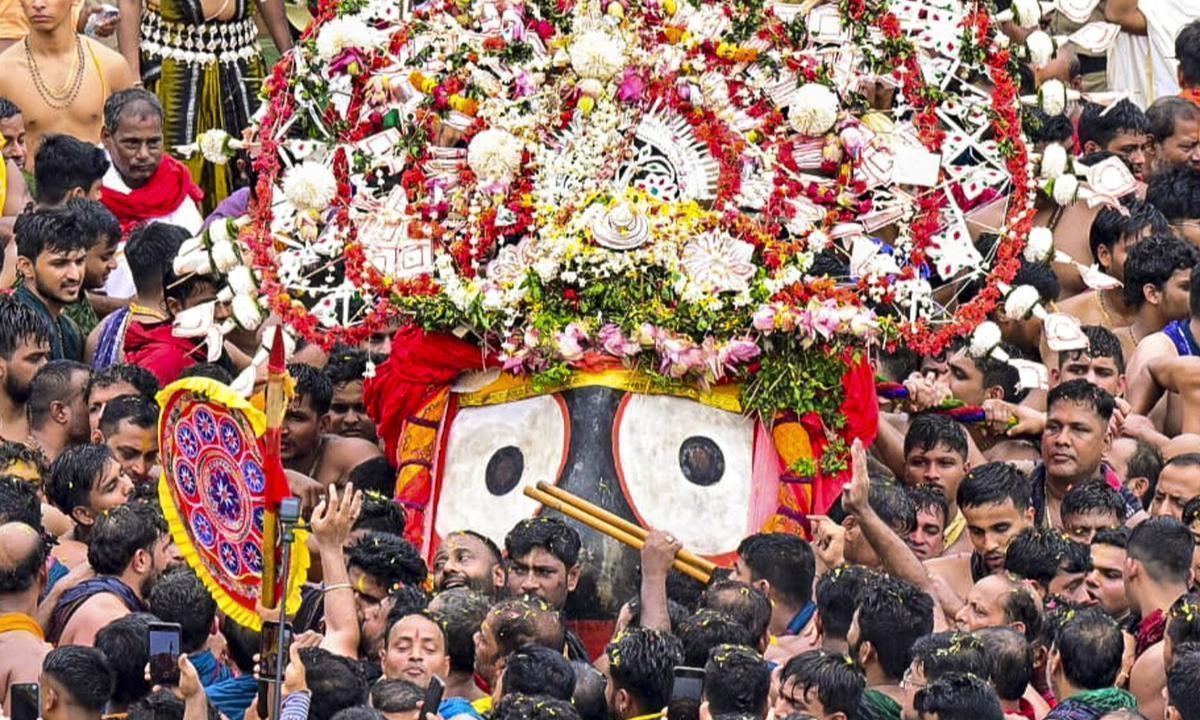
Odisha’s Rath Yatra—or Chariot Festival—is the most celebrated event in Puri, drawing millions of devotees each year. On June 28, 2025, the tradition resumed with outstanding energy and renewed rituals, marking the second day of this nine-day spiritual journey. From ancient lore to modern-day grandeur, the Rath Yatra remains as powerful and relevant as ever. The festival traces its roots back to the 12th century under King Purushottama Deva and the Eastern Ganga dynasty. According to legend, Lord Jagannath—an incarnation of Krishna—made an annual journey from his temple to his aunt’s shrine at Gundicha, symbolizing a divine visit home. References to early Rath Yatras appear in medieval texts like the Brahma and Skanda Puranas .
The English word “juggernaut,” meaning an overwhelming force, is derived from the British colonial misinterpretation of the massive chariots and fervent crowds during the Rath Yatra.
The 2025 edition officially began on June 27, marking the first day when the idols of Jagannath, Balabhadra, and Subhadra were placed on towering wooden chariots—the Nandighosha (45ft high), Taladhwaja, and Darpadalan. Craftsmen from Raghurajpur carved and painted these chariots using neem wood over two months, each reflecting intricate local artistry.
Here’s the key 9-day schedule for 2025:
Anavasara: June 13–26 — a rest period for the deities after their symbolic ‘fever’.
Gundicha Marjana: June 26 — ritual cleansing of the Gundicha Temple.
Rath Yatra: June 27 — idols move to chariots and local streets.
Hera Panchami: July 1 — Lakshmi’s symbolic visit to Gundicha.
Bahuda Yatra & Niladri Bijay: July 4–5 — return procession and celebration.
Suna Besha: July 5 — deities adorned in golden jewelry
On June 28, the Rath Yatra resumed amid an atmosphere of devotion and grandeur. The Gajapati King performed the traditional Chhera Pahara—sweeping the chariot path with a gold broom, symbolizing humility before the Lord.
Security was significantly enhanced this year, with around 10,000 personnel deployed, support from central forces, and over 275 AI-equipped CCTV cameras monitoring crowds. High-profile attendees included Gautam Adani, who visited Puri for the Yatra and led a ‘Prasad Seva’ initiative. Across India—at ISKCON temples and in cities like Ahmedabad—parallel Rath Yatras echoed Puri’s rituals, drawing diverse crowds and celebrating cultural unity .
Key rituals uplift the festival’s spiritual dimension:
Pahandi: ceremonial removal of idols from the temple.
Chhera Pahara: royal humility before divinity, performed with prayers and sandal paste.
Dahuka Boli: bawdy folk shouts that signal the chariot’s movement, harking to Vajrayana Buddhist roots.
Poda Pitha stop: mid-journey pause at Mausi Maa Temple to offer the deities a traditional treat.
In Berhampur, a growing tradition allows women to pull Subhadra’s chariot, highlighting inclusivity in the modern iteration of this age-old event.
Beyond faith, the Rath Yatra is a central thread in Odisha’s social fabric. It's a living link to mythology, a celebration of craft, community, and identity. The event draws 4–5 lakh devotees from India and abroad, promoting regional tourism and devotional pride .
Cultural significance extends to Odisha’s artisans and village traditions. Raghurajpur’s artists prepare chariot decorations annually—linking living heritage with the pilgrimage.
Restoration of the Ratna Bhandar in Puri Temple resumed during the deities’ absence, aiming for a July 8 completion. This conservative restoration helps preserve centuries-old infrastructure and supports safe chariot passage.
While steeped in tradition, the festival embraces innovation. This year’s security relied on AI-enabled camera systems to manage crowds, and state-of-the-art logistics helped ensure smooth pilgrim movement . Safety, accessibility, and devotion are balanced through technology and heritage.
Rath Yatra 2025 doesn’t just mark another annual event—it’s a reaffirmation of heritage, resilience, and spiritual communion. From its roots in medieval dynasties to today’s global celebrations, the festival reminds us that devotion can bridge centuries. As chariots roll and chants rise, every devotee, artisan, and observer becomes part of a living saga—one wheel at a time.
This article is written by Newsible Asia for informational and editorial purposes. Details rely on sources current as of late June 2025 and may change with ongoing coverage.










PM Modi Pays Tribute to Mahatma Gandhi, Urges People to Support Khadi
PM Modi pays tribute to Mahatma Gandhi on Gandhi Jayanti and urges citizens to support Khadi and the

Amazon Seeks to Offload $8 Billion in Nvidia Chips to Investors
Amazon plans to move $8 billion in Nvidia chips to investors, using a new financing model to strengt

Samsung Raises Galaxy S26 Prices as Memory Chip Costs Rise
Samsung raises Galaxy S26 prices in South Korea as rising memory chip costs put pressure on smartpho

Lewis Hamilton Calls Singapore Grand Prix One of F1's Toughest Races
Lewis Hamilton discusses the demanding Singapore Grand Prix and brings Plus44 and Almave to Singapor

Denmark's Pandora Opens World's Largest Jewellery Factory in Vietnam
Pandora opens its largest jewellery factory in Vietnam, expanding global production, strengthening s

Gautam Gambhir Questions Batting-Friendly Pitches After India's Record ODI Chase
Gautam Gambhir questions batting-friendly ODI pitches after India’s record chase, calling for a bett

