
You have not yet added any article to your bookmarks!
Join 10k+ people to get notified about new posts, news and tips.
Do not worry we don't spam!
Post by : Rameen Ariff
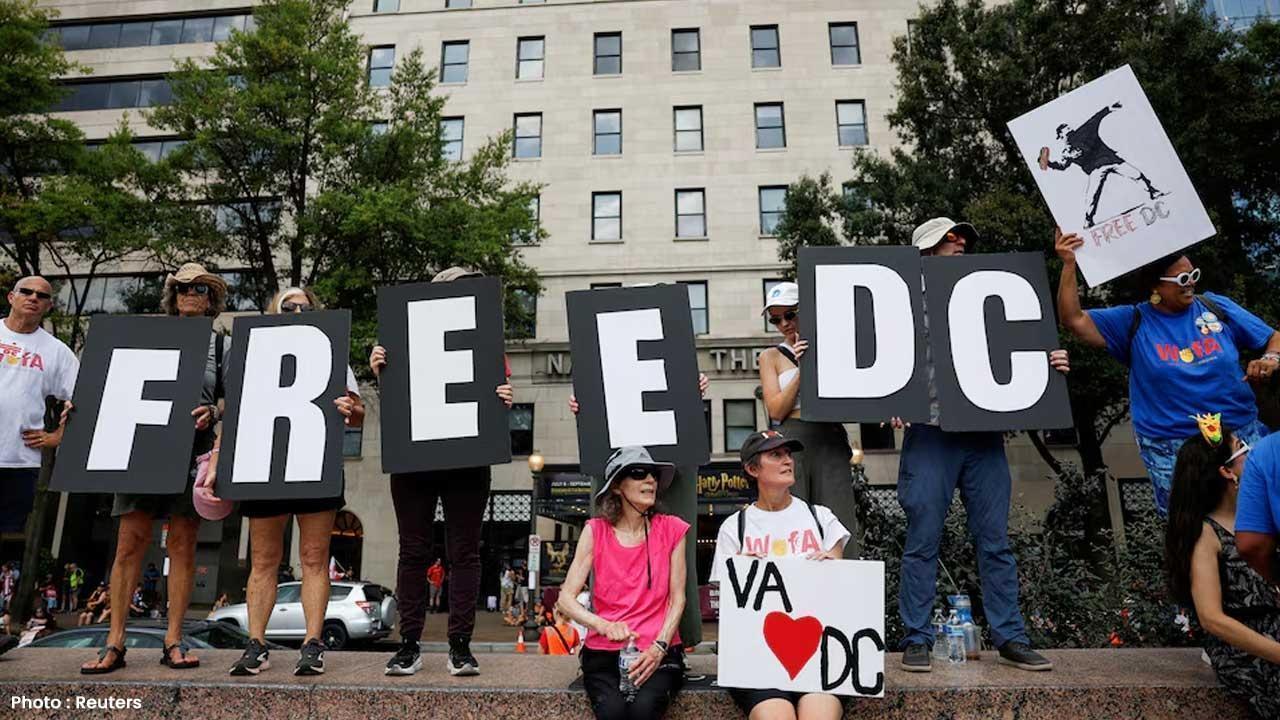
A federal judge has issued a temporary injunction against President Donald Trump’s plan to send National Guard troops to Washington, D.C., without the consent of the city's mayor. This ruling, made on November 21, poses a significant legal challenge to the former president's attempt to implement military presence in U.S. cities.
U.S. District Judge Jia Cobb, appointed by former President Joe Biden, mandated the pause in deployment but stayed her decision until December 11, giving the Trump administration an opportunity to appeal. This case raises profound legal questions regarding the president’s power to deploy troops for domestic law enforcement purposes.
The lawsuit was initiated by District of Columbia Attorney General Brian Schwalb, who contended that permitting Trump to deploy military forces without local authorization would breach legal guidelines and set a precarious precedent. Moreover, the complaint asserted that such an action would interfere unlawfully with the law enforcement prerogatives of the city. Trump announced the troop deployment on August 11, with the lawsuit filed shortly thereafter on September 4.
White House officials maintained that Trump acted within his legitimate legal scope, deeming the lawsuit as a tactic to hinder efforts to curtail violent crime. The administration argued that the deployed troops are functioning under lawful orders and contribute to maintaining order within the capital.
Trump has indicated plans to send National Guard troops to other major urban areas, such as Los Angeles, Chicago, and Portland, Oregon, to combat what he characterizes as violent turmoil stemming from illegal immigration. Local Democratic leaders have filed lawsuits in those cities, asserting that such militarized deployments are politically driven and constitute excessive displays of force.
Previously, courts have favored local authorities in every city that contested the troop deployments, although an appeals court did permit National Guard forces to remain in Los Angeles. The D.C. situation contributes to an expanding legal discourse regarding the delineation of power between federal authorities and local governance concerning military involvement in community policing.
Judge Cobb's decision underscores the need for federal actions, even within Washington where the president holds unique law enforcement powers, to honor lawful boundaries and the jurisdiction of local officials. The impending December 11 appeal date will dictate whether the National Guard’s deployment can move forward as originally envisioned.










PM Modi Pays Tribute to Mahatma Gandhi, Urges People to Support Khadi
PM Modi pays tribute to Mahatma Gandhi on Gandhi Jayanti and urges citizens to support Khadi and the

Amazon Seeks to Offload $8 Billion in Nvidia Chips to Investors
Amazon plans to move $8 billion in Nvidia chips to investors, using a new financing model to strengt

Samsung Raises Galaxy S26 Prices as Memory Chip Costs Rise
Samsung raises Galaxy S26 prices in South Korea as rising memory chip costs put pressure on smartpho

Lewis Hamilton Calls Singapore Grand Prix One of F1's Toughest Races
Lewis Hamilton discusses the demanding Singapore Grand Prix and brings Plus44 and Almave to Singapor

Denmark's Pandora Opens World's Largest Jewellery Factory in Vietnam
Pandora opens its largest jewellery factory in Vietnam, expanding global production, strengthening s

Gautam Gambhir Questions Batting-Friendly Pitches After India's Record ODI Chase
Gautam Gambhir questions batting-friendly ODI pitches after India’s record chase, calling for a bett

