You have not yet added any article to your bookmarks!
Join 10k+ people to get notified about new posts, news and tips.
Do not worry we don't spam!
Post by : Jyoti Gupta
Photo:AFP
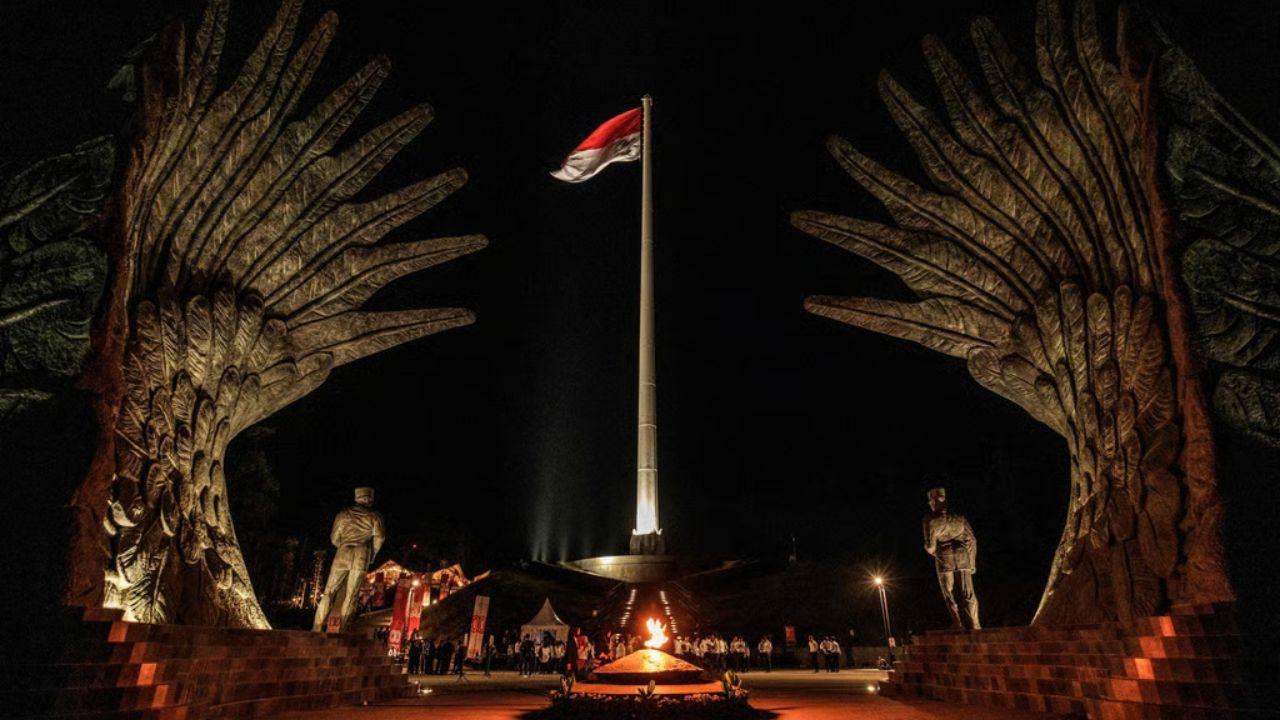
Indonesia’s ambitious dream of building a new capital city, Nusantara, in the heart of Borneo is facing uncertainty. Originally conceived as a model “green” and “smart” city to replace overcrowded Jakarta, the $28.6 billion project now risks becoming a partially built monument to political ambition rather than a functional city of the future.
The idea of Nusantara was first announced by former President Joko Widodo, widely known as Jokowi, in a state address in 2019. Jokowi envisioned the new capital as an environmentally sustainable, technologically advanced city, designed to spread wealth more evenly across Indonesia’s vast archipelago. Jakarta, the current capital, is home to over 10 million people and faces severe problems: chronic traffic congestion, flooding, pollution, and sinking due to overdevelopment. Nusantara was intended to relieve the strain on Java, providing a space where government administration, public services, and modern infrastructure could operate efficiently while preserving the environment.
A Vision of a Green, Modern Capital
Jokowi’s vision of Nusantara was ambitious. It was to be a “smart forest city” built amid Borneo’s lush forests, featuring green infrastructure, modern government complexes, renewable energy, and sustainable urban planning. Private investment was expected to cover the majority of construction costs, reducing the burden on taxpayers while encouraging economic development in East Kalimantan and surrounding regions. The idea was also politically symbolic: a shift from a Java-centric economy to a more equitable distribution of resources and opportunities.
Political Shift and Funding Cuts
However, the project’s momentum has slowed under the leadership of Indonesia’s current President, Prabowo Subianto. Since taking office, Prabowo has barely mentioned Nusantara. In his state address to the People’s Consultative Assembly on August 15, he briefly acknowledged the city while praising Jokowi’s achievements but offered no concrete plans or budgetary commitments. In fact, the draft budget he presented to parliament omitted the project entirely.
Finance officials later confirmed that Nusantara would receive just 6.5 trillion rupiah (around $400 million) in 2026 — roughly half of what was allocated this year. This is a stark contrast to Prabowo’s earlier pledge in January to spend 48.8 trillion rupiah on the city through 2029. Analysts see this as a clear signal that Nusantara may no longer be a top priority under the current administration.
“Prabowo has his own development priorities, including free school meals, public school programs, and village co-operatives. Nusantara simply does not appear to be on his radar,” said Yusuf Wibisono, director of a Jakarta think tank focused on poverty and development.
Lili Romli, a senior researcher, noted that the future of Nusantara could go in one of two directions: “The project may continue, but gradually, in a step-by-step approach. Or it could be postponed or slowed due to financial constraints, with funds diverted to other priorities.”
Budget Comparisons Highlight Priorities
The government’s spending priorities underline this shift. Next year, 335 trillion rupiah ($20.5 billion) has been allocated to Prabowo’s free nutritious meals program, aiming to reach more than 82 million children, toddlers, and pregnant women. Nusantara’s funding appears minuscule in comparison, raising questions about whether the city’s construction can progress meaningfully.
Beyond budget issues, the new capital faces other challenges. Reports have emerged of social problems in the area, including prostitution, gambling, and even local beliefs in “dark magic.” Private investment, which was expected to play a significant role in development, has been slow to materialize.
Limited Government Focus on Nusantara
Since taking office, Prabowo has chaired only two cabinet meetings specifically discussing Nusantara, compared with Jokowi’s frequent weekly deliberations. Despite this, government officials insist the project is not abandoned. State Secretary Prasetyo Hadi confirmed that key government buildings, including the legislative and judicial complexes, are slated for construction by late October or early November this year. These buildings are crucial for allowing the eventual relocation of government functions from Jakarta to Nusantara.
However, even within the ruling coalition, doubts remain. Some lawmakers suggest Nusantara should simply serve as the provincial capital of East Kalimantan to prevent wasting existing infrastructure and reduce controversy over its status. Maintaining current structures alone costs around 300 billion rupiah ($18.4 million) annually.
Investment and “Sunk Cost” Concerns
Since construction began in 2022, the government has spent 75.8 trillion rupiah. Jokowi had hoped private investors would cover up to 80% of the total estimated cost of 466 trillion rupiah. So far, 62 trillion rupiah in investment commitments has been secured from 42 companies, primarily Indonesian, with some pledges from firms in the UAE, South Korea, the US, and China. Chinese companies alone have pledged another 70 trillion rupiah across sectors such as energy, waste management, and transportation.
Despite these numbers, analysts are skeptical about the seriousness of many investors, noting that most have ties to Jokowi’s administration. Yusuf Wibisono argued: “There’s no population in Nusantara yet. Only workers are there. How can these investors realistically expect returns?”
Many experts now view Nusantara as a “sunk cost” — significant funds have already been spent, but continuing may not be justified if political will and resources are lacking. “Halting the project is not shameful,” said Deni Friawan, an economic researcher. “Continuing without proper planning and investment could lead to enormous further costs.”
The Future of Nusantara
For now, Nusantara remains more promise than reality. It embodies Indonesia’s hopes for a greener, smarter, and more distributed capital but also illustrates the impact of political change and shifting priorities. Its future depends on funding, administrative focus, private investment, and how Prabowo’s administration balances populist programs with long-term infrastructure planning.
Even if construction is paused, accountability for the funds already spent and commitments made will remain essential. Nusantara may either emerge as a model city for the future or stand as a reminder of ambitious projects affected by political and financial realities.
In the end, Nusantara is more than just a construction project — it is a reflection of Indonesia’s governance, its development strategy, and how political priorities shape the nation’s path forward.







Sri Lanka Ex-Intel Chief Arrested Over Easter Attacks
Former SIS Chief Suresh Sallay arrested by CID in connection with the 2019 Easter Sunday bombings th

Japan Reports Spike in Measles Cases Authorities Issue Alert
Japan confirms 43 measles cases in early 2026, prompting health authorities to warn potential contac

Korea US Clash Over West Sea Drill Communication
Conflicting accounts emerge on prior notice briefing, and apology during Feb 18-19 US air exercise i

Richard Liu launches $690M eco-yacht brand Sea Expandary
JD.com founder Richard Liu invests $690M in Sea Expandary aiming to produce affordable green yachts

China imposes export curbs on 40 Japanese firms over military ties
Beijing restricts dual-use exports to Japanese companies, citing remilitarization concerns, promptin
Malaysia moves to protect Musang King durian amid China impostors
Authorities safeguard Malaysia’s Musang King brand as durians from Thailand and Vietnam are being fa