
You have not yet added any article to your bookmarks!
Join 10k+ people to get notified about new posts, news and tips.
Do not worry we don't spam!
Post by : Anis Farhan
The global economy is increasingly caught in the crossfire of a modern economic cold war between the world’s two largest economies: the United States and China. While the traditional Cold War was marked by military standoffs and nuclear deterrence, this new version is rooted in market influence, technological dominance, and economic control. The underlying battle is not about weapons, but about who sets the rules for global trade, tech standards, and financial systems in the decades to come.
This modern standoff has been intensifying since the late 2010s, but in the post-pandemic world, it has taken on a new urgency. Tariffs are only the tip of the iceberg. From semiconductor export bans to global currency maneuvering, the rivalry now touches nearly every industry.
One of the most visible battlefronts of this economic conflict is technology. The U.S. has imposed sweeping restrictions on the export of advanced semiconductors to China, citing national security concerns. In response, China has doubled down on self-reliance, investing heavily in its domestic chip production and digital infrastructure.
This decoupling of tech supply chains has profound implications. Multinational corporations are now forced to rethink where they manufacture, where they sell, and which markets they align with. The race for supremacy in artificial intelligence, quantum computing, and 5G networks is more than commercial — it's symbolic of who leads the 21st-century digital economy.
For decades, global trade operated under the assumption that economics would transcend politics. That assumption no longer holds. As geopolitical tensions mount, businesses are reconfiguring their supply chains to mitigate risk. This shift is leading to what many are calling “friend-shoring” — the relocation of operations to politically aligned countries.
This realignment comes at a cost. Supply chain disruptions have become more frequent, and input costs are rising. While Southeast Asian countries, India, and Mexico benefit as alternative hubs, global efficiency is declining. The net result is an increasingly fragmented global economy where regional blocs replace the idea of a unified market.
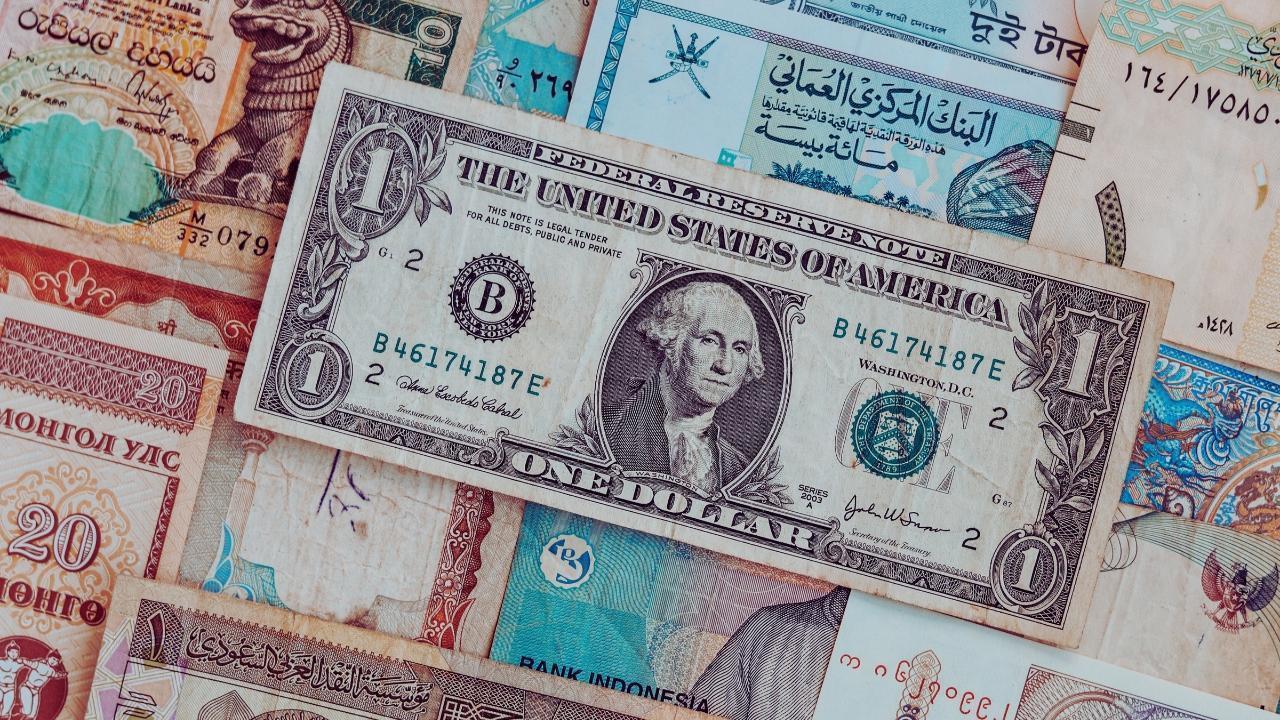
Another dimension of this rivalry lies in currency control and financial influence. The U.S. dollar has long been the dominant global reserve currency, giving the U.S. unmatched power in international finance. However, China is pushing back through initiatives like the Cross-Border Interbank Payment System (CIPS) and the digital yuan.
While these systems remain limited in scope for now, their political symbolism is powerful. Several countries facing Western sanctions — such as Russia, Iran, and Venezuela — have turned to China’s alternative payment platforms. This shift hints at a future where global finance is no longer dollar-dominated, further undermining U.S. leverage on the world stage.
At the institutional level, the World Trade Organization (WTO), once the bedrock of global trade arbitration, has lost much of its authority. Both the U.S. and China have bypassed multilateral trade rules in favor of bilateral deals or economic coercion. The dispute settlement body of the WTO has been crippled since 2019, making enforcement of trade rules toothless.
As legal oversight erodes, trade becomes more weaponized. Export controls, subsidies, and sanctions are now tools of strategic competition rather than policy. This erosion of rules-based trade weakens smaller nations and emerging economies that rely on consistent global norms.
Perhaps the most destabilizing effect of this rivalry is felt in emerging markets. Countries in Africa, Latin America, and parts of Asia find themselves being courted by both powers, each offering aid, infrastructure, and investment with strings attached. Whether it’s China’s Belt and Road Initiative or America’s Build Back Better World program, the new scramble for influence is creating difficult choices for these nations.
Aligning with one side may open trade opportunities but close off others. Financial dependencies, debt traps, and political allegiances are becoming unavoidable realities. As these countries navigate this terrain, their long-term development goals hang in the balance.
Multinational corporations are not passive players in this drama. Many are actively lobbying governments for policy clarity, while others are making quiet adjustments. U.S. tech giants have begun building redundancy into their global operations, while Chinese firms are expanding into less Western-aligned markets such as the Middle East and Africa.
Additionally, some companies are hedging their bets by developing dual ecosystems — one for the U.S.-led market, and another for the China-led bloc. This bifurcation in global commerce may lead to redundancy and increased costs, but for many firms, it’s the only way to survive an increasingly polarized world.
Beyond economics, this rivalry also highlights a fundamental clash of ideologies: liberal democracies vs. centralized authoritarian models. The U.S. and its allies champion market openness and democratic values, while China promotes state-led development and political stability over individual freedoms.
This ideological battle seeps into how markets operate, how investments are made, and how international institutions function. It’s not just a question of who is economically stronger, but whose system others will emulate.
Is this new economic Cold War a temporary phase, or the beginning of a long-term global division? Experts are divided. Some believe that mutual economic dependencies will eventually push both nations to compromise. Others warn that the trajectory points toward deeper division, with a risk of military confrontation lurking in the background.
What’s clear is that globalization, as we knew it in the 1990s and early 2000s, is evolving. The emerging world order will be less open, more regionalized, and fraught with uncertainty. Countries, companies, and individuals will have to make difficult choices in a world where neutrality is increasingly untenable.
This article is a work of original journalism written exclusively for Newsible Asia. It is based on publicly available information, cultural observations, and social analysis to inform, educate, and engage readers. All opinions or interpretations expressed are presented in a human-written, natural tone for general understanding and do not constitute any form of professional advice.










PM Modi Pays Tribute to Mahatma Gandhi, Urges People to Support Khadi
PM Modi pays tribute to Mahatma Gandhi on Gandhi Jayanti and urges citizens to support Khadi and the

Amazon Seeks to Offload $8 Billion in Nvidia Chips to Investors
Amazon plans to move $8 billion in Nvidia chips to investors, using a new financing model to strengt

Samsung Raises Galaxy S26 Prices as Memory Chip Costs Rise
Samsung raises Galaxy S26 prices in South Korea as rising memory chip costs put pressure on smartpho

Lewis Hamilton Calls Singapore Grand Prix One of F1's Toughest Races
Lewis Hamilton discusses the demanding Singapore Grand Prix and brings Plus44 and Almave to Singapor

Denmark's Pandora Opens World's Largest Jewellery Factory in Vietnam
Pandora opens its largest jewellery factory in Vietnam, expanding global production, strengthening s

Gautam Gambhir Questions Batting-Friendly Pitches After India's Record ODI Chase
Gautam Gambhir questions batting-friendly ODI pitches after India’s record chase, calling for a bett

