You have not yet added any article to your bookmarks!
Join 10k+ people to get notified about new posts, news and tips.
Do not worry we don't spam!
Post by : Rohit Dhiman
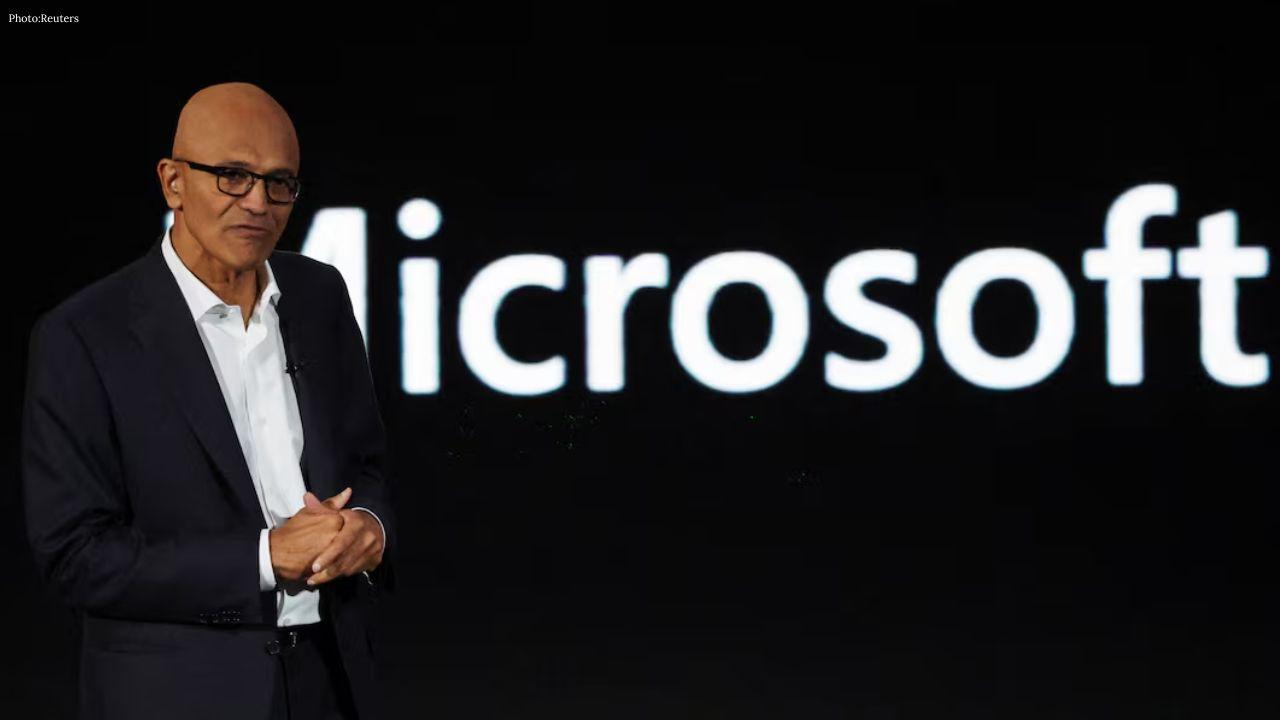
Microsoft and Nvidia are preparing to put local artificial intelligence at the centre of the personal computer market as the two technology giants bring a new high-powered Surface machine to the spotlight at a San Francisco event. Microsoft CEO Satya Nadella and Nvidia CEO Jensen Huang are scheduled to appear together as the companies showcase their latest work around Windows, Surface hardware and Nvidia's RTX Spark platform. The event is focused on how AI can increasingly operate directly on personal computers rather than depending entirely on remote cloud data centres. The biggest attraction is the Surface Laptop Ultra, a machine designed around Nvidia's RTX Spark technology and aimed at users who need substantial computing power for demanding AI workloads.
The core idea behind the new machine is simple but significant: put enough computing power inside a personal computer so that sophisticated AI systems can work directly on the device. That could allow users to perform tasks such as generating and modifying computer code, processing large projects and running advanced AI models without constantly sending information to a remote data centre. Nvidia says its RTX Spark platform is designed specifically for this type of personal AI computing. The company has described the platform as offering up to one petaflop of AI performance and up to 128GB of unified memory. It is also designed to support very large AI models locally. For developers and creative professionals, the appeal is potentially substantial. A powerful local machine can reduce dependence on internet connectivity for certain workloads and may also provide faster response times for tasks that would otherwise require communication with a cloud server.
Microsoft has invested heavily in cloud computing through Azure, where AI workloads can be processed using large data-centre systems. However, moving some AI workloads from cloud servers to powerful PCs could create a different computing model. Instead of every request requiring Microsoft's cloud infrastructure, certain tasks could be completed directly on a user's computer. This could be particularly useful for businesses handling sensitive information, developers working with large codebases and creators dealing with demanding multimedia projects. The approach could also reduce latency in some applications because data does not always have to travel between a personal computer and a remote server. Microsoft has therefore been working with Nvidia to make Windows capable of supporting more advanced local AI experiences. The partnership combines Microsoft's operating-system expertise with Nvidia's graphics and AI-computing technology.
For Nvidia, the partnership is about more than launching another premium laptop. The Windows PC market has traditionally been dominated at the processor level by Intel and AMD. Nvidia has been one of the world's most important companies in AI chips and graphics processors, but expanding deeper into mainstream Windows computing could open another major market. The RTX Spark platform gives Nvidia a way to put its AI technology directly into high-performance personal computers. If local AI becomes a standard feature of future PCs, Nvidia could gain a stronger position beyond data centres and traditional graphics hardware. The company's strategy also reflects the rapid change in consumer computing. AI is increasingly becoming a major reason for people and businesses to upgrade their hardware, rather than simply seeking faster processors or better displays.
Read Also: Husband Remanded After Wife Is Allegedly Stabbed Six Times
The Surface Laptop Ultra is expected to sit at the high end of Microsoft's hardware portfolio. Microsoft has positioned the machine for developers and creative professionals who need substantial computing resources. The company has described it as its most powerful Surface Laptop and has linked the device closely with the new generation of local AI computing. The combination of Windows and Nvidia hardware could make the machine particularly attractive to people developing AI applications, working with large models or handling computationally demanding creative projects. However, the device is not aimed at replacing every conventional laptop. Its performance focus means that price, battery efficiency, heat management and portability will remain important factors for buyers. The real test will be whether users see enough practical benefit from local AI to justify paying a premium for the hardware.
One of the most important parts of Microsoft's strategy involves AI agents. Unlike conventional chatbot systems that mainly respond to questions, AI agents are designed to complete multi-step tasks with greater independence. On a sufficiently powerful personal computer, such agents could potentially interact with applications, work through documents, assist with programming and handle complex workflows. That creates a new possibility for Windows: instead of users manually opening multiple applications and carrying out every step themselves, an AI system could perform parts of the workflow on their behalf. But giving AI agents greater access to files, applications and system resources also creates significant security concerns. Microsoft and Nvidia will therefore need to demonstrate not only that local AI works, but that it can operate within strong security boundaries.
The more control an AI agent receives, the greater the potential consequences if that system is compromised or behaves unexpectedly. This is especially important on personal computers because they can contain private documents, financial information, passwords, photographs, business files and other sensitive data. Nvidia and Microsoft have been working on security measures intended to allow AI agents to operate locally while restricting what they can access. Nvidia has also introduced technologies designed to support safer agent execution on its hardware.
They need to demonstrate that local AI is powerful enough to be useful, while also convincing customers that giving AI software greater access to a computer will not create unacceptable security risks. The Biggest Question Could Be the Price Performance may not be the only issue that determines whether the new machines succeed. Price could become one of the biggest obstacles. Memory-chip costs have risen sharply, increasing the cost of building high-performance computers. Nvidia recently raised the price of its DGX Spark AI desktop by around 75 per cent to about $6,950, highlighting how expensive advanced local AI hardware can become.
The software needed to run advanced AI locally is becoming more capable, but the hardware required to support those systems is also becoming more expensive. As a result, local AI could initially remain concentrated among businesses, developers, professional creators and wealthy consumers rather than becoming an immediately mainstream feature.
The broader significance of the Microsoft-Nvidia partnership is the possible transition from cloud-first AI to a combination of cloud and local computing. Cloud systems will continue to be essential for the largest AI models and workloads. Data centres can provide enormous amounts of processing power that ordinary computers cannot match. But local AI can offer advantages in privacy, responsiveness and independence from constant cloud connections. A future Windows PC could therefore divide workloads between the two. Smaller or sensitive tasks could run directly on the computer, while extremely demanding operations could continue to use cloud infrastructure. That hybrid model could become an important part of the next phase of personal computing.
Microsoft and Nvidia are not alone in pursuing powerful AI computers. Apple has also been developing increasingly capable Mac systems that can perform AI processing directly on the device. Apple's silicon strategy has already placed significant emphasis on combining CPU, GPU and memory resources efficiently, giving Macs the ability to handle increasingly sophisticated workloads without relying entirely on external servers. Microsoft's partnership with Nvidia represents a different approach. Instead of relying solely on its own processor architecture, Microsoft is bringing Nvidia's specialised AI and graphics technology into the Windows ecosystem. The competition could ultimately benefit users if it leads to faster hardware, better AI software and more efficient local computing.
The San Francisco event is important because buyers will want concrete answers beyond technical demonstrations. Pricing will be closely watched, especially because memory costs have increased. Availability and launch timing will also matter. Developers and businesses interested in local AI need to know when the new machines will actually become accessible. Microsoft will also need to explain which AI capabilities will be available from the beginning and which will arrive later through software updates. The performance of real-world applications will arguably be more important than raw benchmark figures. Users will want to know whether local AI can genuinely save time in coding, content creation, business analysis and other daily workflows.
The arrival of powerful local AI machines could change the traditional PC upgrade cycle. For years, consumers generally upgraded computers because they wanted faster processors, better graphics, longer battery life or improved displays. AI introduces another potential reason to upgrade: the ability to run increasingly advanced models directly on the device. That could create a new generation of AI-focused computers where memory capacity and specialised processing become just as important as conventional specifications. For Microsoft, the opportunity is to make Windows central to this transition. For Nvidia, it is an opportunity to expand its AI hardware footprint beyond giant data centres and into the personal-computing market.





Danaher to Launch AI-Powered Autonomous Research Lab in 2027
Danaher plans an AI research lab for 2027, combining robotics and automation to speed up drug discov

Musk Welcomes German Support for Tesla Driver Assistance Tech as EU Approval Push Continues
Elon Musk welcomes Germany's backing for Tesla FSD as the company seeks EU approval amid speed, safe

Microsoft and Nvidia CEOs to Unveil AI Laptop at San Francisco Event
Microsoft and Nvidia showcase a new AI laptop with RTX Spark chips as they push powerful local AI co

Man to face charges over perfume thefts at Changi Airport
A 47-year-old man faces charges over perfume theft at Changi Airport after six items worth nearly S$

Google Signs 3.6-GW Power Deal With Constellation Energy in US
Google signs a 3.6-GW power deal with Constellation Energy, including nuclear power upgrades to supp

Harmanpreet Kaur Steps Down as India Captain Across All Formats
Harmanpreet Kaur steps down as India captain across all formats after a remarkable leadership journe