You have not yet added any article to your bookmarks!
Join 10k+ people to get notified about new posts, news and tips.
Do not worry we don't spam!

Post by : Rohit Dhiman
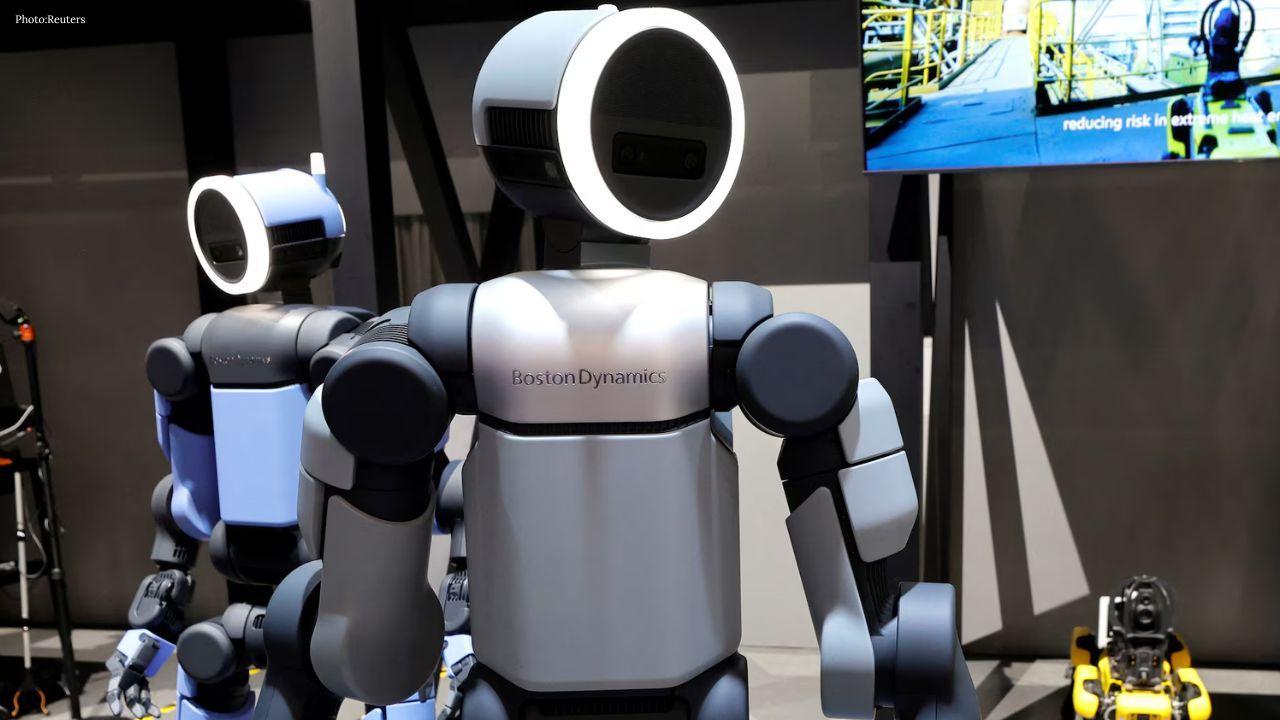
Life sciences company Danaher has announced plans to launch its first AI-powered autonomous research laboratory, with the facility expected to operate at scale in early 2027. The company says the project is designed to make scientific research involved in drug discovery and development faster and more efficient. The planned facility will bring artificial intelligence, robotics and laboratory technologies from multiple Danaher operating companies into a connected research workflow. The move reflects a growing effort across the life sciences industry to use artificial intelligence not only for analysing scientific information but also for carrying out physical laboratory work.
The planned AI research lab is expected to combine software-based intelligence with automated laboratory equipment. Rather than relying on scientists to manually complete every stage of an experiment, the system will be designed to connect several steps in the research process. AI will help generate molecular designs, while robotic systems will build and test the resulting molecules. The results from those experiments will then be returned to the AI model. This creates a continuous feedback process in which information from one round of testing can be used to improve the next round of molecular designs. Danaher expects this approach to create a more connected and automated research environment.
One of the key objectives of the facility will be the development of custom antibodies and other molecular tools. Antibodies are proteins that can bind to specific biological targets, making them important in areas such as medical research, diagnostics and therapeutic development. According to Danaher, its planned AI-powered lab will use artificial intelligence to help identify and design molecules capable of binding to selected biological targets. Once a potential molecule is designed, automated systems will build and test it. The results will then become part of the next stage of the process. This combination of design, physical experimentation and automated learning is intended to reduce the time needed to move through repeated research cycles.
Danaher expects the new approach to significantly increase the pace of molecular research. The company projects that the laboratory could make molecule discovery about eight times faster. It also expects the system to enable a tenfold increase in the number of target-binding molecules generated each year. These figures are company projections for the planned operation rather than independently verified results from a facility already operating at scale. If the expected improvements are achieved, automated systems could allow researchers to test a much larger number of potential molecular candidates within the same period. That could become particularly important in research areas where scientists need to evaluate thousands of possible molecular designs before identifying promising candidates.
JC Gutierrez-Ramos, Danaher's chief science officer, said the automation would allow scientists to spend more time on difficult scientific problems where human judgement and insight remain important. The idea is not simply to replace scientists with machines. Instead, the planned model is intended to shift repetitive experimental work toward automated systems while allowing researchers to concentrate on questions that require deeper scientific reasoning. In an automated research cycle, scientists could define research goals and biological targets, while AI systems and laboratory robots handle repeated design and testing steps. This could change how research teams divide their time between experimental work, data analysis and scientific decision-making.
The planned autonomous research lab is expected to operate through a continuous sequence of activities. First, AI systems can propose molecular designs based on a specific biological target. The laboratory's automated equipment can then produce the selected molecules. Robotic systems would subsequently test the molecules and collect information about how effectively they interact with their intended targets. That experimental information can then be fed back into the AI system. The model can use the new results to improve subsequent designs, creating another cycle of prediction, production and testing. Repeated cycles could allow the system to explore molecular possibilities much faster than a conventional workflow in which each stage is handled separately.
Read Also: Musk Welcomes German Support for Tesla Driver Assistance Tech as EU Approval Push Continues
Danaher says the facility is part of a wider company programme focused on developing a fleet of intelligent laboratory instruments. The company operates across several areas of the life sciences sector, giving it access to different laboratory technologies and scientific platforms. By connecting these technologies, Danaher aims to create an environment where instruments can communicate as part of a larger automated workflow rather than functioning as isolated pieces of equipment. The planned facility therefore represents more than a single AI experiment. It is part of a broader attempt to bring automation and artificial intelligence deeper into laboratory operations.
The drug discovery process can require large numbers of experiments and extensive analysis. Researchers often need to identify promising molecules, test their properties and repeatedly adjust their designs before a candidate can move further through development. Artificial intelligence can potentially assist by analysing large datasets and identifying patterns that may help researchers decide which molecular structures should be tested next. When AI is connected directly to automated laboratory equipment, the process can become more continuous. Instead of stopping after an AI prediction, the system can potentially move from prediction to physical experiment and then use the experimental results to improve future predictions.
The planned Danaher facility also illustrates how laboratory automation is moving beyond individual robotic instruments. Traditional automation can perform specific repetitive tasks. An autonomous laboratory aims to connect multiple stages and allow software systems to determine or recommend what should happen next based on previous results. This makes the concept of an AI-powered lab different from simply adding an AI tool to an existing laboratory. The objective is to create an integrated system in which artificial intelligence, robotics, instruments and scientific data operate together.
For scientists, greater automation could mean less time spent on repetitive laboratory procedures. Researchers could potentially use automated systems to run larger experimental programmes while focusing their own efforts on designing research strategies, interpreting complex findings and deciding which scientific questions should be pursued. However, the success of such systems will depend on the quality of their models, laboratory equipment, experimental data and validation processes. The ability to automate an experiment does not automatically guarantee that its results are scientifically meaningful. Human oversight and scientific evaluation remain important parts of research.
Danaher expects the new facility to operate at scale in early 2027. The project will be closely watched because it brings together several technologies that are increasingly being adopted across life sciences: artificial intelligence, robotics, laboratory automation and advanced molecular design. If the company's projected improvements are achieved, the facility could demonstrate how autonomous laboratory systems can increase the number of experiments researchers are able to conduct while reducing the time required for repeated research cycles. For now, the project remains a planned initiative, with the full impact expected to become clearer once the laboratory begins operating at scale.







Danaher to Launch AI-Powered Autonomous Research Lab in 2027
Danaher plans an AI research lab for 2027, combining robotics and automation to speed up drug discov

Musk Welcomes German Support for Tesla Driver Assistance Tech as EU Approval Push Continues
Elon Musk welcomes Germany's backing for Tesla FSD as the company seeks EU approval amid speed, safe

Microsoft and Nvidia CEOs to Unveil AI Laptop at San Francisco Event
Microsoft and Nvidia showcase a new AI laptop with RTX Spark chips as they push powerful local AI co

Man to face charges over perfume thefts at Changi Airport
A 47-year-old man faces charges over perfume theft at Changi Airport after six items worth nearly S$

Google Signs 3.6-GW Power Deal With Constellation Energy in US
Google signs a 3.6-GW power deal with Constellation Energy, including nuclear power upgrades to supp

Harmanpreet Kaur Steps Down as India Captain Across All Formats
Harmanpreet Kaur steps down as India captain across all formats after a remarkable leadership journe