
You have not yet added any article to your bookmarks!
Join 10k+ people to get notified about new posts, news and tips.
Do not worry we don't spam!
Post by : Rohit Dhiman
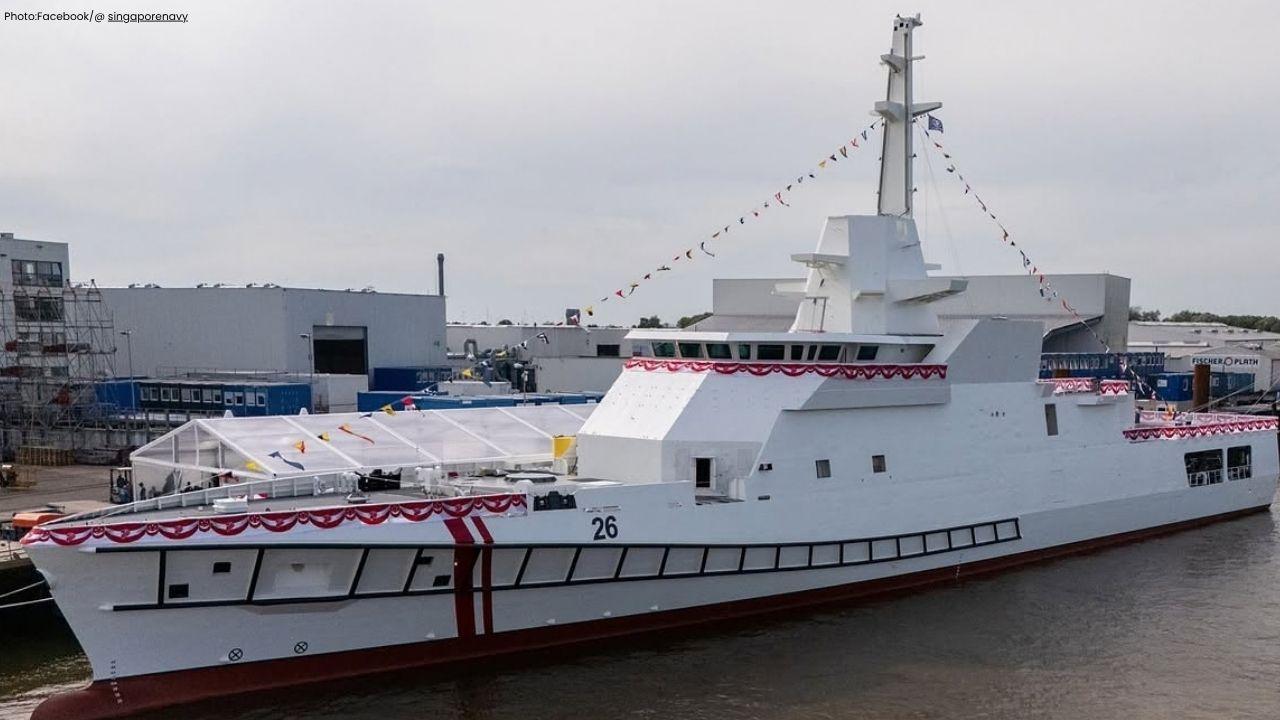
Singapore has taken another step in strengthening its maritime security capabilities with the launch of the first new Sentinel-class Offshore Patrol Vessel in Germany. The vessel, named , was launched on Oct 1, 2026, as part of a programme involving four new offshore patrol vessels ordered by Singapore. The ships are being constructed by German shipbuilder Fassmer under a programme designed to support Singapore's growing maritime-security requirements. The launch represents an important stage in the construction programme. With the first vessel now in the water, the project will move forward towards fitting-out, trials and eventual delivery. The new ships are expected to begin operational service from 2028.
The launch ceremony brought together senior defence officials from Singapore and Germany. Singapore's Minister for Defence Chan Chun Sing attended the ceremony with his wife, who served as the vessel's Lady Sponsor and formally christened the ship. German Federal Minister of Defence Boris Pistorius was also present, along with German Navy Chief Vice Admiral Wilhelm Tobias Abry. Republic of Singapore Navy Chief Rear Admiral Sean Wat and other senior defence officials from both countries also attended the event. The presence of senior officials from both nations highlighted the importance of the vessel programme and the defence cooperation involved in its development.
Singapore has ordered four vessels under the new programme. Unlike conventional commissioned warships operated directly as naval combatants, these ships will be Singapore Government Vessels. They are intended to support the country's maritime-security requirements and respond to an expanding range of operational tasks. The vessels are being developed to handle duties associated with patrol, surveillance, maritime security and other missions that may require a flexible offshore platform. According to the information supplied by the Republic of Singapore Navy, the new vessels are intended to address increased operational demands and a broader maritime-security mission. This makes the programme particularly significant for Singapore, whose economy and national security are closely linked to the sea and major international shipping routes.
The new class will progressively replace Singapore's existing Sentinel-class Maritime Security and Response Vessels. Those older vessels entered service with Singapore's Maritime Security and Response Flotilla after being converted from former Fearless-class patrol boats. The replacement programme will therefore provide Singapore with a newer generation of vessels for maritime-security duties. The introduction of the new ships is expected to give the country's maritime-security forces access to a larger platform with greater flexibility for different types of missions. The first new vessel is scheduled to enter operational service from 2028.
The new ships are based on Fassmer's OPV90 Mk II design. The design was publicly presented at IMDEX Asia in Singapore in May 2025 and represents a larger development of Fassmer's earlier offshore patrol vessel family. The vessel measures approximately 94.9 metres in length. The design has connections to Fassmer's wider offshore patrol vessel portfolio, including the 86-metre family of vessels and Germany's Potsdam-class ships operated by the country's Federal Police. The larger platform provides room for aviation facilities, boats, mission equipment and other systems required for extended maritime-security operations.
The OPV90 Mk II design includes a range of weapons and sensor systems. The published design is equipped with a Leonardo 76 mm Strales gun positioned at the front of the vessel. It also features two 30 mm remotely controlled gun mounts. For surveillance and situational awareness, the design includes a Saab Giraffe 1X rotating AESA radar, a fire-control radar and navigation radars. However, Fassmer has not publicly confirmed whether Singapore's vessels will receive exactly the same equipment configuration as the publicly displayed design. That distinction is important because the final equipment fit of a vessel can differ according to the requirements of the customer and the mission profile for which the ships are being built.
Read Also: Thai Police Arrest Jet Skier for Riding Through Flooded Bangkok Street
One of the notable features of the design is its ability to support aviation operations. The vessel includes facilities for a helicopter weighing up to 12 tonnes. This capability can significantly expand the range of maritime missions the ship can support, particularly when aerial surveillance, transport or other helicopter-assisted operations are required. The design also incorporates two RHIB launch bays. RHIBs, or rigid-hull inflatable boats, can be used to deploy personnel away from the main vessel for boarding, inspection, rescue and other maritime operations. The vessel also has dedicated space for containerised mission systems. Four 20-foot ISO containers can be carried in a dedicated area positioned ahead of the flight deck. Additional mission modules can also be accommodated internally.
The flexibility of the vessel is one of the central features of the design. Rather than being limited to a single task, the new patrol vessels can support different types of maritime-security operations. Potential roles include routine patrols, surveillance, boarding operations and disaster-relief missions. The vessels can also support unmanned-system operations and the deployment of specialised equipment. This multi-role approach is particularly relevant for government-operated vessels that may be required to respond to changing situations at sea. A ship with modular mission spaces can potentially be adapted for different requirements without relying entirely on a fixed configuration.
The OPV90 Mk II design also incorporates features intended to improve the vessel's handling and survivability during maritime operations. The ship is fitted with dual bow thrusters, which are designed to improve manoeuvrability. This can be particularly useful during operations in confined waters, harbour areas and situations requiring precise ship handling. The hull also incorporates forward bracing intended to provide protection during close-quarters encounters. Such features are relevant to maritime-security missions, where vessels may sometimes have to operate close to other ships or conduct boarding-related activities.
Although the vessel was launched in Germany, construction of the first two hulls began at BLRT Western Shipyard in Klaipėda, Lithuania, as part of Fassmer's programme for Singapore. The construction programme therefore involves an international industrial effort, with the ships being developed through cooperation across different European locations before ultimately supporting Singapore's maritime-security requirements. With now launched, the programme has reached a new phase. The vessel will continue through fitting-out and testing before it can be delivered and eventually enter operational service.
Launching a ship is a major milestone, but it does not mean that the vessel is immediately ready for operational deployment. Following the launch, the ship must undergo further work, including fitting-out, system integration and trials. These stages are essential for checking the vessel's propulsion, navigation, communications, sensors, weapons and other systems. Sea trials are also required to assess how the ship performs under actual maritime conditions. Only after the necessary testing and acceptance procedures are completed can the vessel progress towards operational service. For Singapore, the first new vessel is expected to become operational from 2028.
Singapore occupies a strategically important position along major international maritime routes. The country's economy is heavily connected to shipping, trade and maritime activity. Maintaining safe and secure waters is therefore an important national priority. The new maritime security vessels are intended to help Singapore respond to a wider range of operational requirements. Their offshore patrol design, aviation facilities, RHIB launch capability and modular mission spaces give them the flexibility to undertake different types of government maritime missions. The ships will also operate alongside Singapore's wider naval and maritime-security fleet.
The new vessels will become part of a broader maritime force that includes Independence-class Littoral Mission Vessels, Formidable-class frigates and submarine forces. However, the new Sentinel-class ships will operate in a maritime-security role under Singapore Government Vessel status. This distinction reflects their intended mission profile. While Singapore maintains sophisticated naval combat capabilities, maritime security also requires vessels designed for patrol, surveillance, law-enforcement support, boarding operations, emergency response and other non-traditional missions. The new vessels are therefore expected to complement, rather than simply duplicate, Singapore's existing naval capabilities.
The launch of marks a significant milestone in Singapore's four-vessel programme. The project combines a modern offshore patrol vessel design with modular mission capabilities, aviation support and advanced sensors. The first ship's launch also provides a clearer indication of the progress being made towards the planned 2028 operational entry. The remaining vessels will continue through their respective construction and delivery schedules as the programme progresses. For Singapore, the arrival of this new generation of patrol vessels is part of a broader effort to maintain effective maritime surveillance and security capabilities in an increasingly demanding operating environment.
It is a new offshore patrol vessel being built for Singapore to support maritime-security and government missions.
Singapore has ordered four new vessels under the programme.
The first vessel, was launched in Germany on Oct 1, 2026.
The ships are being built for Singapore by German shipbuilder Fassmer.







Michael Bracewell Chooses Casual Contract, Targets BBL Opportunity
Michael Bracewell moves to a casual contract as he eyes a BBL opportunity while remaining available

Tuchel Says Alex Scott Can Challenge Declan Rice for England Midfield Spot
Thomas Tuchel says Alex Scott can challenge Declan Rice for an England midfield place after his impr

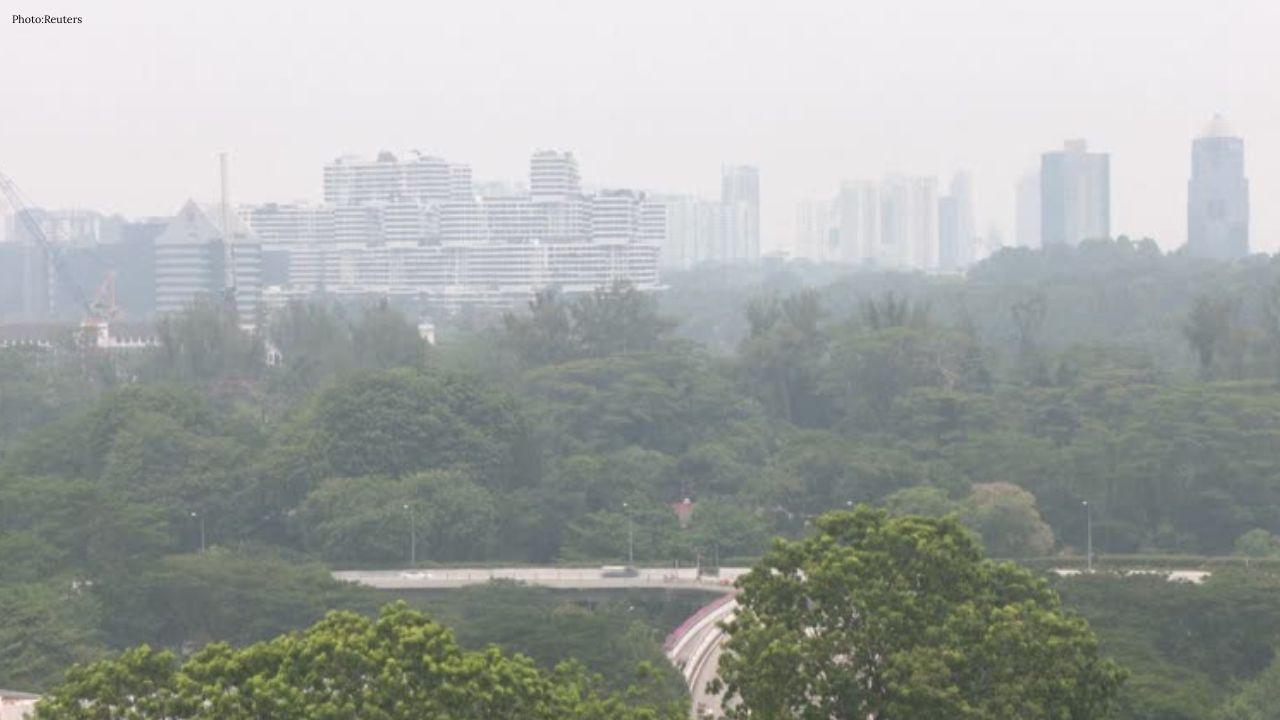
Air Quality Turns Unhealthy in Central and Western Singapore Amid Haze
Singapore haze pushes PSI above 100 in central and western areas as smoke from regional hotspots rai

PM Modi Pays Tribute to Mahatma Gandhi, Urges People to Support Khadi
PM Modi pays tribute to Mahatma Gandhi on Gandhi Jayanti and urges citizens to support Khadi and the

Amazon Seeks to Offload $8 Billion in Nvidia Chips to Investors
Amazon plans to move $8 billion in Nvidia chips to investors, using a new financing model to strengt

Samsung Raises Galaxy S26 Prices as Memory Chip Costs Rise
Samsung raises Galaxy S26 prices in South Korea as rising memory chip costs put pressure on smartpho

