You have not yet added any article to your bookmarks!
Join 10k+ people to get notified about new posts, news and tips.
Do not worry we don't spam!

Post by : Anis Farhan
The Indian equity markets are gearing up for a crucial trading session on January 23, 2026, with a blend of domestic and global forces shaping expectations. A modest relief rally was witnessed in the previous session, but the technical landscape suggests that caution remains warranted. The Nifty 50’s ability to secure a sustained close above the 25,850 level will be instrumental in determining the near-term trend. Until then, consolidation and volatility are expected to feature prominently. Support and resistance structures, combined with derivative positioning and macroeconomic signals, form the backdrop against which traders should situate their strategies. This trade setup breakdown covers fifteen critical dimensions, providing a granular view of what lies ahead.
The Nifty 50 index is at a technical inflection point following its bounce above the 200-day Exponential Moving Average (EMA). However, the broader pattern remains cautious with key moving averages acting as potential resistance. Near-term immediate supports are seen around 25,160 and 24,900, while resistance clusters emerge between 25,500 and 25,600. A convincing breach of these resistance zones could unlock further upside, but until that happens, trading is expected to remain range bound.
The Bank Nifty showed notable strength, rallying around 400 points from recent lows. Technical formations on daily charts indicate potential indecision, marked by patterns like the doji, which typically signal equilibrium between bulls and bears. Resistance levels hinge near 59,485–59,949, while a failure to sustain above these zones could see support tested around 58,800–58,449. Momentum oscillators still lean bearish in the absence of sustained buying interest.
Derivatives activity provides a window into trader positioning and possible inflection zones for the spot market. On the call side, the 26,000 strike hosts the highest open interest, followed closely by strikes at 25,500 and 25,800. This cluster suggests that resistance pressure may materialize near these levels, limiting runaway rallies. Maximum call writing around 25,400 further underscores this potential ceiling.
On the put side, significant open interest sits at the 25,000 strike, reinforcing its role as a crucial support area. Additional support is seen in the 25,200–25,300 zone. Traders often monitor this bouquet of strikes to anticipate where significant defensive activity could emerge, shaping intraday volatility and broader trend narratives.
In Bank Nifty contracts, the 60,000 strike has emerged as a focal point for calls, pointing to resistance. Conversely, unwinding of contracts around 59,700–58,800 may signal shifting trader bias and could presage short-term volatility as positions adjust to evolving price action.
International derivative markets provide early signals about how Indian benchmarks might react at the cash market open. The SGX Nifty futures have shown weakness in overnight trade, implying a softer opening bias for the domestic indices. Weakness in these offshore contracts often reflects broader risk-off sentiment or delayed reaction to global macro data, and can lead domestic markets to open below previous session’s close.
Overseas markets have shown mixed trends, with notable gains in major U.S. indices such as the Dow, NASDAQ, and S&P futures. Asian markets also offered a mixed picture with indices like the Nikkei and Hang Seng trading modestly higher. Such diverse signals reflect global investor caution, possibly triggered by macroeconomic data or geopolitical developments, which can temper trading enthusiasm in Indian equities.
Volatility indicators, especially the India VIX, remain elevated — a reflection of lingering uncertainty among market participants. While relief rallies can provide short bursts of optimism, elevated volatility often suggests that investors are still pricing in risk, which can keep trading ranges tight and discourage aggressive positioning. A sustained contraction in the VIX is typically seen as a sign of confidence returning, but the current elevated levels counsel patience and risk management.
Recent trading sessions have shown a shift in breadth metrics with more advancing shares compared to decliners on major exchanges, signaling that buying interest has spread across more stocks. This can be a healthy sign in a consolidating market, offering technical support to key indices and preventing prolonged downtrends. However, breadth improvements need confirmation through sustained volume and higher highs in key benchmarks.
While broad indices provide the macro canvas, sectoral shifts can offer localized trading opportunities. Financials, technology, energy, and select industrials have shown varying degrees of resilience in recent sessions. Domain expertise and an eye toward earnings trends can help refine sector positioning. For instance, banking stocks often lead during interest rate related shifts, while energy and commodities respond sharply to global price swings. Sector rotation can therefore play a pivotal role in shaping near-term alpha generation.
Mid and small caps often exhibit heightened sensitivity to liquidity flows and investor risk appetite. Recent market behavior suggests patchy performance among these segments, with some names offering rebounds while others continue to lag. Traders need to balance higher reward expectations with cautious stop-loss discipline due to the segments’ inherent volatility.
Central bank actions and rate expectations affect equity valuations, especially of interest rate sensitive sectors like banking and real estate. While there have been no recent policy changes, traders remain vigilant for commentary around future rate directions, inflation data, and GDP releases, all of which could recalibrate risk premia. Macro indicators thus feed directly into market risk assessments.
Commodities such as crude oil and precious metals have shown notable moves in recent sessions, driven by global demand expectations and geopolitical factors. Oil prices rising can temper sentiment as inflationary concerns mount, while metals like gold often act as a hedge during risk-off phases. Domestic equities often mirror these commodity swings, making them essential components of the pre-market outlook.
The comprehensive picture for January 23 indicates a market at a technical crossroads. With key support around 25,160 and resistance between 25,500–25,600 for the Nifty, traders should watch for breakout or breakdown on either side. Derivative open interest suggests significant activity around 25,000–26,000, making these levels pivotal. Macro cues and volatility measures counsel disciplined risk approaches, while global trends and SGX Nifty signals hint at a potentially soft start. Sector analysis and breadth metrics provide additional layers of insight for active strategies.
Disclaimer: The content presented in this article is for informational purposes only and should not be construed as financial advice. Market conditions are subject to rapid change, and readers should conduct their own research or consult a financial professional before making investment decisions.








Lamborghini Catches Fire on Singapore's ECP, Causing Heavy Traffic
A Lamborghini caught fire on Singapore's ECP, causing heavy traffic and bus delays. No injuries were

Bangkok Airport Duty-Free Area Flooded by Pipe Burst
A burst water pipe flooded the duty-free shopping area at Bangkok's Suvarnabhumi Airport on July 16,

Nine Monks Killed in Thailand Pickup Truck Tragedy
An 11-year-old boy driving a pickup truck crashed into monks during a pilgrimage in northeastern Tha
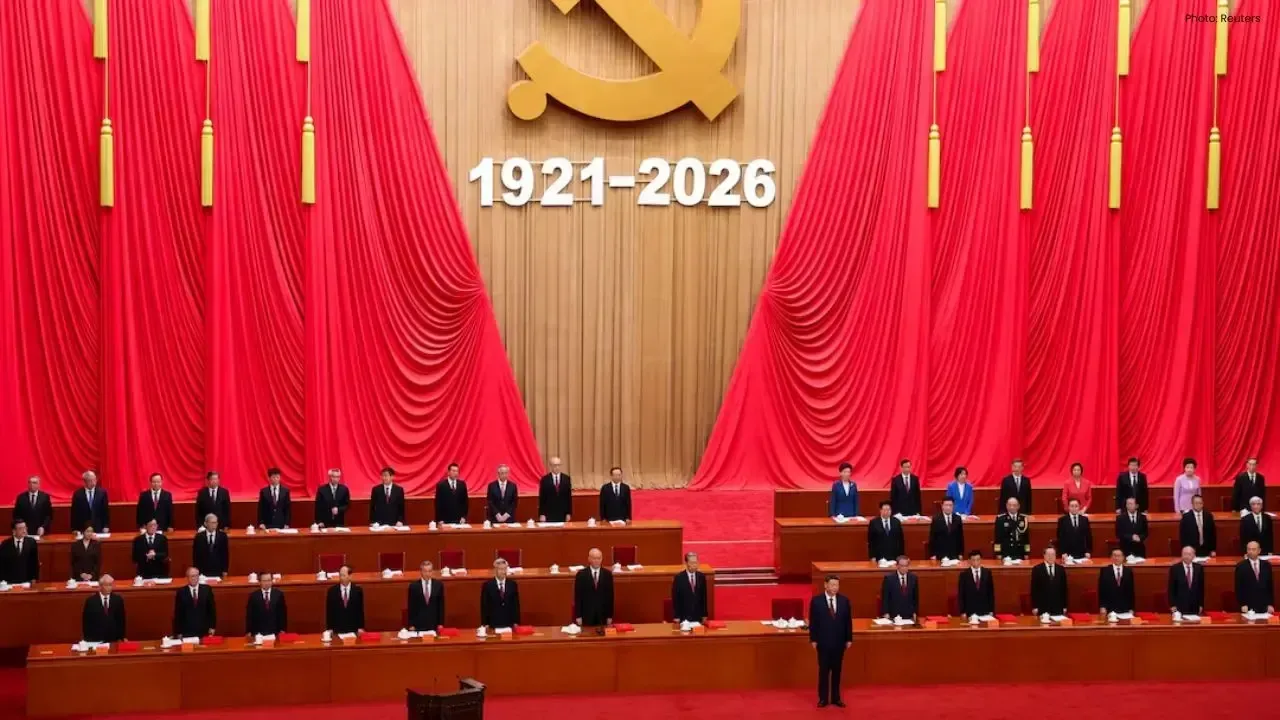
Anwar Congratulates Xi on CPC's 105th Anniversary
Malaysia reaffirms strong ties with China as PM Anwar Ibrahim sends a congratulatory letter to Presi

Thai Agriculture Team Reviews 2026 Farm Development Plans
Agriculture Ministry officials inspected livestock and organic rice projects in Nakhon Sawan to moni

Thailand, Canada Boost Ties in PM-Level Phone Talks
Thailand and Canada agreed to strengthen trade, security, OECD cooperation and ASEAN-Canada FTA talk