You have not yet added any article to your bookmarks!
Join 10k+ people to get notified about new posts, news and tips.
Do not worry we don't spam!
Post by : Samjeet Ariff
Turkish desserts stand out for their richly layered flavors and historical significance, deeply rooted in Ottoman traditions. These treats aren't merely desserts; they're a celebration of culture, often enjoyed during special occasions, family gatherings, and tea time. Among various sweet offerings, Baklava, Kunefe, and Lokum are the most celebrated. This guide provides a comprehensive overview of each dessert, detailing their ingredients, taste, texture, typical prices, and the best times to indulge, allowing food enthusiasts to navigate Turkish sweet traditions with ease.
Unlike Western sweets that lean towards buttercream and chocolate, Turkish confections focus on a blend of nuts, dairy, filo pastry, and fragrant sugar syrups flavored with floral notes like rose and orange blossom. The sweetening often comes from syrup, giving a glossy finish and a rich sweetness. Typically, these desserts are served in modest portions due to their richness.
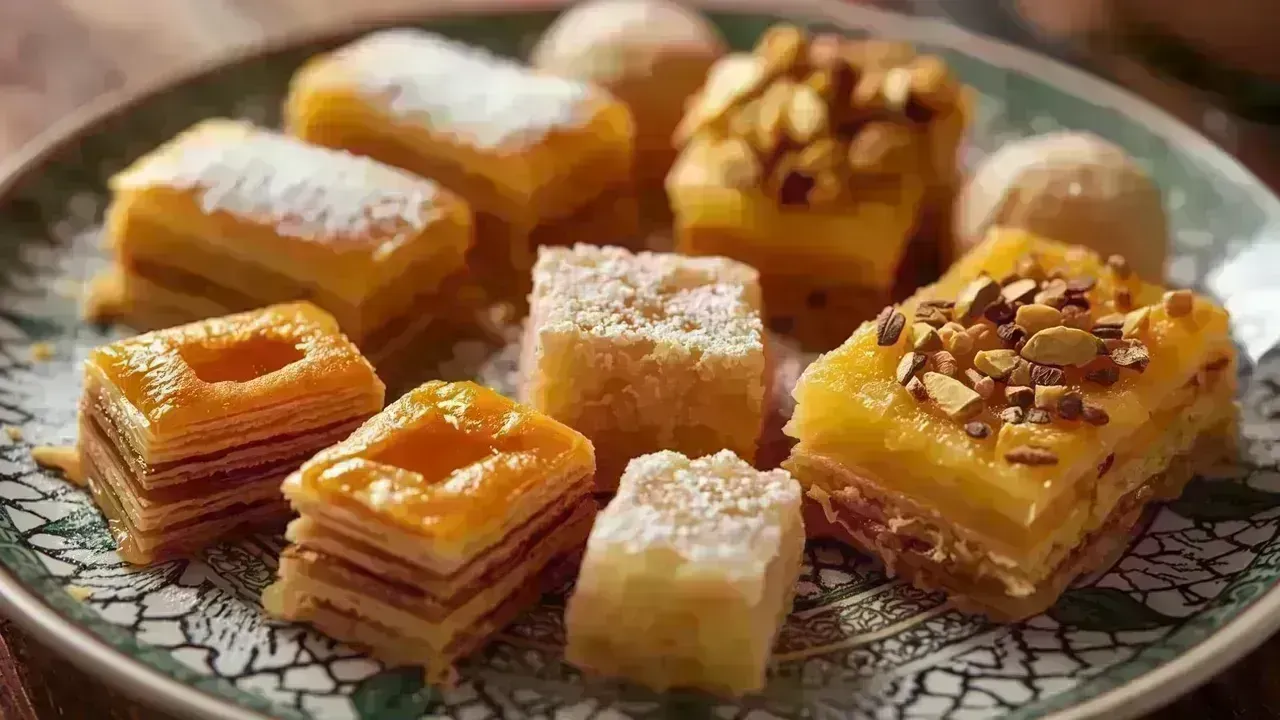
Known as the quintessence of Turkish desserts, Baklava is synonymous with the culinary genius of the Ottoman Empire. Crafted with numerous thin layers of butter-brushed filo pastry interspersed with finely chopped nuts and drenched in sugar syrup post-baking.
The traditional version is predominantly pistachio, particularly from Gaziantep, although variations with walnuts and hazelnuts are popular. Quality baklava strikes a balance between crispy exteriors and soft innards, steering clear of excessive greasiness.
With a hint of lemon in the syrup to offset the sweetness, authentic baklava should never be soggy. Typically cut into diamond or square pieces, it's best served at room temperature and is a staple post-meal, especially during festive occasions. Enjoying it with Turkish tea or black coffee enhances the experience.
The classic pistachio baklava reigns supreme, while walnut baklava is often found in home kitchens. There's also Şöbiyet, a cream-infused variation that is denser. Additionally, a modern twist is cold baklava, served chill with a milky syrup and cocoa for a lighter experience.
Kunefe presents a distinct experience compared to baklava. This warm dessert is prepared using thin strands of kadayif dough layered with unsalted cheese, baked to a crispy finish, and lightly soaked in syrup.
Always enjoyed warm, the melting cheese creates a delightful contrast with the crispy outer layer, adorned with crushed pistachios for added texture and visual appeal.
The taste combines sweet, salty, and creamy notes, making kunefe a truly indulgent offering.
Typically reserved for serving fresh and after meals, kunefe is often too rich to take away, particularly popular in southern Turkey.
Unlike many typical Turkish desserts, kunefe isn’t overwhelmingly sweet. The presence of cheese provides a savory touch, making it appealing even for those who shy away from overly sugary treats. Due to its richness, smaller portions are preferable.
Known as Turkish delight, Lokum is a tender, chewy candy made from sugar, starch, and flavorings, featuring a gel-like consistency and usually coated with powdered sugar or coconut flakes.
Common flavors include rose, lemon, orange, and mastic, while modern spins feature pistachio, hazelnut, pomegranate, chocolate, and coffee.
Lighter than baklava or kunefe, lokum pairs beautifully with Turkish tea or coffee and is frequently given as a gift, often presented in decorative boxes.
Quality lokum should be soft yet elastic, melting slowly in the mouth without being sticky or excessively sweet.
Lokum is a symbol of hospitality, commonly offered to guests and enjoyed during informal visits, tea gatherings, and holiday celebrations. It can be consumed regularly in small portions, unlike the heavier baklava and kunefe.
Baklava is characterized by its crisp, nutty, syrupy layers. Kunefe boasts a crunchy exterior paired with a creamy warm center, while lokum is recognized for its soft, chewy, subtly sweet texture. Baklava offers intensity, kunefe embodies indulgence, and lokum exudes a refined simplicity.
Among these, baklava ranks as the sweetest with its heavy syrupy richness. Kunefe presents moderate sweetness, counterbalanced by its cheese, while lokum delivers a mild sweetness suitable for lighter palates.
Baklava is generally moderately priced and readily available across various bakeries. Kunefe tends to be pricier due to the freshness required in its preparation. Lokum is the most affordable option, sold by weight in specialty shops.
Newcomers to Turkish cuisine should begin with pistachio baklava to truly appreciate the heritage behind Turkish desserts. Kunefe is perfect for those who cherish warm, cheesy flavors, while lokum works well as a delightful pairing with tea or coffee.
Purchasing baklava from low-quality outlets may result in overly sweet or greasy products. Ordering kunefe for takeout can sacrifice its quality. It's advisable to pick lokum with authentic flavors for a satisfying experience.
Reflecting a vibrant culinary tradition, Turkish desserts signify balance, craftsmanship, and generous hospitality. While baklava symbolizes deep-rooted culture and opulence, kunefe offers warmth and richness, and lokum portrays elegance and charm. Familiarity with these desserts enriches the appreciation of Turkish gastronomy beyond mere flavors, transforming every taste into a cultural journey.
The information provided here is for educational purposes. Variations in ingredients, preparation methods, and sweetness can differ based on region and vendor.










Lamborghini Catches Fire on Singapore's ECP, Causing Heavy Traffic
A Lamborghini caught fire on Singapore's ECP, causing heavy traffic and bus delays. No injuries were

Bangkok Airport Duty-Free Area Flooded by Pipe Burst
A burst water pipe flooded the duty-free shopping area at Bangkok's Suvarnabhumi Airport on July 16,

Nine Monks Killed in Thailand Pickup Truck Tragedy
An 11-year-old boy driving a pickup truck crashed into monks during a pilgrimage in northeastern Tha

Anwar Congratulates Xi on CPC's 105th Anniversary
Malaysia reaffirms strong ties with China as PM Anwar Ibrahim sends a congratulatory letter to Presi

Thai Agriculture Team Reviews 2026 Farm Development Plans
Agriculture Ministry officials inspected livestock and organic rice projects in Nakhon Sawan to moni

Thailand, Canada Boost Ties in PM-Level Phone Talks
Thailand and Canada agreed to strengthen trade, security, OECD cooperation and ASEAN-Canada FTA talk