
You have not yet added any article to your bookmarks!
Join 10k+ people to get notified about new posts, news and tips.
Do not worry we don't spam!
Post by : Rameen Ariff
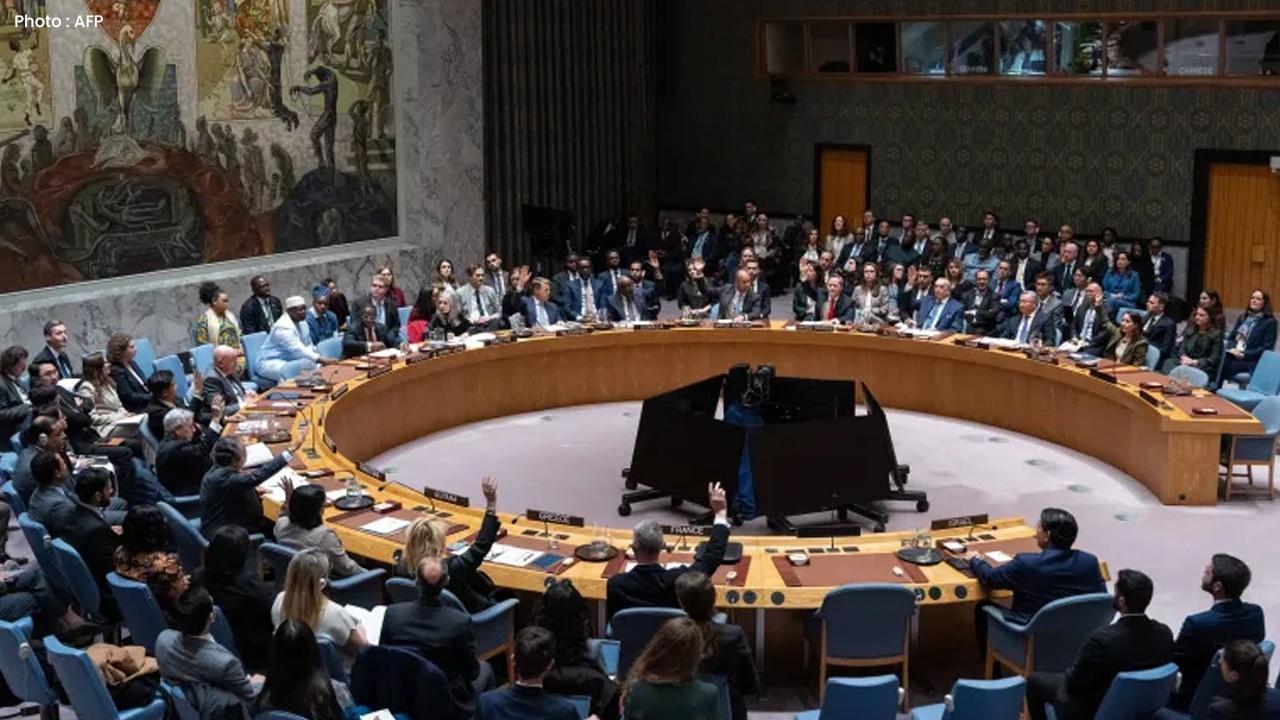
The United Nations Security Council has ratified a groundbreaking resolution aimed at establishing a transitional administration in Gaza while also authorizing the deployment of an International Stabilization Force. This resolution, put forth by the United States as part of President Donald Trump’s extensive Gaza peace framework, received approval on November 17, 2025, with a notable 13 affirmative votes. Russia and China abstained from the vote, but no member exercised a veto.
As outlined in the resolution, the international force is tasked with bolstering security, managing borders, coordinating humanitarian efforts, and collaborating closely with both Egypt and Israel, alongside a vetted Palestinian police force. Furthermore, it sets forth criteria for a credible pathway toward Palestinian self-governance and eventual statehood, contingent upon the implementation of governance reforms and advancements in Gaza's reconstruction.
Recent Developments
The Council voted on the US-drafted resolution during a session in New York, with the intent to provide both a mandate for international intervention in maintaining stability in Gaza and support for the fragile ceasefire between Israel and Hamas. The resolution also proposes steps for demilitarization and an agreed timetable for Israeli troop withdrawal, based on specific security benchmarks.
Details and Timings
Venue: UN Security Council Headquarters
Date: November 17, 2025
Outcome: Resolution passed 13–0, with two abstentions (Russia and China)
Mechanics of the Resolution
The resolution introduces several key measures:
A transitional administration for Gaza
An International Stabilization Force empowered to employ necessary measures
Initiatives for border security and humanitarian intervention
A framework for the disarmament of non-state militant groups
A gradual process for the withdrawal of Israeli military forces
A diplomatic framework aimed at facilitating Palestinian self-determination, contingent upon reforms in the Palestinian Authority
The resolution asserts that conditions may now allow for a “credible pathway” to Palestinian statehood once governance, security, and reconstruction criteria are satisfied.
Responses and Statements
Hamas Reaction
Hamas has outrightly rejected the resolution, arguing it fails to address the political and humanitarian rights of Palestinians. The group criticized the proposed international trusteeship over Gaza and the disarmament clauses, asserting it positions the international force as actively involved in the conflict.
US Stance
The US Ambassador to the UN described the vote as a pivotal move towards long-term stability in Gaza, signifying the potential for peace and security for both Israelis and Palestinians.
Algeria's Perspective
Algeria's ambassador expressed support for the ceasefire but emphasized that enduring peace cannot be attained without establishing justice and an independent Palestinian state.
Israel's Response
Israel's Prime Minister voiced strong objections to any mention of Palestinian statehood and reiterated the government's aim to demilitarize Gaza fully. The National Security Minister also criticized the resolution, rejecting international acknowledgment of Palestinian statehood.
Presidential Remarks
President Trump stated that the international committee managing Gaza’s transitional phase would feature global leaders and extended gratitude to various nations—including Qatar, Egypt, the UAE, Saudi Arabia, Indonesia, Turkiye, and Jordan—for their backing of the initiative.
Expert and Analyst Opinions
Numerous regional and international analysts commented that the resolution reflects the existing power dynamics in Gaza and the wider Middle East. They noted that while administrative control shifts, it does not fully confront long-term sovereignty or humanitarian issues. Some experts believe that the resolution perpetuates significant US and Israeli influence over Gaza's future.
Despite the ceasefire instituted since October 10, reports of airstrikes and limited humanitarian access in Gaza persist, underscoring an urgent need for aid, reconstruction, and a political framework addressing long-standing governance, security, and self-determination challenges.










PM Modi Pays Tribute to Mahatma Gandhi, Urges People to Support Khadi
PM Modi pays tribute to Mahatma Gandhi on Gandhi Jayanti and urges citizens to support Khadi and the

Amazon Seeks to Offload $8 Billion in Nvidia Chips to Investors
Amazon plans to move $8 billion in Nvidia chips to investors, using a new financing model to strengt

Samsung Raises Galaxy S26 Prices as Memory Chip Costs Rise
Samsung raises Galaxy S26 prices in South Korea as rising memory chip costs put pressure on smartpho

Lewis Hamilton Calls Singapore Grand Prix One of F1's Toughest Races
Lewis Hamilton discusses the demanding Singapore Grand Prix and brings Plus44 and Almave to Singapor

Denmark's Pandora Opens World's Largest Jewellery Factory in Vietnam
Pandora opens its largest jewellery factory in Vietnam, expanding global production, strengthening s

Gautam Gambhir Questions Batting-Friendly Pitches After India's Record ODI Chase
Gautam Gambhir questions batting-friendly ODI pitches after India’s record chase, calling for a bett

