You have not yet added any article to your bookmarks!
Join 10k+ people to get notified about new posts, news and tips.
Do not worry we don't spam!
Post by : Meena Ariff
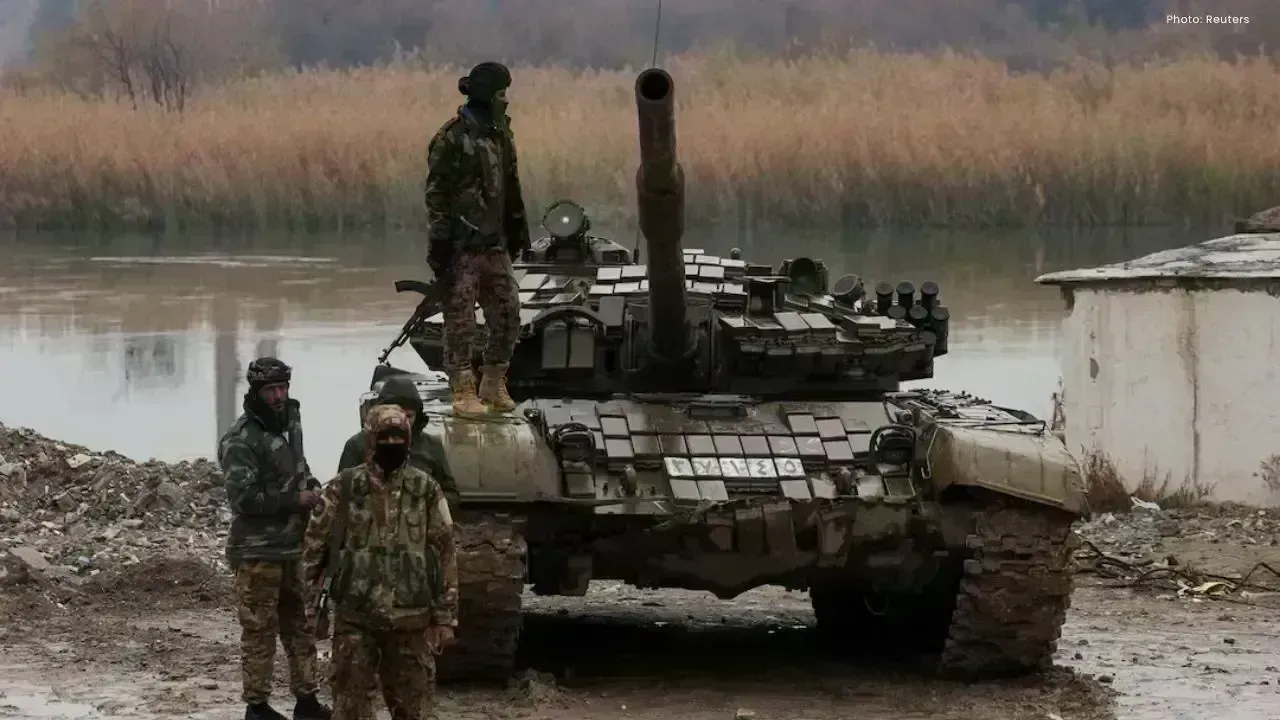
In a pivotal moment for Syria, the government and the Kurdish-led Syrian Democratic Forces (SDF) finalized a comprehensive agreement aimed at redefining power dynamics in the region. This deal, signed on Sunday, seeks to integrate Kurdish military and civil authorities into the national framework, effectively concluding days of conflict and the era of semi-independence for northeast Syria.
The accord follows a period of intense fighting, during which Syrian forces advanced into areas historically administered by the SDF. These regions include Deir al-Zor, the country’s primary oil and wheat production area, and Raqqa, which contains crucial dams affecting the Euphrates River’s electricity and water supply. Gaining control over these areas positions the Damascus government to enhance its economic and infrastructural leverage.
For more than a decade, the SDF maintained control of a semi-autonomous zone in northeastern Syria, bolstered by U.S. support and playing a key role in the defeat of the Islamic State in 2017. The SDF established its own security apparatus and governance structures but faced a new reality following the ousting of former President Bashar al-Assad in late 2024 and the advent of President Ahmed al-Sharaa’s Islamist government.
Negotiations between the Damascus administration and the SDF had stretched over months with aspirations for full integration by the end of 2025. As that timeline lapsed, tensions escalated, culminating in confrontations and rapid military incursions into Kurdish territories. The resulting agreement reflects a blend of military pressure and political dialogue.
According to the 14-point agreement, all SDF personnel will be incorporated into Syria’s defense and interior ministries as individual members rather than distinct Kurdish units, marking a significant concession by the SDF. The deal mandates the transfer of border checkpoints, oil and gas resources, and facilities housing Islamic State affiliates and their families.
This shift in power toward Damascus comes with painful implications for Kurdish leaders. SDF chief Mazloum Abdi confirmed that his forces would withdraw from both Deir al-Zor and Raqqa, predominantly Arab areas. He characterized the recent hostilities as an imposed conflict, asserting that the SDF had sought to prevent it.
Nevertheless, the deal also allows the SDF to nominate Kurdish representatives for high-ranking military and governmental positions. Moreover, it stipulates that in Hasakeh province—a stronghold for Kurds—the governor will be selected through consensus. These provisions hint at an effort, at least on paper, to retain Kurdish political sway within a unified Syria.
A sensitive aspect of the agreement involves the commitment to expel all non-Syrian individuals tied to the Kurdistan Workers’ Party (PKK). Turkey, which views the PKK as a terrorist organization, has long alleged its influence over SDF operations. Damascus has echoed these assertions, while the SDF denies them. Invoking the removal of PKK associates could alleviate pressure from Turkey and potentially enhance regional diplomatic relations.
Internationally, responses highlight the complexities of the situation. The United States finds itself balancing its support for the SDF, a critical ally in combating the Islamic State, with its backing of President Sharaa’s vision of a unified Syrian administration. U.S. envoy Tom Barrack described the agreement as a “pivotal inflection point,” cautioning that many intricate challenges persist.
Turkey welcomed the accord, expressing hope for peace and stability in Syria and beyond. Ankara's response underscores the desire among regional powers to curtail armed factions that operate outside state control.
Despite the announcement, the ground situation remains precarious, with reports of sporadic fighting suggesting that not all factions have completely ceased hostilities. The upcoming 24 to 48 hours will be critical as territorial handovers begin. The smoothness of this transition will serve as a litmus test for both parties’ commitments.
Amid these developments, deeper concerns linger. Many Kurds fear for their future under the new administration, especially in light of last year’s sectarian violence that resulted in the deaths of thousands of Alawites and Druze at the hands of government-aligned forces. These incidents raise questions about whether Damascus can genuinely safeguard Syria’s diverse communities.
While this agreement may close one chapter of conflict, it fails to resolve Syria’s enduring quest for peace. Shaped by coercion, apprehension, and exhaustion after years of warfare, the efficacy of this deal in fostering genuine unity or merely establishing a new facade of control will depend on its implementation in the weeks and months ahead.
Currently, Syria stands at a crucial juncture; while silence may overshadow the gunfire, the challenge of cultivating trust, justice, and stability in a fragmented nation is only just beginning.






George Russell Wins Dutch GP Sprint, Boosts Mercedes Morale
George Russell wins the Dutch GP Sprint from pole as Mercedes teammate Kimi Antonelli extends his F1

Australia 50/3 After Bangladesh Bowled Out for 64 in Second Test
Australia reached 50/3 after Bangladesh were bowled out for 64 in the second Test, with Mitchell Sta

Jordan Burroughs Returns to Wrestling with 2028 Olympic Dream
Jordan Burroughs returns to wrestling with Real American Freestyle as the Olympic champion eyes a po

Lamborghini Catches Fire on Singapore's ECP, Causing Heavy Traffic
A Lamborghini caught fire on Singapore's ECP, causing heavy traffic and bus delays. No injuries were

Bangkok Airport Duty-Free Area Flooded by Pipe Burst
A burst water pipe flooded the duty-free shopping area at Bangkok's Suvarnabhumi Airport on July 16,
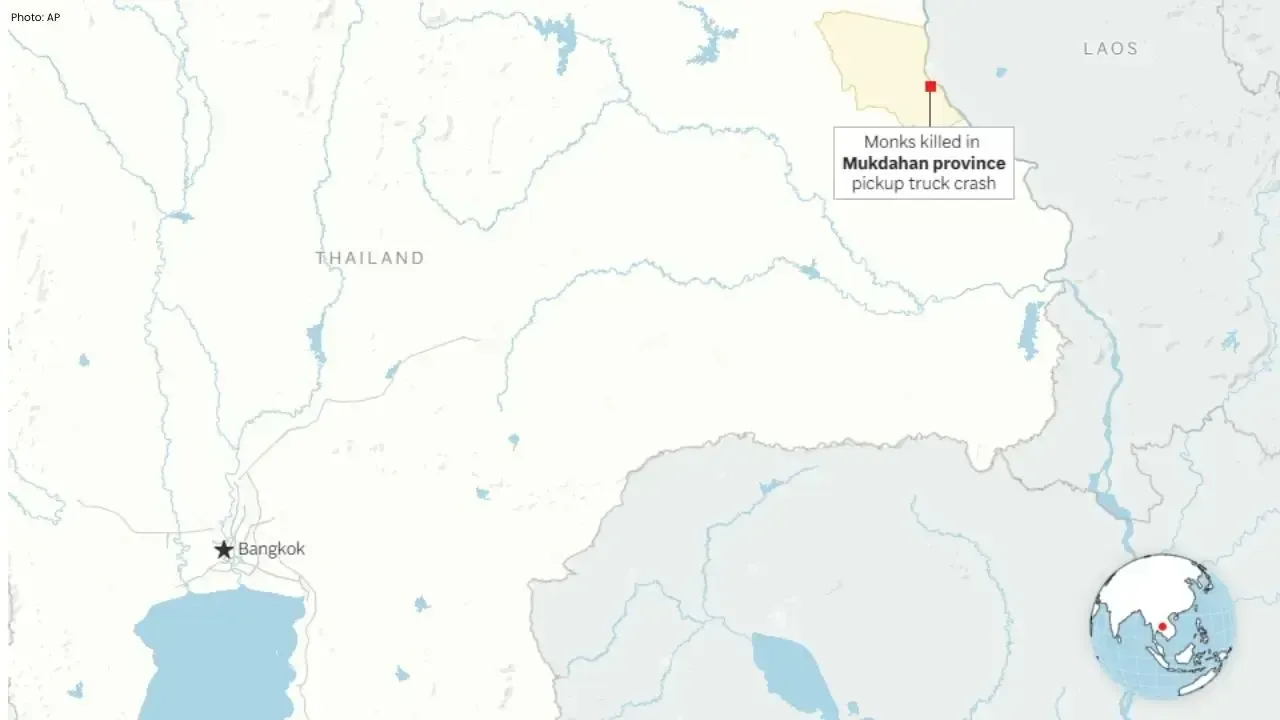
Nine Monks Killed in Thailand Pickup Truck Tragedy
An 11-year-old boy driving a pickup truck crashed into monks during a pilgrimage in northeastern Tha