
You have not yet added any article to your bookmarks!
Join 10k+ people to get notified about new posts, news and tips.
Do not worry we don't spam!
Post by : Anis Farhan
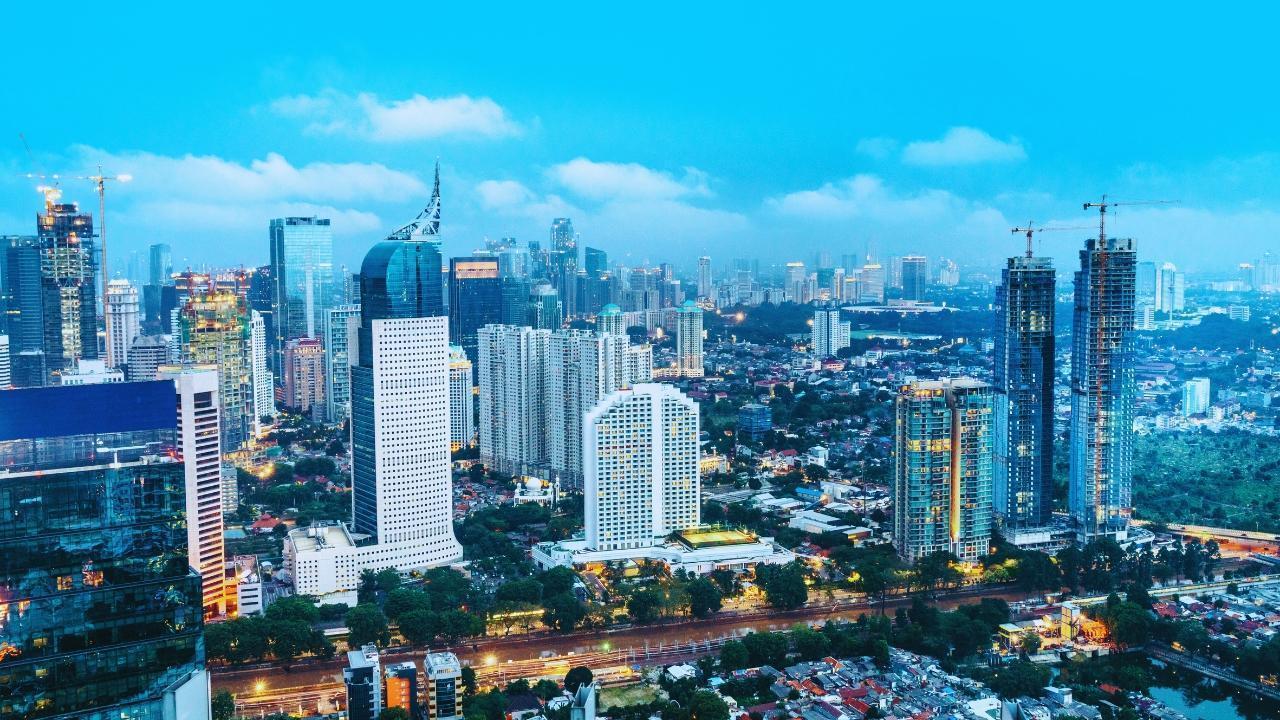
Indonesia’s boldest infrastructure project in decades—the construction of its new capital city, Nusantara—has now entered Phase 3, marking a shift from groundwork and masterplanning to vertical construction and core city development. Announced in 2019 and formalized in law by 2022, the Nusantara project aims to relocate the country’s administrative center from the overcrowded, sinking megacity of Jakarta to East Kalimantan on the island of Borneo.
As of July 2025, foundational structures, such as key ministerial buildings, roads, drainage systems, and housing zones, are either completed or nearing completion. Phase 3 now involves the erection of key government headquarters, smart infrastructure installations, and the acceleration of investment zones around the administrative core. It is a critical moment for President Joko Widodo’s legacy-defining project—a move that is both ambitious and unprecedented in modern Southeast Asian history.
Yet alongside progress, this phase also raises questions—particularly about financing, investor appetite, logistical bottlenecks, and the long-term environmental and socio-economic sustainability of Nusantara.
Phase 3 of the Nusantara project, which runs from mid-2025 through 2026, focuses primarily on the functional readiness of the city’s administrative core. This includes the Presidential Palace, the National Parliament complex, ministries and public service offices, digital command centers, and green transport corridors.
Beyond administrative architecture, Phase 3 introduces integrated transit systems, clean energy grids, and digital infrastructure, including 5G-ready networks and AI-enabled urban planning dashboards. The Indonesian government envisions Nusantara as a “smart forest city,” combining green infrastructure with next-generation digital ecosystems.
Success in this phase will determine whether the capital transition—planned to begin officially by late 2026—can proceed on schedule. Delays, underfunding, or execution failures at this stage could erode public and investor confidence in the project’s feasibility and long-term value.
Perhaps the biggest challenge facing Phase 3 is financing. While the Indonesian government has earmarked approximately IDR 466 trillion (about USD 30 billion) for the Nusantara project overall, only 20% of that comes directly from the state budget. The remaining 80% is expected from public-private partnerships (PPPs), foreign direct investment, and strategic loans.
In early 2025, the government reported that just over USD 10 billion had been firmly committed, primarily from local state-owned enterprises and a handful of foreign investors, including from South Korea, Japan, and the United Arab Emirates. However, several global investment houses remain cautious, citing unclear return timelines, complex regulatory procedures, and environmental scrutiny.
President Jokowi and the Nusantara Capital Authority have conducted roadshows in the Middle East, Europe, and ASEAN countries to promote the project. As a result, recent months have seen increased interest from green infrastructure funds, particularly those focusing on sustainable cities and ESG-compliant real estate. But even with this momentum, funding shortfalls persist, especially in housing, water infrastructure, and transportation networks.
The government has responded with new incentives, including land-use guarantees, tax holidays, and co-financing structures for core infrastructure investors. Still, whether these incentives are sufficient to close the funding gap remains to be seen.
One of Nusantara’s defining promises is its identity as an “eco-capital,” nestled within a tropical forest setting, and built with sustainability at its core. The site—located between the districts of Penajam Paser Utara and Kutai Kartanegara—sits near delicate rainforest ecosystems, prompting intense scrutiny from environmentalists.
Critics argue that large-scale construction could exacerbate deforestation, disrupt wildlife corridors, and burden local water sources. While the government insists that only 25% of the designated area will be developed—with the rest preserved as green or forest land—satellite imagery and civil society reports suggest that land clearance is moving faster than initially planned.
In response, the Nusantara Capital Authority has initiated reforestation drives and pledged to make public all environmental impact assessments by the end of 2025. Plans are also underway to power the city with renewable energy sources, including solar farms, hydroelectric inputs, and waste-to-energy facilities. How successfully these measures are implemented will be a key factor in determining whether Nusantara lives up to its environmental commitments.
Beyond buildings and budgets, the success of Nusantara hinges on human factors—chief among them the willingness of civil servants, entrepreneurs, and families to relocate from Java to Borneo. Surveys conducted by Indonesia’s Civil Service Commission show a mixed response: while younger public servants show enthusiasm about working in a green, digitally advanced city, older bureaucrats express reluctance due to family, school, and housing concerns.
To address this, the government has begun building affordable and mixed-income housing clusters in the Nusantara core, equipped with healthcare, education, and entertainment facilities. The hope is that this early social infrastructure will encourage voluntary relocation and community development, rather than forced migration.
Logistically, Nusantara’s remote location still poses challenges. While new roads, ports, and the under-construction Balikpapan–Nusantara toll road have improved access, air connectivity remains limited. The planned Nusantara International Airport, set to open in mid-2026, will be critical in ensuring the city’s integration into national and global travel networks.
Nusantara is more than just a capital relocation—it is an attempt to rebalance Indonesia’s historically Java-centric development. By placing the nation’s political center in Kalimantan, the project aims to stimulate economic activity in less-developed regions, reduce the burden on Jakarta, and create a new axis of growth across the archipelago.
Regionally, the project is being closely watched. Other Southeast Asian nations—particularly those managing urban congestion and ecological fragility—are studying Nusantara as a potential model or cautionary tale. If successful, it could redefine how emerging economies approach urban planning in an era of climate urgency, digital transformation, and demographic shift.
This article is intended for informational purposes only. It does not constitute infrastructure investment or policy advice. Readers are encouraged to consult verified government sources or urban planning experts before drawing conclusions.










PM Modi Pays Tribute to Mahatma Gandhi, Urges People to Support Khadi
PM Modi pays tribute to Mahatma Gandhi on Gandhi Jayanti and urges citizens to support Khadi and the

Amazon Seeks to Offload $8 Billion in Nvidia Chips to Investors
Amazon plans to move $8 billion in Nvidia chips to investors, using a new financing model to strengt

Samsung Raises Galaxy S26 Prices as Memory Chip Costs Rise
Samsung raises Galaxy S26 prices in South Korea as rising memory chip costs put pressure on smartpho

Lewis Hamilton Calls Singapore Grand Prix One of F1's Toughest Races
Lewis Hamilton discusses the demanding Singapore Grand Prix and brings Plus44 and Almave to Singapor

Denmark's Pandora Opens World's Largest Jewellery Factory in Vietnam
Pandora opens its largest jewellery factory in Vietnam, expanding global production, strengthening s

Gautam Gambhir Questions Batting-Friendly Pitches After India's Record ODI Chase
Gautam Gambhir questions batting-friendly ODI pitches after India’s record chase, calling for a bett

