You have not yet added any article to your bookmarks!
Join 10k+ people to get notified about new posts, news and tips.
Do not worry we don't spam!

Post by : Anis Farhan
Every day, billions of people turn to search engines not to impress anyone, but to understand the world, solve problems, and confront uncertainties. Unlike social media posts or public opinions, search queries are private, unfiltered, and often emotionally driven. They capture what people truly care about in moments of confusion, curiosity, fear, or ambition.
Global search behavior offers a rare window into collective human psychology. When analyzed carefully, recurring search patterns reveal far more than surface-level trends. They expose what societies worry about, aspire to, and struggle with—often before these concerns appear in headlines or policy debates.
The following seventeen global search queries, observed consistently across regions and languages, paint a revealing picture of what the world genuinely cares about right now.
This remains one of the most searched phrases globally, cutting across age groups, geographies, and economic backgrounds. Its persistence reflects widespread financial uncertainty and a growing desire for independence from traditional employment structures.
People are not just looking for extra income; they are searching for control, flexibility, and security in an unstable economic environment. The rise of remote work, digital platforms, and creator economies has amplified this curiosity, turning income generation into a global obsession.
Few queries capture modern anxiety as clearly as this one. Searches around job displacement and artificial intelligence reflect fear, curiosity, and uncertainty in equal measure.
This query reveals that people are not simply fascinated by AI’s capabilities—they are worried about their place in a future shaped by automation. It highlights a deeper concern about relevance, skill obsolescence, and long-term career survival.
Mental health-related searches have surged worldwide, signaling a cultural shift in how emotional well-being is perceived. What was once stigmatized is now openly acknowledged—at least in private search behavior.
This query reflects rising stress, burnout, loneliness, and emotional fatigue in a hyperconnected world. It also reveals a growing willingness to seek help, guidance, and self-understanding rather than silently coping.
Few searches are as revealing as existential ones. Queries about purpose, meaning, and direction appear across cultures, religions, and age groups.
This search suggests that material success alone no longer satisfies many people. In a world of abundance and constant comparison, individuals are questioning what truly matters, seeking alignment rather than achievement.
Entrepreneurship-related searches are not limited to startup hubs or wealthy economies. They appear consistently in developing and developed nations alike.
This query reflects both aspiration and necessity. For some, it represents ambition and innovation. For others, it signals dissatisfaction with traditional employment or a lack of economic opportunities. Either way, it reveals a desire for agency and ownership.
This deceptively simple query points to a deeper global issue. Chronic fatigue searches reflect modern lifestyle challenges: poor sleep, screen overuse, stress, and blurred boundaries between work and rest.
People are not just physically tired; they are mentally drained. This search reveals a collective struggle with pace, pressure, and sustainability in daily life.
Despite decades of information on health and fitness, weight-related searches remain among the most common globally.
This query reflects not just physical health concerns, but social pressure, body image issues, and cultural standards. It also reveals impatience—a desire for quick solutions in a world accustomed to instant results.
This broad query spikes during moments of crisis, conflict, or uncertainty. It reflects confusion and the need for clarity amid information overload.
Rather than searching for specific events, people seek context. This reveals a sense of disorientation and a craving for understanding beyond fragmented headlines and algorithm-driven feeds.
Investment-related searches show that people are increasingly aware that saving alone is no longer enough. Inflation, rising costs, and economic volatility have pushed individuals to seek ways to grow wealth.
This query reflects a shift toward financial literacy, risk awareness, and long-term thinking. It also reveals uncertainty, as many lack trusted guidance in an increasingly complex financial landscape.
Happiness remains one of the most searched concepts globally, despite countless books, videos, and philosophies addressing it.
This search suggests that modern life, while convenient, often fails to deliver fulfillment. People are not just unhappy—they are unsure why. The query reveals a search for emotional clarity, balance, and contentment.
Loneliness-related searches have risen sharply, even as digital connectivity increases. This query exposes a paradox: people are more connected than ever, yet feel increasingly isolated.
The search reflects a desire for reassurance, validation, and shared experience. It reveals how modern social structures often lack depth, leaving individuals emotionally disconnected despite constant interaction.
Skill acquisition searches reflect the realization that lifelong learning is no longer optional. Rapid technological change has made adaptability essential.
This query reveals both ambition and anxiety. People are eager to grow but uncertain about where to begin, what matters, and how to stay relevant in a shifting job market.
As traditional markers of success—wealth, status, titles—lose universal appeal, people are redefining what success means personally.
This search reflects a cultural transition from external validation to internal alignment. It reveals dissatisfaction with inherited definitions and a desire to construct individualized measures of achievement.
Stress-related searches indicate that pressure has become a baseline condition rather than an exception. People are not searching for ways to eliminate stress, but to manage it.
This reflects acceptance of stress as a constant presence in modern life and a growing emphasis on coping mechanisms rather than systemic change.
Trust-related searches around technology signal growing skepticism. People rely on digital systems for nearly everything, yet question their motives, transparency, and impact.
This query reflects concern over privacy, misinformation, automation, and control. It reveals a tension between dependence and doubt in the digital age.
Future-oriented searches capture both hope and anxiety. People want reassurance that progress will lead to stability rather than chaos.
This query reflects uncertainty driven by rapid change, environmental concerns, and technological disruption. It also shows a desire to prepare, adapt, and find direction amid unpredictability.
This broad, holistic query ties many others together. It reflects dissatisfaction not with a single area of life, but with the overall experience.
People searching this phrase are not looking for hacks—they are seeking coherence. Health, work, relationships, purpose, and peace all converge in this simple but profound question.
Taken together, these seventeen global search queries reveal a world preoccupied not with novelty, but with stability, meaning, and control. Beneath technological fascination lies emotional vulnerability. Beneath ambition lies uncertainty.
People are searching less for answers and more for orientation. They want to understand where they stand, what matters, and how to move forward in a world that feels fast, fragmented, and unpredictable.
Unlike surveys or social media trends, search queries are unperformed. They are raw expressions of need, fear, and curiosity. They reveal what people ask when no one is watching.
This makes search data one of the most honest reflections of human priorities in the digital age.
Media often focuses on events, conflicts, and technology. Search behavior focuses on survival, identity, and well-being.
This gap explains why many people feel disconnected from public narratives. What dominates attention is not always what dominates concern.
Understanding global search behavior can guide better policymaking, more empathetic technology design, and more relevant content creation. It reminds us that behind every trend is a human question.
As long as people search, they will reveal what truly matters—quietly, honestly, and continuously.
The world does not always say what it cares about out loud. But it types it into search bars every day.
These seventeen queries do not just reflect curiosity. They reflect humanity trying to make sense of itself in a rapidly changing world.
To understand the future, sometimes all you need to do is listen to what people are already asking.
Disclaimer: This article is based on global search behavior patterns and trend analysis. Interpretations may evolve as digital habits and societal conditions change.








Lamborghini Catches Fire on Singapore's ECP, Causing Heavy Traffic
A Lamborghini caught fire on Singapore's ECP, causing heavy traffic and bus delays. No injuries were

Bangkok Airport Duty-Free Area Flooded by Pipe Burst
A burst water pipe flooded the duty-free shopping area at Bangkok's Suvarnabhumi Airport on July 16,

Nine Monks Killed in Thailand Pickup Truck Tragedy
An 11-year-old boy driving a pickup truck crashed into monks during a pilgrimage in northeastern Tha
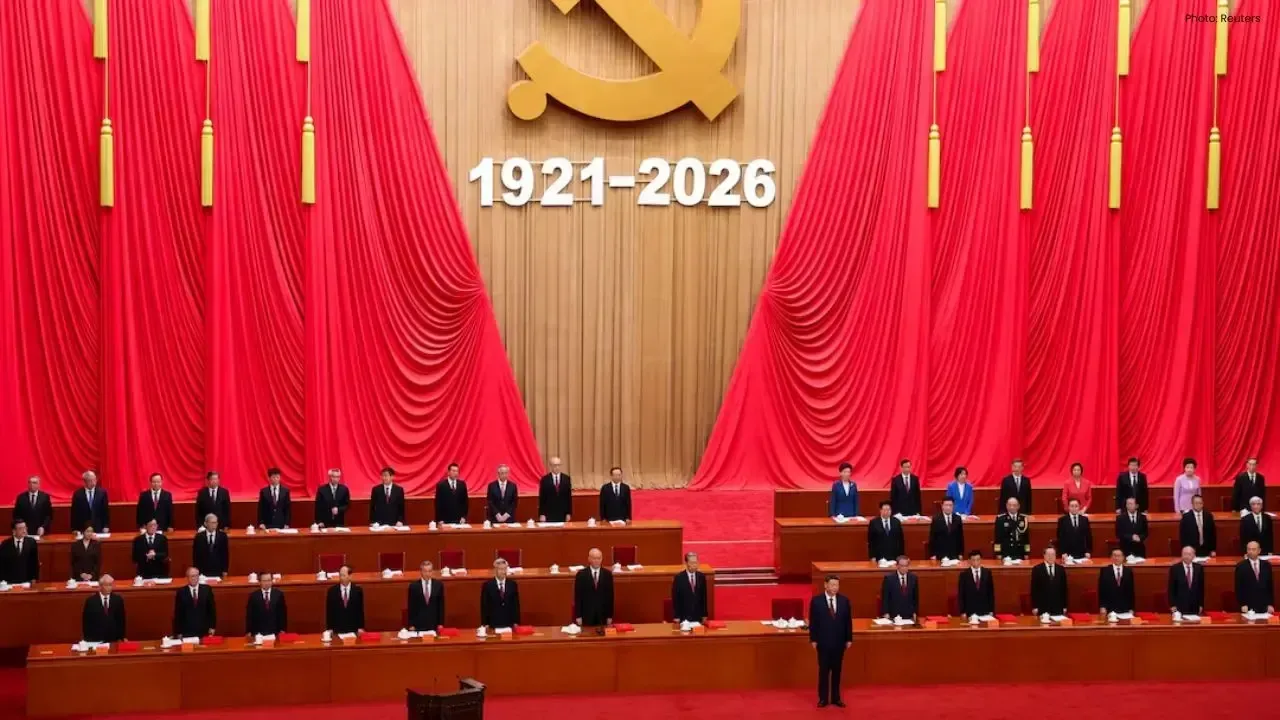
Anwar Congratulates Xi on CPC's 105th Anniversary
Malaysia reaffirms strong ties with China as PM Anwar Ibrahim sends a congratulatory letter to Presi

Thai Agriculture Team Reviews 2026 Farm Development Plans
Agriculture Ministry officials inspected livestock and organic rice projects in Nakhon Sawan to moni

Thailand, Canada Boost Ties in PM-Level Phone Talks
Thailand and Canada agreed to strengthen trade, security, OECD cooperation and ASEAN-Canada FTA talk