
You have not yet added any article to your bookmarks!
Join 10k+ people to get notified about new posts, news and tips.
Do not worry we don't spam!
Post by : Badri Ariffin
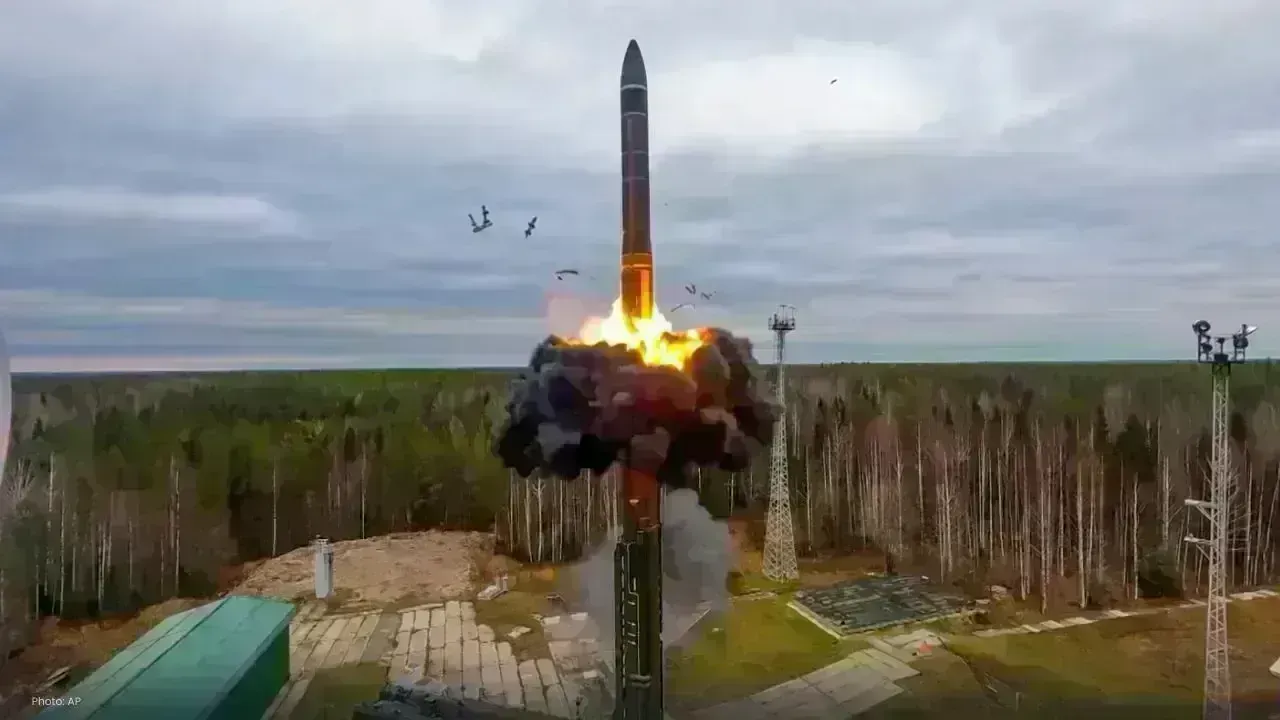
The international community is on high alert as the United States and Russia indicate a possible return to nuclear testing, rekindling fears of a renewed arms race. Recent announcements have raised serious concerns regarding the stability of global nonproliferation efforts.
In a statement on his social media platform, U.S. President Donald Trump asserted that he has directed the Department of War to initiate nuclear tests at a level comparable to other nations. This could potentially mark the first American nuclear tests in over thirty years. In response, Russian President Vladimir Putin warned that any nuclear testing by the U.S. or other parties to the Comprehensive Nuclear-Test-Ban Treaty (CTBT) would force Russia to respond in kind.
The CTBT, which took decades to negotiate and was adopted by the U.N. General Assembly in 1996, prohibits nuclear explosions, creating an established norm against atomic testing. While 187 countries have signed and 178 have ratified the treaty, it has not yet been fully enacted, awaiting ratification from 44 key countries. Among those, China, Egypt, Iran, Israel, and the U.S. signed but have yet to ratify, whereas India, Pakistan, and North Korea remain outside the agreement entirely. Russia retracted its ratification in 2023, citing global compliance issues.
The treaty also led to the formation of the Comprehensive Nuclear-Test-Ban Treaty Organization (CTBTO), which manages 307 monitoring stations globally. Utilizing seismic, hydroacoustic, infrasound, and radionuclide detection technologies, it monitors nuclear tests and provides essential verification information. The CTBTO successfully identified all six of North Korea's nuclear tests conducted between 2006 and 2017.
Experts caution that a return to nuclear testing could have significant consequences. "It opens avenues for less experienced nuclear states to conduct full tests, potentially enhancing their warhead designs," stated Daryl Kimball from the Arms Control Association. Nations such as China and India may also be encouraged to reconsider their testing positions, as the majority of previous tests have been conducted by the U.S. and Russia.
Not all proposed tests involve detonations, however. U.S. officials clarified that the planned experiments would focus on subcritical tests, which utilize fissile material without initiating a self-sustaining chain reaction. These activities remain within the technical boundaries of international monitoring, although hydronuclear tests with minimal yields might escape detection, leading to a potential "verification gap" in the system.
As these tensions continue, the CTBTO plays a vital role in the global framework for nuclear oversight, ensuring that nations can detect nuclear explosions and maintain confidence in compliance amid renewed atomic ambitions.




Hyundai raises profit target, expands hybrid lineup in the US
Hyundai hybrid cars get a major boost as the automaker raises its profit margin target and plans new

Josh Kerr and Jakob Ingebrigtsen Set for 1,500m Rivalry Rematch
Josh Kerr and Jakob Ingebrigtsen will renew their 1,500m rivalry at the Ultimate Championship in Bud

PSG Coach Luis Enrique Urges Players to Step Outside Comfort Zone
PSG coach Luis Enrique says players must leave their comfort zone and keep improving as the club tar

China’s Tiangong Sets New 400m Record at Robot Olympics
China’s Tiangong robot sets a new 400m record at the Robot Olympics, beating a South African robot i

George Russell Wins Dutch GP Sprint, Boosts Mercedes Morale
George Russell wins the Dutch GP Sprint from pole as Mercedes teammate Kimi Antonelli extends his F1

Australia 50/3 After Bangladesh Bowled Out for 64 in Second Test
Australia reached 50/3 after Bangladesh were bowled out for 64 in the second Test, with Mitchell Sta

