You have not yet added any article to your bookmarks!
Join 10k+ people to get notified about new posts, news and tips.
Do not worry we don't spam!
Post by : Anis Farhan
Earthquakes have long shaped Asia’s geography and history, yet their sudden and destructive force continues to catch communities off guard. In recent weeks, the continent has faced multiple tremors of varying intensity, from devastating shocks in Afghanistan to strong quakes in Russia’s Kamchatka Peninsula and consistent seismic rumblings across Indonesia. These incidents are not isolated; they are part of a larger tectonic reality. Asia sits on some of the world’s most active fault lines, making it one of the most earthquake-prone regions globally.
The past month alone has seen several notable seismic events. Afghanistan suffered a powerful quake that left thousands homeless, highlighting the fragile infrastructure in the region. Northeastern India, particularly Assam, recorded multiple tremors in quick succession, including a moderate 5.8 magnitude quake that caused widespread panic but little structural damage. Meanwhile, Russia’s Kamchatka Peninsula experienced a major 7.4 magnitude earthquake, though the remote location meant casualties and destruction were limited. Indonesia, situated squarely on the Pacific “Ring of Fire,” has been rocked by thousands of small quakes, with several powerful enough to damage homes and disrupt communities.
These events collectively underline that earthquakes are not rare, occasional disasters in Asia — they are recurring realities that demand ongoing vigilance.
Asia’s seismic activity can be explained by its tectonic setting. The Indian Plate continues to collide with the Eurasian Plate, giving rise to the Himalayas while also storing enormous seismic stress. This pressure manifests in frequent earthquakes across northern India, Nepal, Bhutan, and Afghanistan. The subduction zones in Indonesia and the Philippines, where one tectonic plate dives beneath another, are hotspots for both earthquakes and volcanic eruptions. In Russia’s Far East, the Kuril-Kamchatka Trench produces some of the world’s strongest quakes due to the interaction of the Pacific Plate with the Eurasian Plate.
While the science explains where and why earthquakes happen, predicting the exact time remains impossible. This unpredictability makes preparedness the most effective defense.
Several patterns are evident in recent seismic activity:
Increased Frequency in Clusters: Assam in northeastern India has reported dozens of quakes in just weeks. While most are small, their clustering suggests heightened tectonic stress.
Growing Vulnerability in Fragile States: Countries like Afghanistan, where infrastructure is weak and disaster response is limited, suffer disproportionately high casualties compared to nations with stronger systems.
Resilient vs. Non-Resilient Communities: Kamchatka’s strong quake caused little harm largely because the region is sparsely populated and better prepared, while similar strength quakes in dense urban centers could cause catastrophe.
Beyond numbers and magnitudes, earthquakes take a deep human toll. Families lose homes, children lose access to schools, and entire villages face displacement. In Afghanistan, recent quakes have destroyed livelihoods, with farming communities struggling to recover as arable land is buried or water supplies disrupted. Psychological trauma is also immense; the fear of aftershocks leaves residents sleeping outdoors, even in freezing temperatures.
Earthquake response in Asia faces several hurdles:
Geography: Mountainous terrain in Afghanistan and Nepal makes it hard for aid to reach quickly.
Infrastructure: Poorly built houses crumble easily, trapping people inside.
Coordination: Governments and international organizations often struggle to deliver aid effectively due to logistical challenges.
Economic Strain: Developing nations lack the resources to rebuild quickly, leaving survivors in prolonged hardship.
These challenges demonstrate why prevention and preparedness matter as much as post-disaster response.
While earthquakes cannot be prevented, their impact can be reduced through practical measures:
Stricter Building Codes: Countries like Japan and Chile, also in seismic zones, have shown that earthquake-resistant buildings save lives. Asia must adopt and enforce similar standards.
Public Awareness Campaigns: Teaching communities how to respond during and after a quake reduces panic and casualties.
Early Warning Systems: Advances in seismology allow alerts to be issued seconds before strong shaking begins. These seconds can save lives if people are trained to act quickly.
Emergency Drills: Regular drills in schools, offices, and residential areas build muscle memory for crisis situations.
Preparedness transforms earthquakes from inevitable disasters into manageable risks.
Indonesia illustrates the constant threat of seismic activity. In August alone, it recorded over 4,000 earthquakes, a staggering figure that demonstrates the volatility of its tectonic setting. While most quakes were minor, a handful caused damage to homes and infrastructure. The country has improved its warning systems since the devastating 2004 tsunami, but challenges remain in ensuring that rural and isolated communities are equally protected.
Afghanistan’s vulnerability highlights the link between poverty, governance, and disaster impact. Recent quakes have left tens of thousands homeless, with international aid struggling to reach them. Weak construction practices mean homes collapse even under moderate shaking. Recovery is slow, and recurring quakes deepen the crisis. For Afghanistan, building resilience is as much a political and economic challenge as a scientific one.
While Asia experiences some of the deadliest earthquakes, it is not alone. South America’s Andes region and North America’s California also face seismic risks. However, the difference lies in preparedness. Countries with stricter building codes and rapid-response systems suffer fewer casualties. For Asia, bridging this gap remains the key to reducing human loss.
As populations grow and cities expand into earthquake-prone areas, the risks will only increase. Technology, however, offers hope. Mobile-based early warning systems, AI-powered damage assessments, and satellite monitoring are transforming how nations respond. The challenge is ensuring these innovations are accessible not only to wealthy countries but also to vulnerable ones.
International cooperation will be essential. Earthquakes ignore borders, and regional collaboration in data-sharing, emergency drills, and disaster relief can strengthen resilience across Asia.
The earthquakes of recent weeks are a sobering reminder that Asia lives under constant seismic threat. Yet, they also present an opportunity: to learn, to prepare, and to build resilience. By strengthening infrastructure, improving awareness, and embracing technology, Asian nations can transform their vulnerability into preparedness. The choice is clear: either repeat the cycle of devastation or invest in safety for future generations.
This article is intended for informational purposes and is based on recent seismic activity and expert analysis. Earthquake impacts may vary depending on location, preparedness, and infrastructure resilience.








Australia 50/3 After Bangladesh Bowled Out for 64 in Second Test
Australia reached 50/3 after Bangladesh were bowled out for 64 in the second Test, with Mitchell Sta

Jordan Burroughs Returns to Wrestling with 2028 Olympic Dream
Jordan Burroughs returns to wrestling with Real American Freestyle as the Olympic champion eyes a po

Lamborghini Catches Fire on Singapore's ECP, Causing Heavy Traffic
A Lamborghini caught fire on Singapore's ECP, causing heavy traffic and bus delays. No injuries were

Bangkok Airport Duty-Free Area Flooded by Pipe Burst
A burst water pipe flooded the duty-free shopping area at Bangkok's Suvarnabhumi Airport on July 16,
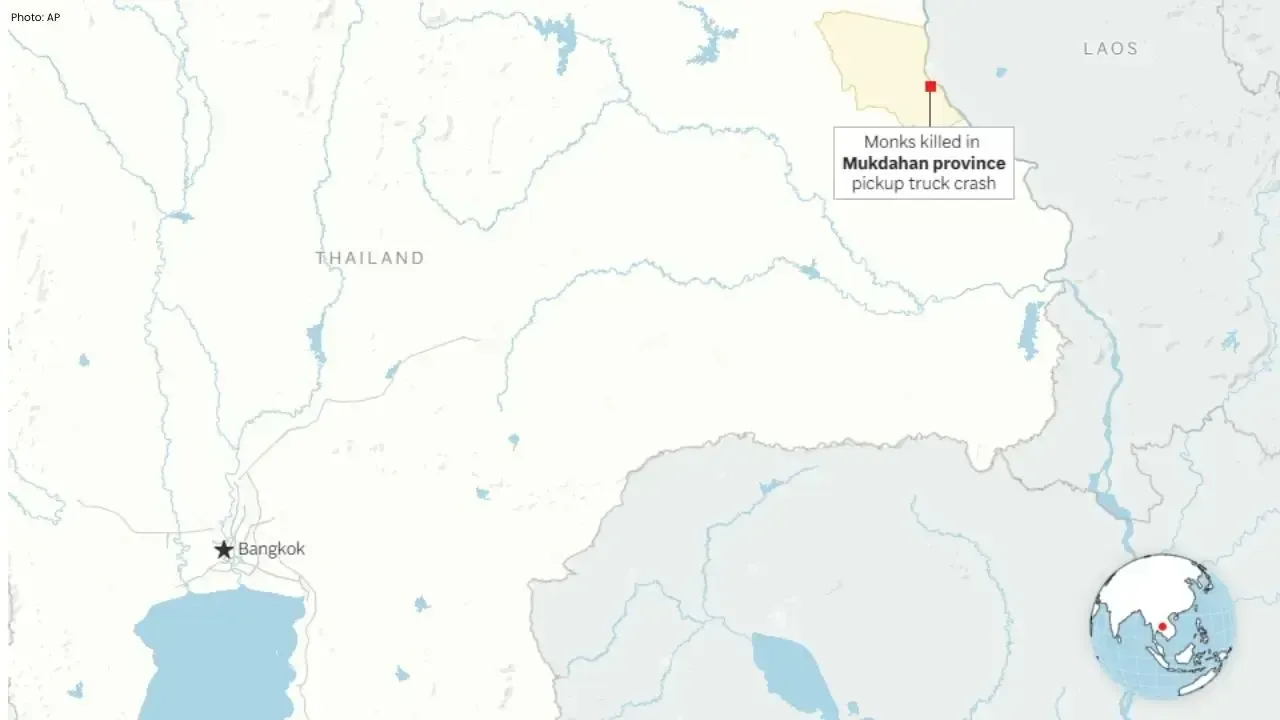
Nine Monks Killed in Thailand Pickup Truck Tragedy
An 11-year-old boy driving a pickup truck crashed into monks during a pilgrimage in northeastern Tha

Anwar Congratulates Xi on CPC's 105th Anniversary
Malaysia reaffirms strong ties with China as PM Anwar Ibrahim sends a congratulatory letter to Presi