You have not yet added any article to your bookmarks!
Join 10k+ people to get notified about new posts, news and tips.
Do not worry we don't spam!

Post by : Rameen Ariff
Early Thursday, Bangladesh experienced an earthquake measuring 4.1 on the Richter scale, according to the National Center for Seismology (NCS). The seismic activity struck at 5:44 AM Indian Standard Time (IST) at a depth of 30 kilometers, near coordinates 23.95°N and 90.72°E, causing tremors across the region. While no immediate reports of casualties or major damage have emerged, the tremor has raised concerns given the country's history of seismic vulnerability.
This recent quake comes barely two weeks after a more powerful 5.5-magnitude earthquake shook Bangladesh on November 21. That earlier earthquake tragically caused at least three deaths and injured ten people when a brick rooftop railing of an eight-story building in Dhaka’s Armanitola area collapsed. Shallow earthquakes like these are particularly dangerous because their seismic waves travel shorter distances to the surface, resulting in stronger shaking and a higher risk of structural damage and casualties.
Bangladesh lies at the intersection of three tectonic plates – the Indian, Eurasian, and Burma plates – making it highly susceptible to earthquakes. The Indian plate is moving northeast at roughly 6 cm per year, while the Eurasian plate is moving north at about 2 cm per year above the Indian plate. The region has five major fault zones: Bogura, Tripura, Shilong Plateau, Dauki, and Assam, which contribute to the country’s frequent seismic activity. Experts have identified 13 earthquake-prone areas in Bangladesh, with Chattogram, the Chattogram Hill Tracts, and Jaintiapur in Sylhet considered extreme risk zones.
The capital city, Dhaka, is particularly vulnerable due to its extremely high population density, with over 30,000 residents per square kilometer. According to reports, Dhaka is among the 20 cities worldwide most at risk of earthquakes. The recent tremor serves as a reminder of Bangladesh’s vulnerability to seismic events and highlights the need for continued preparedness, resilient infrastructure, and public awareness to minimize damage and casualties in future earthquakes.
This 4.1-magnitude earthquake reinforces concerns over Bangladesh’s seismic risks and the importance of monitoring fault zones, especially in densely populated urban areas like Dhaka, Chattogram, and Sylhet. As the country continues to develop, building earthquake-resistant structures and enforcing strict construction codes remain critical for protecting lives and property in this earthquake-prone nation.








Lamborghini Catches Fire on Singapore's ECP, Causing Heavy Traffic
A Lamborghini caught fire on Singapore's ECP, causing heavy traffic and bus delays. No injuries were

Bangkok Airport Duty-Free Area Flooded by Pipe Burst
A burst water pipe flooded the duty-free shopping area at Bangkok's Suvarnabhumi Airport on July 16,
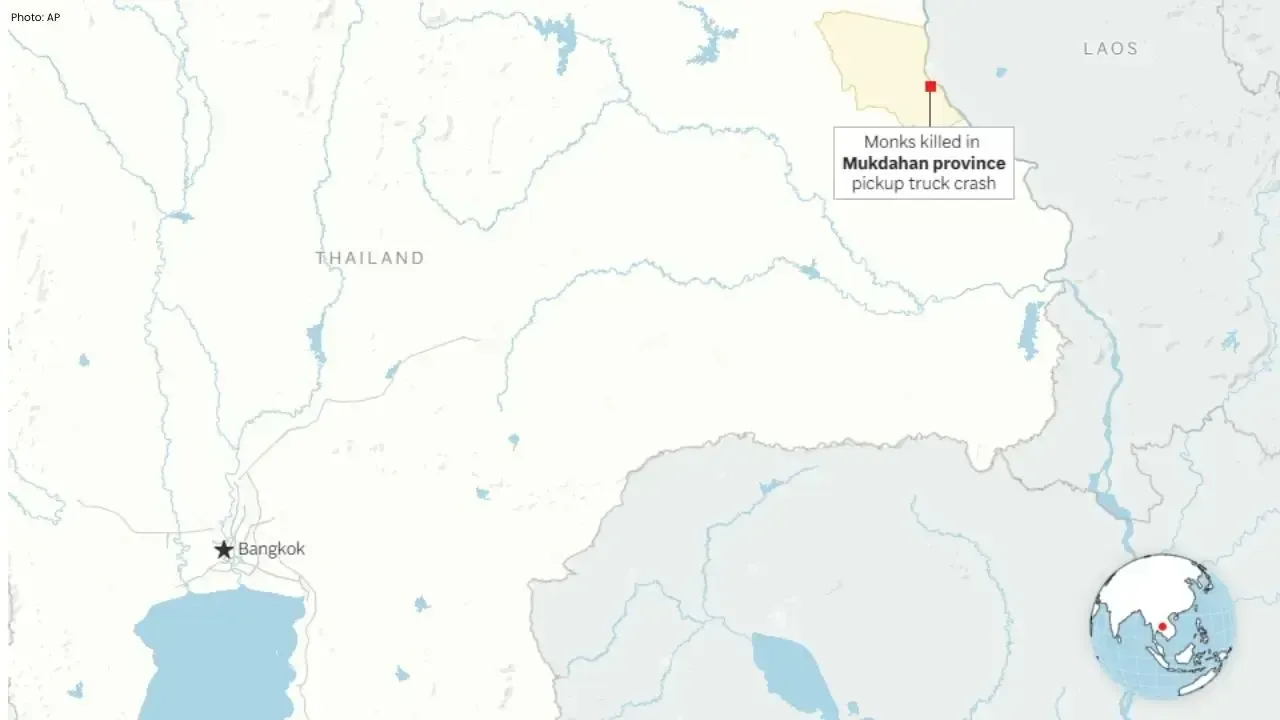
Nine Monks Killed in Thailand Pickup Truck Tragedy
An 11-year-old boy driving a pickup truck crashed into monks during a pilgrimage in northeastern Tha

Anwar Congratulates Xi on CPC's 105th Anniversary
Malaysia reaffirms strong ties with China as PM Anwar Ibrahim sends a congratulatory letter to Presi

Thai Agriculture Team Reviews 2026 Farm Development Plans
Agriculture Ministry officials inspected livestock and organic rice projects in Nakhon Sawan to moni

Thailand, Canada Boost Ties in PM-Level Phone Talks
Thailand and Canada agreed to strengthen trade, security, OECD cooperation and ASEAN-Canada FTA talk