You have not yet added any article to your bookmarks!
Join 10k+ people to get notified about new posts, news and tips.
Do not worry we don't spam!

Post by : Anis Farhan
Most people believe digital privacy is about keeping passwords safe or avoiding obvious scams. In reality, privacy in the digital age is shaped by systems most users never see, consent forms rarely read, and technologies designed to observe rather than protect.
The modern internet does not rely on stealing data—it relies on persuading people to give it away legally, quietly, and continuously. Governments, platforms, advertisers, data brokers, and even everyday apps participate in an ecosystem where personal information is the primary resource.
Below are nine untold facts about digital privacy that reveal how deeply data collection is embedded into modern life—and why understanding it matters more than ever.
Many users assume that logging out of accounts or using private browsing modes stops tracking. In reality, tracking often continues through device identifiers, browser fingerprints, IP addresses, and behavioural patterns.
Even without an account, websites can identify:
Screen size
Operating system
Browser version
Installed fonts and plugins
This creates a unique digital fingerprint that can follow you across sites.
You may feel anonymous, but platforms can still build detailed behavioural profiles. Privacy modes mostly prevent local storage, not external observation.
Smartphones generate far more data than desktop computers because they track movement, location, usage patterns, biometrics, and app behaviour continuously.
Apps often collect:
Location data (even in the background)
Motion and activity data
Contact metadata
Device interaction habits
Even apps with no obvious need for location access may request it.
Companies like Google and Apple publicly promote privacy, yet their ecosystems still depend on extensive data collection to function and compete.
Many free apps generate revenue not from users, but from selling behavioural data or access to targeted audiences. Paid apps, by contrast, are often less incentivised to monetise user data.
Free apps may collect:
Usage frequency
Interaction patterns
In-app behaviour
Linked identity data
This information is then packaged for advertisers or data brokers.
Paying does not guarantee privacy—but free almost always guarantees data extraction.
There is an entire industry of data brokers that most users have never heard of. These companies aggregate data from apps, websites, loyalty cards, and public records to create detailed profiles.
These profiles may include:
Interests
Spending habits
Health-related inferences
Political leanings
You never directly consent to these transactions.
In many regions, data brokerage operates in regulatory grey areas. Information is often anonymised in theory—but easily re-identified in practice.
Most privacy policies are intentionally long, vague, and technical. Studies show it would take hundreds of hours annually to read the policies associated with everyday digital use.
By clicking “agree,” users often consent to:
Third-party data sharing
Long-term data retention
Cross-platform tracking
This is not informed consent—it is functional compliance.
The legal burden shifts responsibility to users while protecting companies. Once consent is given, data usage becomes lawful—even if users don’t understand the implications.
Facial recognition technology is increasingly used in public spaces, retail environments, and digital authentication. Unlike passwords, biometric data cannot be reset once compromised.
Images shared online can be scraped and used to:
Train recognition systems
Identify individuals in crowds
Cross-reference identities
Some databases were built without explicit user permission.
Once facial data exists in multiple systems, control over identity erodes. Regulation is struggling to keep pace with deployment.
Turning off ad personalisation or tracking settings does not always stop data collection—it often changes how data is used.
Data may still be:
Collected for “service improvement”
Retained internally
Shared in aggregated form
True opt-outs are rare and difficult to verify.
Companies prioritise usability and revenue over granular control. Fully stopping data flow would break many business models.
Deleting an account or app does not guarantee immediate or complete data removal. Backups, archives, and third-party copies often persist.
Data may remain:
In server backups
With advertising partners
In anonymised datasets
Some companies retain data for years after account closure.
Old data can resurface in unexpected ways, especially if companies merge, are acquired, or suffer breaches.
True privacy increasingly requires:
Paid services
Technical literacy
Active management
Those with resources can protect themselves better, while others trade privacy for access and convenience.
This creates a new kind of inequality: privacy disparity.
As digital systems deepen, privacy may shift from being a universal right to a personal responsibility—placing more burden on individuals than institutions.
Digital privacy is not only about individual choices. It is shaped by platform design, legal frameworks, and economic incentives. Blaming users for data exposure ignores how systems are engineered.
Understanding how data flows allows users to make informed trade-offs—choosing when convenience is worth the cost and when it isn’t.
Privacy awareness does not require abandoning technology. Small steps help:
Reviewing app permissions regularly
Limiting unnecessary access
Using privacy-focused browsers or tools
Being mindful of what is shared publicly
The goal is intentional use, not fear.
Digital privacy is no longer about secrecy; it is about control, transparency, and consent. As data becomes the backbone of modern economies, individuals must navigate a world where being observed is the default state.
These untold facts are not meant to alarm—but to inform. In a digital landscape designed to collect by default, awareness is the most powerful form of protection.
The future of privacy will depend not only on laws and technology, but on how well people understand the systems they live inside.
Disclaimer:
This article is for informational purposes only and reflects current digital privacy practices, which may vary by region and evolve over time. It does not constitute legal or technical advice.










Lamborghini Catches Fire on Singapore's ECP, Causing Heavy Traffic
A Lamborghini caught fire on Singapore's ECP, causing heavy traffic and bus delays. No injuries were

Bangkok Airport Duty-Free Area Flooded by Pipe Burst
A burst water pipe flooded the duty-free shopping area at Bangkok's Suvarnabhumi Airport on July 16,
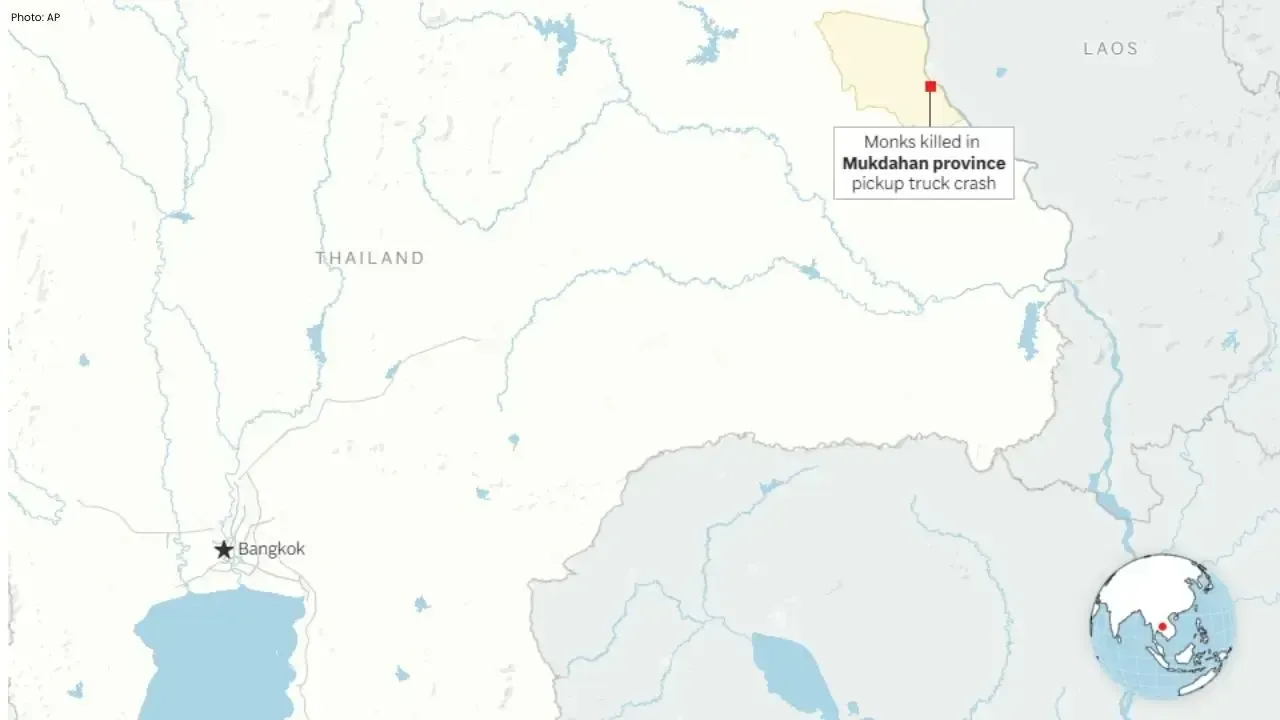
Nine Monks Killed in Thailand Pickup Truck Tragedy
An 11-year-old boy driving a pickup truck crashed into monks during a pilgrimage in northeastern Tha

Anwar Congratulates Xi on CPC's 105th Anniversary
Malaysia reaffirms strong ties with China as PM Anwar Ibrahim sends a congratulatory letter to Presi

Thai Agriculture Team Reviews 2026 Farm Development Plans
Agriculture Ministry officials inspected livestock and organic rice projects in Nakhon Sawan to moni

Thailand, Canada Boost Ties in PM-Level Phone Talks
Thailand and Canada agreed to strengthen trade, security, OECD cooperation and ASEAN-Canada FTA talk