You have not yet added any article to your bookmarks!
Join 10k+ people to get notified about new posts, news and tips.
Do not worry we don't spam!

Post by : Anis Farhan
South Asia is witnessing an extraordinary moment in history. From Colombo’s streets in Sri Lanka to Kathmandu’s squares in Nepal, young people are rising against entrenched elites, corruption, and failing governance. This generational wave, led largely by Gen Z, is shaking long-standing power structures and redefining the region’s political future. Nepal’s dramatic upheaval, with the burning of parliament and the sudden swearing-in of its first female prime minister, is the most striking symbol of this movement. Yet it reflects a broader generational shift sweeping across Asia.
In Kathmandu, the smoke from protests still lingers in the air. The once-unshakable grip of former Prime Minister KP Sharma Oli collapsed within days, as thousands of young people took to the streets under the banner of Gen Z. Their demand was simple yet revolutionary—end corruption and restore justice.
By the week’s end, parliament had been dissolved, Oli had gone into hiding, and former chief justice Sushila Karki was sworn in as interim prime minister. For many Nepali youth, this moment represents the end of decades of political stagnation. Karki’s promise of “good governance and economic equality” struck a chord with the young, who make up the majority of Nepal’s population.
The uprising in Nepal follows closely on the heels of Sri Lanka’s youth-led revolution in 2022, when demonstrators stormed government buildings, forcing President Gotabaya Rajapaksa to flee. The crisis, sparked by economic collapse and corruption, set a precedent for how people power—driven by social media, grassroots organization, and sheer frustration—could topple entrenched elites.
For Nepali youth, Sri Lanka’s example was both a warning and an inspiration. It demonstrated that when discontent meets collective action, no government is immune to change.
Bangladesh, too, has seen waves of protest against corruption, inequality, and suppression of free expression. These movements, like those in Sri Lanka and Nepal, are driven by an increasingly impatient young population unwilling to inherit broken systems.
Across South Asia, the median age hovers in the mid-20s. This demographic reality ensures that youth voices cannot be sidelined for long. With unemployment, inflation, and corruption eroding trust in institutions, protests are becoming not isolated events but recurring patterns.
Unlike past generations, today’s protesters wield smartphones as powerful tools. Social media platforms—Twitter, Instagram, TikTok, and local forums—are where calls to action spread. Livestreams of rallies, viral slogans, and online solidarity amplify street movements far beyond national borders.
In Nepal, protestors branded themselves proudly as “Gen Z,” a generational identity tied not to ideology but to shared frustration and global digital culture. This decentralized, leaderless approach gives movements resilience and inclusivity, though it also raises questions about long-term direction.
What unites these uprisings is not simply anger but a generational demand for dignity and accountability. Young people across South Asia are calling for:
An end to corruption and nepotism.
Fair economic opportunities in societies dominated by elites.
Genuine democracy that serves ordinary people.
Inclusion in decision-making processes that will shape their future.
These demands reflect deep disillusionment with traditional politics, where older elites have long monopolized power. Gen Z is proving unwilling to wait for incremental change.
While these youth movements have toppled governments, they also face uncertainty. Leaderless uprisings risk fragmentation once the initial victory is achieved. Questions of stability, governance, and international relations loom large.
In Nepal, for instance, the installation of an interim government led by Sushila Karki brings hope but also anxiety. Can a nation with fresh wounds from protest and instability transition smoothly into new elections? Similarly, Sri Lanka continues to grapple with the aftermath of its uprising, with economic recovery far from complete.
Despite the risks, one truth is undeniable—South Asia’s youth are no longer silent spectators. They are active shapers of the political landscape. The uprisings from Colombo to Kathmandu are part of a generational awakening, one that challenges entrenched elites and seeks to rebuild nations on the principles of transparency and equality.
The torch of change has been passed to a new generation, and they are determined to use it. As the world watches, the movements of South Asian youth could become a blueprint for how young populations in other regions demand accountability from their governments.
This article was written for Newsible Asia for informational and editorial purposes. It reflects ongoing developments in South Asia’s political landscape and does not serve as political endorsement or policy guidance.








Australia 50/3 After Bangladesh Bowled Out for 64 in Second Test
Australia reached 50/3 after Bangladesh were bowled out for 64 in the second Test, with Mitchell Sta

Jordan Burroughs Returns to Wrestling with 2028 Olympic Dream
Jordan Burroughs returns to wrestling with Real American Freestyle as the Olympic champion eyes a po

Lamborghini Catches Fire on Singapore's ECP, Causing Heavy Traffic
A Lamborghini caught fire on Singapore's ECP, causing heavy traffic and bus delays. No injuries were

Bangkok Airport Duty-Free Area Flooded by Pipe Burst
A burst water pipe flooded the duty-free shopping area at Bangkok's Suvarnabhumi Airport on July 16,

Nine Monks Killed in Thailand Pickup Truck Tragedy
An 11-year-old boy driving a pickup truck crashed into monks during a pilgrimage in northeastern Tha
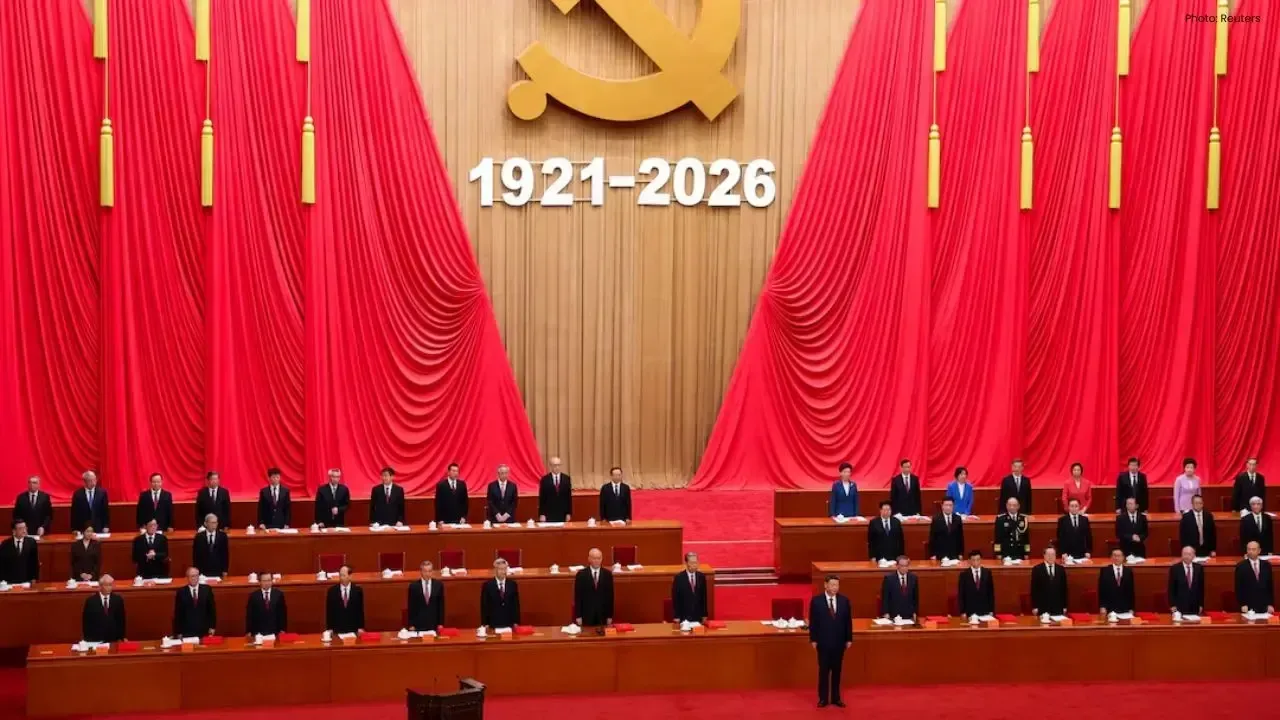
Anwar Congratulates Xi on CPC's 105th Anniversary
Malaysia reaffirms strong ties with China as PM Anwar Ibrahim sends a congratulatory letter to Presi