
You have not yet added any article to your bookmarks!
Join 10k+ people to get notified about new posts, news and tips.
Do not worry we don't spam!
Post by : Meena Ariff
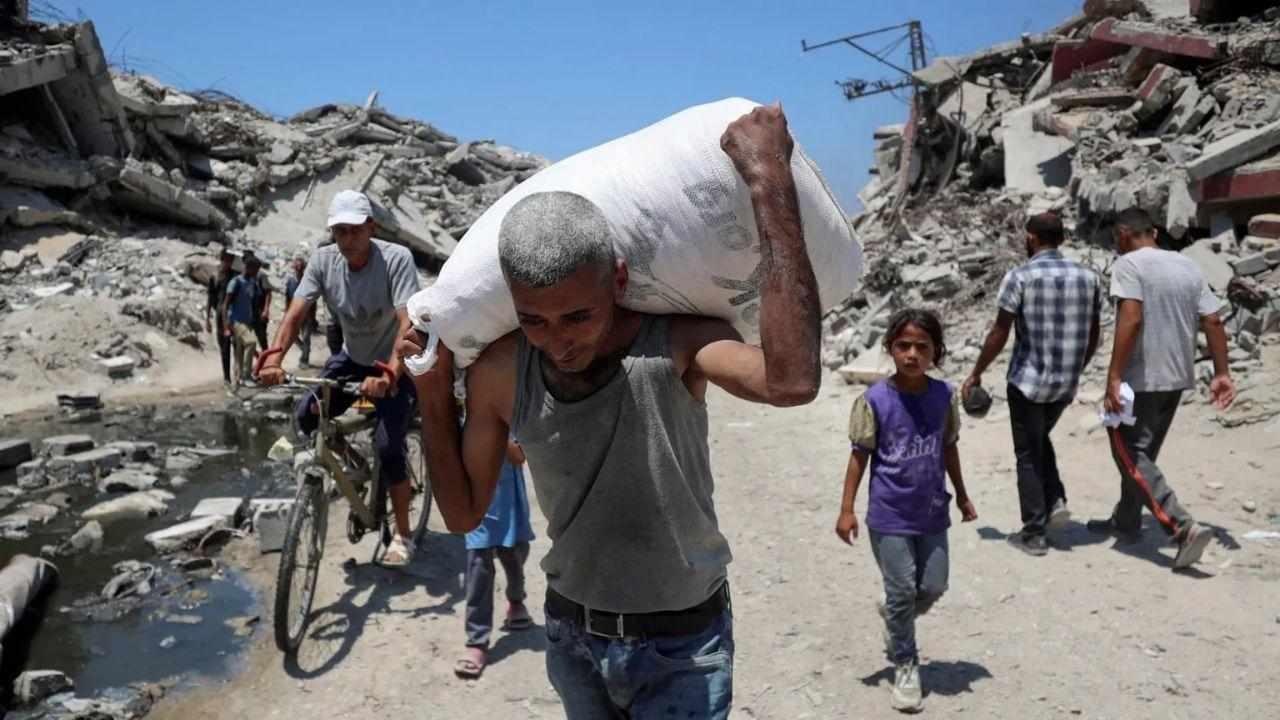
A relentless winter storm has hit Gaza, transforming its delicate tent camps into disaster zones. Continuous heavy rain has flooded shelters, ruined food supplies, and left numerous displaced families grappling with frigid temperatures and the threat of disease.
In areas like Khan Younis and along the coastal regions, rainwater inundated the aging tents, converting dirt paths into muddy rivers. Families arose to find their mattresses adrift in murky water, clothes rendered unusable, and children enduring long, cold nights. Overwhelmed sewage systems and heaps of waste exacerbated already perilous living situations.
“Our tent is submerged,” recounted Um Salman Abu Qenas, a displaced mother in Khan Younis. “All our belongings are ruined, and we had nowhere to sleep.”
Aid workers emphasize that this storm underscores the inadequacy of recent ceasefire agreements in providing substantial relief. Despite a halt in hostilities, essential supplies for shelter, warmth, and sanitation are critically lacking for Gaza's nearly entirely displaced populace.
The United Nations Relief and Works Agency cautioned that overcrowded, cold, and unsanitary living environments significantly heighten illness risks, particularly for vulnerable groups like children and the elderly. With healthcare access limited and shelters inadequate, even typical winter weather has transformed into a severe threat.
In the Muwasi region, Sabreen Qudeeh shared her distress of waking to rain dripping from her tent roof while floodwaters infiltrated from outside. “My daughters cried all night,” she lamented, showing her sodden blankets and damaged bedding.
Emergency services reported a spike in distress calls as tents collapsed or filled with water. In Gaza City, several structurally weakened buildings also succumbed to the rain's weight, prompting advisories for residents to steer clear of them.
Within the camps, families frantically attempted to remove water using buckets and plastic containers. Aliaa Bahtiti revealed that her young son had to sleep in water overnight. “He was freezing by morning,” she said. “We are unable to afford food, blankets, or dry clothing.”
Humanitarian organizations estimate that only a small fraction of the much-needed winterized shelters and supplies has reached Gaza since the ceasefire. Many of the tents that have arrived offer inadequate insulation, providing scant protection from the cold rain. Local aid groups have reported lacking necessary water pumps and heavy machinery to alleviate flooding and clear debris.
With housing largely obliterated and infrastructure devastated from months of conflict, the winter storms amplify the existing humanitarian crisis. Aid agencies warn that without a significant increase in unhindered humanitarian aid, more families will face preventable illnesses and devastation due to the harsh weather.







Josh Kerr and Jakob Ingebrigtsen Set for 1,500m Rivalry Rematch
Josh Kerr and Jakob Ingebrigtsen will renew their 1,500m rivalry at the Ultimate Championship in Bud

PSG Coach Luis Enrique Urges Players to Step Outside Comfort Zone
PSG coach Luis Enrique says players must leave their comfort zone and keep improving as the club tar

China’s Tiangong Sets New 400m Record at Robot Olympics
China’s Tiangong robot sets a new 400m record at the Robot Olympics, beating a South African robot i

George Russell Wins Dutch GP Sprint, Boosts Mercedes Morale
George Russell wins the Dutch GP Sprint from pole as Mercedes teammate Kimi Antonelli extends his F1

Australia 50/3 After Bangladesh Bowled Out for 64 in Second Test
Australia reached 50/3 after Bangladesh were bowled out for 64 in the second Test, with Mitchell Sta

Jordan Burroughs Returns to Wrestling with 2028 Olympic Dream
Jordan Burroughs returns to wrestling with Real American Freestyle as the Olympic champion eyes a po

