You have not yet added any article to your bookmarks!
Join 10k+ people to get notified about new posts, news and tips.
Do not worry we don't spam!
Post by : Anis Farhan
Photo: Netfix
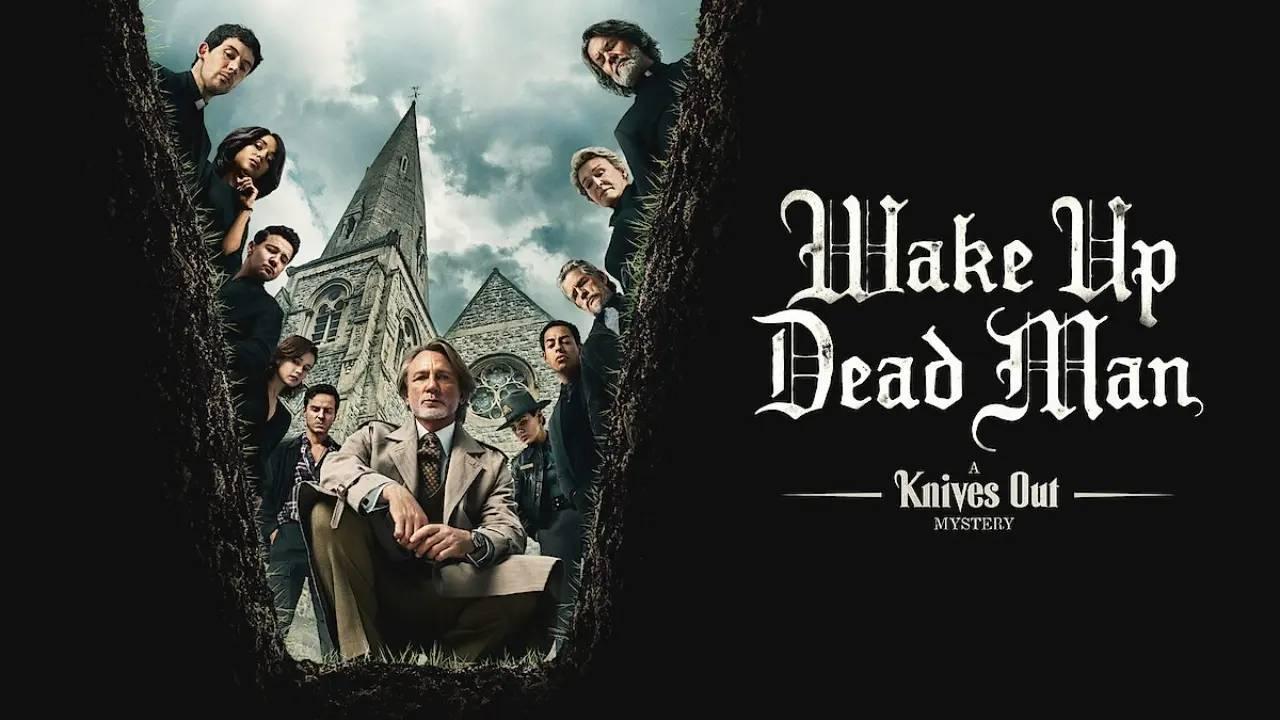
Few modern filmmakers have revived the whodunit genre with as much flair and intelligence as Rian Johnson. After redefining audience expectations with Knives Out and expanding the universe with Glass Onion, Johnson returns with Wake Up Dead Man, a film that feels both recognizably playful and strikingly mature. At its center once again is Daniel Craig’s Benoit Blanc, a detective whose Southern drawl and razor-sharp mind have become iconic in contemporary cinema.
This time, however, the mystery is heavier, the stakes more personal, and the tone subtly darker. Wake Up Dead Man does not merely ask who committed the crime; it asks why people lie to themselves, how guilt corrodes morality, and whether truth is always the noblest outcome. In doing so, Johnson delivers his most assured and emotionally resonant whodunit yet.
At its core, Wake Up Dead Man revolves around an apparent death that seems straightforward until Benoit Blanc begins asking the wrong questions. What initially appears to be a closed case gradually unfolds into a labyrinth of secrets, shifting alibis, and buried resentments.
Rian Johnson structures the story like a classic puzzle box, but with deliberate pacing that allows characters to breathe. The mystery deepens not through shock twists alone, but through accumulating moral tension.
The film’s setting plays a crucial role, serving as both a physical location and a psychological pressure cooker. Every room, corridor, and gathering space feels curated to encourage secrets while pretending to invite honesty. Johnson uses space as narrative language, allowing silences and glances to speak as loudly as dialogue.
Daniel Craig’s Benoit Blanc has always been larger than life, but in Wake Up Dead Man, the performance takes on a quieter authority. Craig dials down the theatricality just enough to reveal a detective weighed down by experience.
This Blanc listens more than he speaks, observes more than he lectures. When he does deliver a monologue, it lands with earned gravity rather than flamboyant showmanship.
Craig’s greatest strength here is his ability to preside over the narrative rather than dominate it. He allows the ensemble to flourish, stepping in only when necessary. The result is a detective who feels less like a gimmick and more like a moral compass navigating increasingly murky terrain.
Rian Johnson understands that repetition is the enemy of suspense. Rather than recreating the beats of his earlier films, he subtly rearranges them. The familiar pleasure of watching clues fall into place remains, but the emotional payoff feels deeper and more unsettling.
Johnson trusts the audience, resisting the urge to over-explain. He allows ambiguity to linger just long enough to provoke thought without causing frustration.
While Wake Up Dead Man carries a darker tone, it never becomes bleak. Johnson balances tension with moments of dry humor and human warmth. The laughter comes softer this time, but it feels earned rather than forced.
Each supporting character is crafted with care, existing not merely as suspects but as fully realized individuals. Their secrets are not cartoonish twists but reflections of fear, ambition, and regret.
Johnson avoids clear villains and saints, instead presenting a spectrum of moral compromise. This complexity elevates the mystery beyond mechanics into character study.
The cast delivers uniformly strong performances, with subtle shifts in tone and body language revealing more than overt exposition. Rewatching the film reveals how carefully each actor calibrates their performance, planting emotional clues alongside narrative ones.
One of the film’s central questions is whether truth always leads to justice. Benoit Blanc finds himself confronting situations where exposing facts may cause more harm than healing. This ethical tension gives the mystery its emotional backbone.
Wake Up Dead Man treats guilt not as a confession waiting to happen, but as a corrosive force that shapes behavior. Characters are undone not by clever detective work alone, but by the weight of their own choices.
The film’s cinematography favors restraint over spectacle. Muted colors and controlled lighting create an atmosphere of quiet unease. Shadows are used not just for mood, but to suggest what remains unseen and unsaid.
Johnson and his cinematographer embed visual clues within the frame, rewarding attentive viewers. These details never feel gimmicky; they serve the story rather than distract from it.
The dialogue crackles with intelligence, but it is never indulgent. Every line serves a purpose, whether revealing character, advancing the plot, or subtly misleading the audience.
Equally important is Johnson’s use of silence. Pauses, hesitations, and unfinished sentences often convey more than extended speeches. This restraint adds realism and emotional depth.
Rather than trying to outdo its predecessors with louder twists, Wake Up Dead Man matures the franchise. It feels like a filmmaker and actor fully comfortable in their collaboration, willing to take risks through subtlety rather than spectacle.
While earlier films delighted with cleverness, this installment leaves a stronger emotional imprint. The mystery resolves, but its moral questions linger, inviting reflection rather than applause alone.
This is not a whodunit that rushes to impress. It asks viewers to pay attention, to listen closely, and to consider motivations rather than just outcomes. Those willing to engage will find the experience deeply satisfying.
Like the best mysteries, Wake Up Dead Man improves on a second viewing. Knowing the outcome allows viewers to appreciate the craftsmanship of its construction and the nuance of its performances.
The performances, direction, and thematic ambition elevate the film above genre expectations. Daniel Craig’s restrained authority anchors the narrative, while Rian Johnson’s confident direction ensures cohesion.
Some audiences expecting a lighter, more comedic tone may find this installment more introspective than anticipated. However, this tonal shift feels intentional and artistically justified.
Wake Up Dead Man is not just another clever mystery; it is a thoughtful meditation on truth, guilt, and responsibility disguised as a genre film. Daniel Craig delivers one of his most nuanced performances as Benoit Blanc, while Rian Johnson confirms his status as one of the most intelligent storytellers working in mainstream cinema today.
The film respects its audience, trusting them to follow complex emotional and narrative threads without spoon-feeding conclusions. In doing so, it achieves something rare: a mystery that entertains, challenges, and lingers long after the final reveal.
For fans of intelligent cinema and modern whodunits, Wake Up Dead Man is not merely a satisfying puzzle. It is a reminder that the genre still has profound stories left to tell.
Disclaimer:
This article is a critical review based on cinematic analysis and personal interpretation. Opinions expressed are subjective and intended for informational and entertainment purposes only.







PSG Coach Luis Enrique Urges Players to Step Outside Comfort Zone
PSG coach Luis Enrique says players must leave their comfort zone and keep improving as the club tar

China’s Tiangong Sets New 400m Record at Robot Olympics
China’s Tiangong robot sets a new 400m record at the Robot Olympics, beating a South African robot i

George Russell Wins Dutch GP Sprint, Boosts Mercedes Morale
George Russell wins the Dutch GP Sprint from pole as Mercedes teammate Kimi Antonelli extends his F1

Australia 50/3 After Bangladesh Bowled Out for 64 in Second Test
Australia reached 50/3 after Bangladesh were bowled out for 64 in the second Test, with Mitchell Sta

Jordan Burroughs Returns to Wrestling with 2028 Olympic Dream
Jordan Burroughs returns to wrestling with Real American Freestyle as the Olympic champion eyes a po

Lamborghini Catches Fire on Singapore's ECP, Causing Heavy Traffic
A Lamborghini caught fire on Singapore's ECP, causing heavy traffic and bus delays. No injuries were