You have not yet added any article to your bookmarks!
Join 10k+ people to get notified about new posts, news and tips.
Do not worry we don't spam!

Post by : Anis Farhan
From U.S. tech corridors to Asia’s corridors of power, AI regulation is shaping into a geopolitical contest. U.S. officials are advocating for light-touch, innovation-first policies, while Chinese leaders push for international governance structures. Meanwhile, Asia’s nations—each with distinct governance styles—find themselves navigating between innovation, control, and alignment.
White House tech adviser Michael Kratsios recently urged Asian partners to reject the EU’s stringent AI regulations, labeling them as “fear and over-regulation.” He promoted a U.S.-led export package combining cloud services, chips, and AI tools tailored to local needs, emphasizing customized, innovation-oriented governance.
Simultaneously, bipartisan progress in Congress reflects growing concern over national security. Legislation now proposes banning Chinese AI systems like DeepSeek from federal use, citing risks of data misuse and ties to foreign military efforts.
At the World Artificial Intelligence Conference in Shanghai, Premier Li Qiang advocated for an international AI governance body, warning, “AI risks becoming an exclusive game for a few countries and companies.”
China’s push reflects its effort to redefine global AI standards under a multilateral framework—one that can accommodate state-driven models and open-source priorities, countering Western dominance in AI governance.
The AI regulatory landscape in Asia is as diverse as its cultures:
China leads with binding regulations. Its Interim Measures for Generative AI impose licensing, content labeling, and data security mandates.
Singapore champions a voluntary, sandbox-driven approach via its Model AI Governance Framework and AI Verify Toolkit, aligning with OECD principles while encouraging innovation.
Japan is gradually transitioning from soft, ethical guidelines—like its 2024 AI Guidelines for Business—toward structured regulation for high-impact models under its draft Basic Law for Responsible AI.
South Korea is adopting principled, risk-based legislation. Its upcoming AI Framework Act demands transparency and oversight for generative models, while its PIPA amendments empower individuals to reject or question automated decisions.
Across Southeast Asia—Thailand, Vietnam, Taiwan, Indonesia—countries favor voluntary guidelines aligned to ASEAN’s AI governance and ethics template.
This governance divergence reshapes global AI dynamics:
Innovation vs. Safety: Over-regulation risks stifling innovation, while too-lax policies may invite misuse or ethical breaches.
Strategic Influence: Policies define who leads standards. The U.S. seeks global influence through optional frameworks, while China pursues binding collaborative models.
Fragmentation Risk: Asia’s patchwork — some hard laws, some soft guidelines — may hinder regulatory harmony unless aligned via ASEAN or sectoral agreements.
White House tech adviser Michael Kratsios recently urged Asian partners to reject the EU’s stringent AI regulations, labeling them as “fear and over-regulation.” He promoted a U.S.-led export package combining cloud services, chips, and AI tools tailored to local needs, emphasizing customized, innovation-oriented governance.
Simultaneously, bipartisan progress in Congress reflects growing concern over national security. Legislation now proposes banning Chinese AI systems like DeepSeek from federal use, citing risks of data misuse and ties to foreign military efforts.
Future governance may lean toward balanced, adaptive models:
Adaptive Frameworks: Regions could adopt a tiered system—strong oversight for high-risk AI, flexibility for lower-risk categories—much like South Korea’s principles-based model or Japan’s evolving draft law.
International Declarations: The Seoul Declaration from the 2024 AI Seoul Summit signaled a shared vision of safe and inclusive AI, aligning Asia with G7 collaboration.
Public-Private Synergies: Collaborative sandboxes—with ethical oversight but flexible governance—could bridge regulation and innovation.
As AI gallops forward, Asia stands at a governance crossroads. Governments and industries must deftly balance innovation and oversight. U.S. flexibility offers speed; Chinese multilateralism provides structure—but Asia’s path will likely be hybrid, blending choice with caution.
This article is informational and reflects developments as of mid-2025. It does not advocate any political stance and relies on open-source reporting and expert analysis.








Lamborghini Catches Fire on Singapore's ECP, Causing Heavy Traffic
A Lamborghini caught fire on Singapore's ECP, causing heavy traffic and bus delays. No injuries were

Bangkok Airport Duty-Free Area Flooded by Pipe Burst
A burst water pipe flooded the duty-free shopping area at Bangkok's Suvarnabhumi Airport on July 16,

Nine Monks Killed in Thailand Pickup Truck Tragedy
An 11-year-old boy driving a pickup truck crashed into monks during a pilgrimage in northeastern Tha
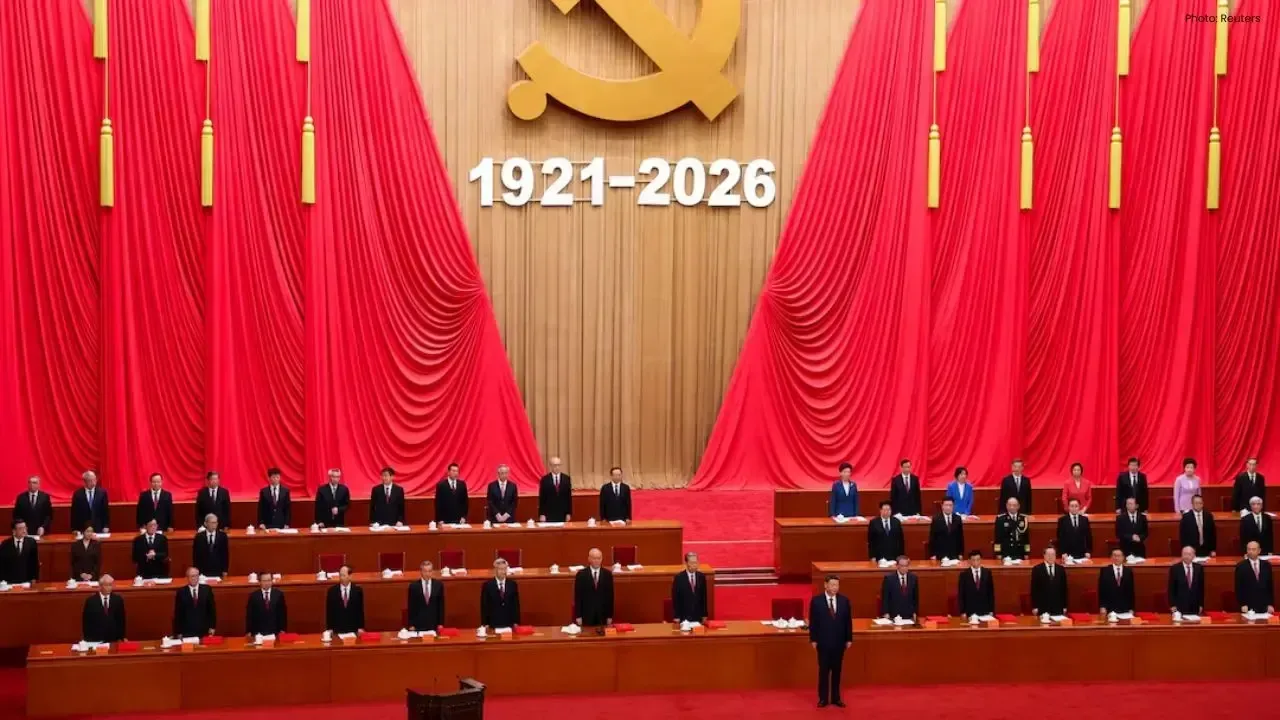
Anwar Congratulates Xi on CPC's 105th Anniversary
Malaysia reaffirms strong ties with China as PM Anwar Ibrahim sends a congratulatory letter to Presi

Thai Agriculture Team Reviews 2026 Farm Development Plans
Agriculture Ministry officials inspected livestock and organic rice projects in Nakhon Sawan to moni

Thailand, Canada Boost Ties in PM-Level Phone Talks
Thailand and Canada agreed to strengthen trade, security, OECD cooperation and ASEAN-Canada FTA talk