
You have not yet added any article to your bookmarks!
Join 10k+ people to get notified about new posts, news and tips.
Do not worry we don't spam!
Post by : Saif Rahman
The United States is ramping up its efforts to seize oil tankers departing from Venezuela, just days after U.S. forces commandeered a ship off the Venezuelan coastline. This bold initiative signifies a significant upturn in Washington's bid to exert pressure on President Nicolas Maduro while curbing his access to oil revenues.
The implications of this move are being felt across global shipping routes and energy markets. Shipowners and transport operators are now hesitant to engage in loading or moving Venezuelan crude, fearing their vessels could be next in line for interception.
Renewed U.S. Pressure Campaign
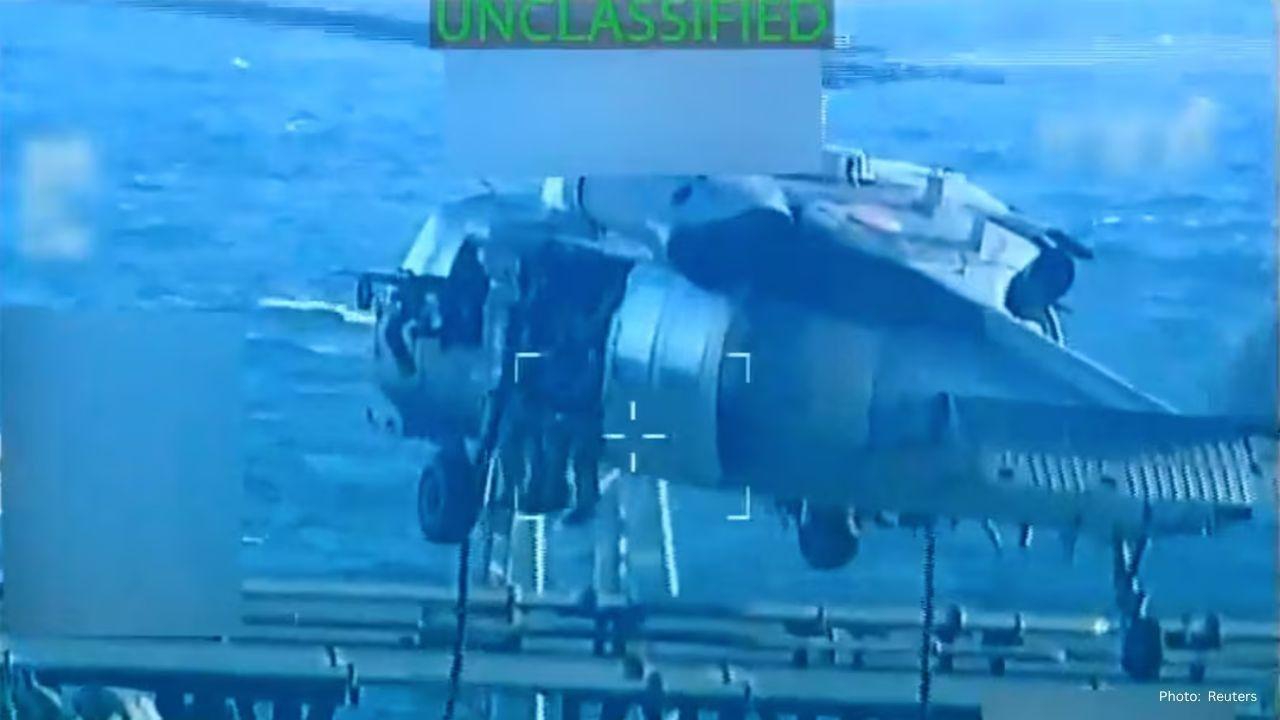
Sources familiar with the development report that the U.S. government is compiling a list of additional tankers tied to sanctioned trading activities. The recently seized vessel, named Skipper, marks the first time a Venezuelan oil tanker has been intercepted by American forces. This operation coincides with a broadened U.S. military presence in the southern Caribbean and increased surveillance in areas around Venezuela and Guyana.
President Donald Trump has consistently advocated for the removal of Maduro, whom the U.S. accuses of corruption and egregious human rights violations. The seizure of oil shipments serves as a method to tighten financial constraints on a regime that heavily relies on crude oil sales for its income.
Disruption to Oil Exports
This recent action has effectively disrupted a principal export route from Venezuela to Asian markets. Shipments amounting to nearly 6 million barrels of Merey crude, the nation's primary export grade, have been put on hold. Tankers that had recently loaded are now immobilized off the Venezuelan coastline, awaiting further decisions.
A trading executive stated, "The decision was swift and unavoidable: the ships were set for departure to Asia, and now everything is suspended."
Much of the ongoing trade is linked to the so-called “shadow fleet,” which comprises older vessels of uncertain ownership that navigate oil from sanctioned nations like Venezuela, Iran, and Russia to willing buyers such as China. A single ship might carry yields from multiple sanctioned countries on various voyages, complicating oversight and enforcement efforts.
Expectations of Future Seizures
The U.S. Treasury has recently imposed sanctions on six more supertankers that had been servicing Venezuelan oil. Furthermore, four Venezuelan individuals—including three relatives of First Lady Cilia Flores—have also been sanctioned. It remains unclear whether these vessels are part of the U.S.'s upcoming target list.
Government officials indicate that the Justice Department and Department of Homeland Security have devised these operations over preceding months. Currently, U.S. forces are monitoring tankers within Venezuelan ports and ready to act as they venture into international waters. The Skipper is slated to be relocated to a U.S. port for formal legal proceedings and cargo confiscation.
The timing of subsequent seizures will hinge on port capacity and safety concerns, as many shadow fleet vessels are aged, poorly maintained, and inadequately insured, raising risks for major ports accepting them.
Venezuela Calls It 'Piracy'—Legal Experts Disagree
The Venezuelan administration has vocally condemned the seizure, labeling it “international piracy.” However, legal specialists argue that this term is misapplied, as piracy pertains to criminal acts by non-state actors, not government actions conducted under legal frameworks. A maritime law professional elaborates that this U.S. seizure does not constitute piracy under international law, despite Venezuela's political rhetoric.
Maduro contends that the U.S. military buildup near his nation indicates a possible coup attempt aimed at seizing Venezuela’s substantial oil reserves. Washington rebuts this claim, asserting that their focus lies on combating illegal oil activities and what it deems “black market financing” for rogue governments.
Heightened Regional Anxiety
The overall atmosphere is fraught with tension. U.S. forces have conducted over 20 strikes against suspected drug-trafficking vessels in recent months, resulting in more than 80 fatalities. Some observers argue that these actions could exceed international law parameters, whereas the U.S. maintains they are crucial for American safety.
As additional tanker seizures loom, both the oil market and diplomatic relationships face escalating uncertainty. If Venezuelan oil shipments dwindle significantly, the nation’s already fragile economy might plummet further, and the global oil supply chain could confront broader disruptions.
This rising maritime conflict demonstrates the extent to which the power struggle in Venezuela is spilling over into international waters, and it underscores the potential repercussions for the global oil trade.




Josh Kerr and Jakob Ingebrigtsen Set for 1,500m Rivalry Rematch
Josh Kerr and Jakob Ingebrigtsen will renew their 1,500m rivalry at the Ultimate Championship in Bud

PSG Coach Luis Enrique Urges Players to Step Outside Comfort Zone
PSG coach Luis Enrique says players must leave their comfort zone and keep improving as the club tar

China’s Tiangong Sets New 400m Record at Robot Olympics
China’s Tiangong robot sets a new 400m record at the Robot Olympics, beating a South African robot i

George Russell Wins Dutch GP Sprint, Boosts Mercedes Morale
George Russell wins the Dutch GP Sprint from pole as Mercedes teammate Kimi Antonelli extends his F1

Australia 50/3 After Bangladesh Bowled Out for 64 in Second Test
Australia reached 50/3 after Bangladesh were bowled out for 64 in the second Test, with Mitchell Sta

Jordan Burroughs Returns to Wrestling with 2028 Olympic Dream
Jordan Burroughs returns to wrestling with Real American Freestyle as the Olympic champion eyes a po

