
You have not yet added any article to your bookmarks!
Join 10k+ people to get notified about new posts, news and tips.
Do not worry we don't spam!
Post by : Badri Ariffin
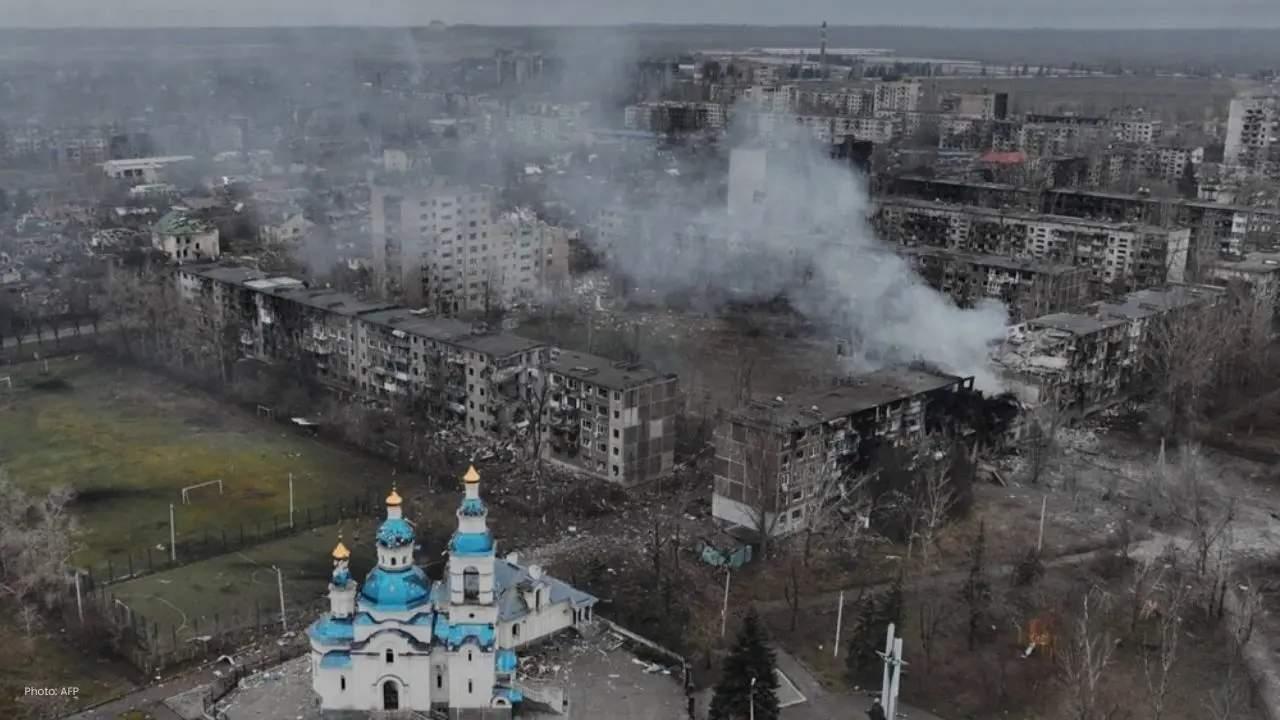
Ukraine has executed a significant and daring strike deep within Russian borders, focusing on a crucial offshore oil platform in the Caspian Sea earlier this week. This operation, confirmed by sources within Ukraine's Security Service, marks the first instance of an attack targeting Russian energy structures in the Caspian area, indicating a new strategic phase in Ukraine's overarching campaign.
The Filanovsky platform, recognized as the largest managed by Lukoil in the Russian sector of the Caspian, was hit during a previously unreported drone operation. Ukrainian officials define this target as integral to Moscow’s wartime economic framework, which purportedly bolsters the Kremlin's military activities.
This strike is part of a broader series of Ukrainian offensives on Russian energy resources that began anew in early 2024. In recent months, Ukraine's efforts have escalated from targeting refineries and fuel storage facilities to pipelines, export points, tankers, and now offshore installations. The month of November recorded the highest frequency of such operations to date, per conflict-monitoring reports.
The mounting pressure on Russia’s energy sector coincides with a global oil supply surplus, which mitigates potential price spikes and keeps Ukraine’s Western allies largely supportive. Conversely, Russia’s oil revenues have been experiencing a downturn. Reports from the International Energy Agency indicate that earnings fell to unprecedented lows in November since the escalation of conflict in 2022, attributable to sharp declines in both export volumes and pricing.
This financial erosion is exerting additional stress on Moscow's budget, already troubled by significant wartime expenditures and ongoing inflation. Revenue from oil and gas during the first three quarters of the year decreased by 22%, and expectations point toward a considerable budget shortfall, likely resulting in tax increases in 2025.
A considerable portion of the recent declines is associated with disruptions in Russia's so-called "shadow fleet"—tankers designed to circumvent sanctions—and damage to maritime infrastructure. Nearly half of the oil shipments from Russia in the Black Sea were curtailed in November due to strikes and logistical challenges.
The United States has intensified its pressure on Russia by implementing some of the stringent sanctions against leading oil companies, Rosneft and Lukoil, in October. These actions coincided with Ukrainian drone strikes earlier this year, resulting in fuel rationing across various Russian territories.
This latest operative in the Caspian emphasizes Ukraine’s expanding capabilities and increasing dependence on long-range unmanned systems. It also highlights Kyiv’s commitment to continue undermining Russia’s economic foundation as the conflict drags into another challenging winter with stalled diplomatic initiatives.







Josh Kerr and Jakob Ingebrigtsen Set for 1,500m Rivalry Rematch
Josh Kerr and Jakob Ingebrigtsen will renew their 1,500m rivalry at the Ultimate Championship in Bud

PSG Coach Luis Enrique Urges Players to Step Outside Comfort Zone
PSG coach Luis Enrique says players must leave their comfort zone and keep improving as the club tar

China’s Tiangong Sets New 400m Record at Robot Olympics
China’s Tiangong robot sets a new 400m record at the Robot Olympics, beating a South African robot i

George Russell Wins Dutch GP Sprint, Boosts Mercedes Morale
George Russell wins the Dutch GP Sprint from pole as Mercedes teammate Kimi Antonelli extends his F1

Australia 50/3 After Bangladesh Bowled Out for 64 in Second Test
Australia reached 50/3 after Bangladesh were bowled out for 64 in the second Test, with Mitchell Sta

Jordan Burroughs Returns to Wrestling with 2028 Olympic Dream
Jordan Burroughs returns to wrestling with Real American Freestyle as the Olympic champion eyes a po

