
You have not yet added any article to your bookmarks!
Join 10k+ people to get notified about new posts, news and tips.
Do not worry we don't spam!
Post by : Saif Rahman
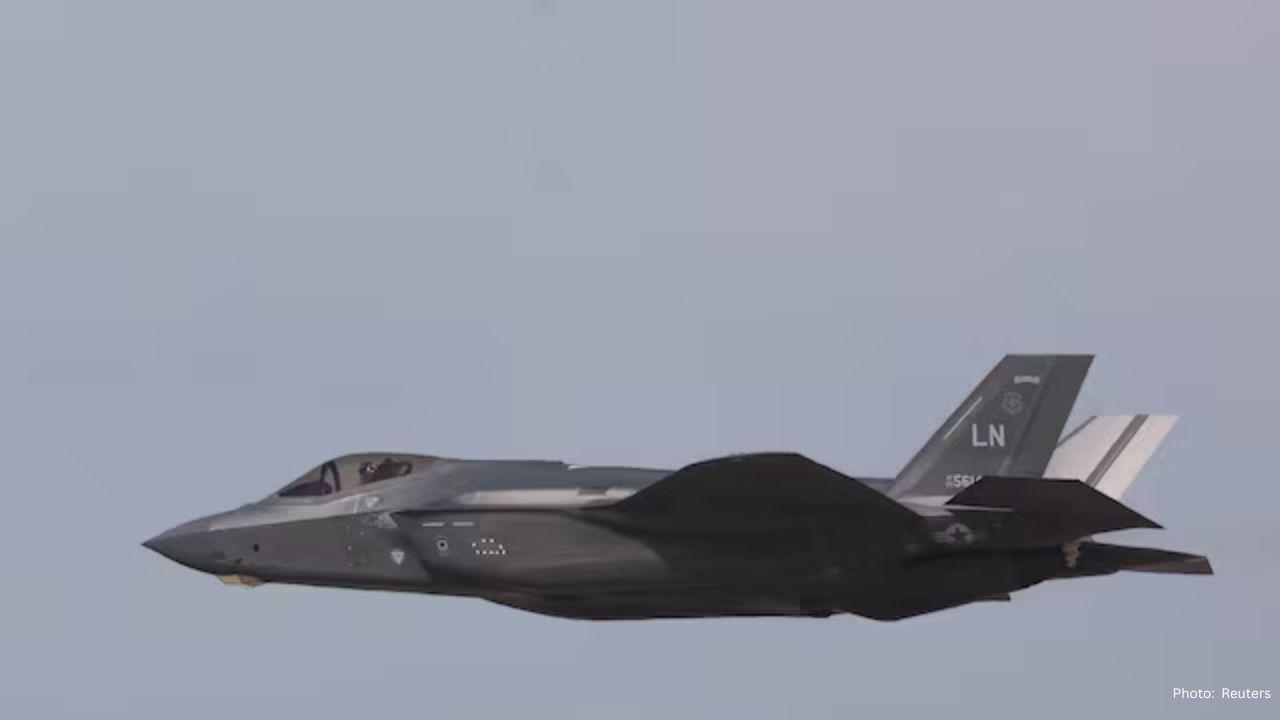
The United States has announced that it is engaging in renewed conversations with Turkey regarding the nation's potential re-entry into the F-35 fighter jet program. This development marks a significant step forward in the long-standing dispute between these two NATO allies.
Turkey was excluded from the F-35 initiative in 2020 following the acquisition of Russian S-400 air defense systems. The U.S. argued that the Russian technology poses a serious risk to both the advanced American aircraft and NATO's defense framework. Consequently, Washington imposed sanctions on Turkey, which Ankara contended were unjust and politically motivated.
U.S. Ambassador to Turkey Tom Barrack indicated on Wednesday that Washington is now working with Ankara to find an agreeable solution. Through a post on X, he acknowledged Turkey's aspiration to rejoin the program while emphasizing that U.S. law prohibits Turkey from retaining the S-400s if it wishes to participate in the F-35 initiative.
Barrack also mentioned that the relationship between President Donald Trump and Turkish President Tayyip Erdogan has fostered a more cooperative atmosphere, resulting in the “most productive discussions” on the issue in nearly a decade. He expressed optimism that these talks could yield fruitful outcomes in the coming months, aligning with the security interests of both nations.
Meanwhile, Turkish Foreign Minister Hakan Fidan expressed optimism as well, stating to Reuters that he anticipates the lifting of American sanctions on Turkey to occur “very soon,” adding that both parties have initiated collaborative efforts to settle the impasse.
However, the S-400 remains the primary obstacle. The U.S. maintains that the Russian defense system can’t be safely used alongside NATO technology and could compromise sensitive information on the F-35. Turkey disputes these claims, arguing that the S-400 will remain independent of NATO systems and does not present a threat.
Turkish officials have consistently asserted their intention to retain the S-400s, despite them being a critical hurdle in rejoining the F-35 program, asserting that Turkey has the sovereign right to procure any necessary defense systems.
The revival of discussions signifies both sides' interest in mending a crucial aspect of their diplomatic relations. For Turkey, re-engaging with the F-35 program promises advanced technology and enhanced defense collaboration with NATO. For the U.S., fortifying ties with Turkey helps ensure unity within the alliance amid global security challenges.
Whether these renewed discussions will culminate in a conclusive agreement remains uncertain. Nonetheless, Washington and Ankara now appear more inclined to explore solutions, fostering hope for a significant resolution to this prolonged dispute.







Josh Kerr and Jakob Ingebrigtsen Set for 1,500m Rivalry Rematch
Josh Kerr and Jakob Ingebrigtsen will renew their 1,500m rivalry at the Ultimate Championship in Bud

PSG Coach Luis Enrique Urges Players to Step Outside Comfort Zone
PSG coach Luis Enrique says players must leave their comfort zone and keep improving as the club tar

China’s Tiangong Sets New 400m Record at Robot Olympics
China’s Tiangong robot sets a new 400m record at the Robot Olympics, beating a South African robot i

George Russell Wins Dutch GP Sprint, Boosts Mercedes Morale
George Russell wins the Dutch GP Sprint from pole as Mercedes teammate Kimi Antonelli extends his F1

Australia 50/3 After Bangladesh Bowled Out for 64 in Second Test
Australia reached 50/3 after Bangladesh were bowled out for 64 in the second Test, with Mitchell Sta

Jordan Burroughs Returns to Wrestling with 2028 Olympic Dream
Jordan Burroughs returns to wrestling with Real American Freestyle as the Olympic champion eyes a po

