
You have not yet added any article to your bookmarks!
Join 10k+ people to get notified about new posts, news and tips.
Do not worry we don't spam!
Post by : Saif Rahman
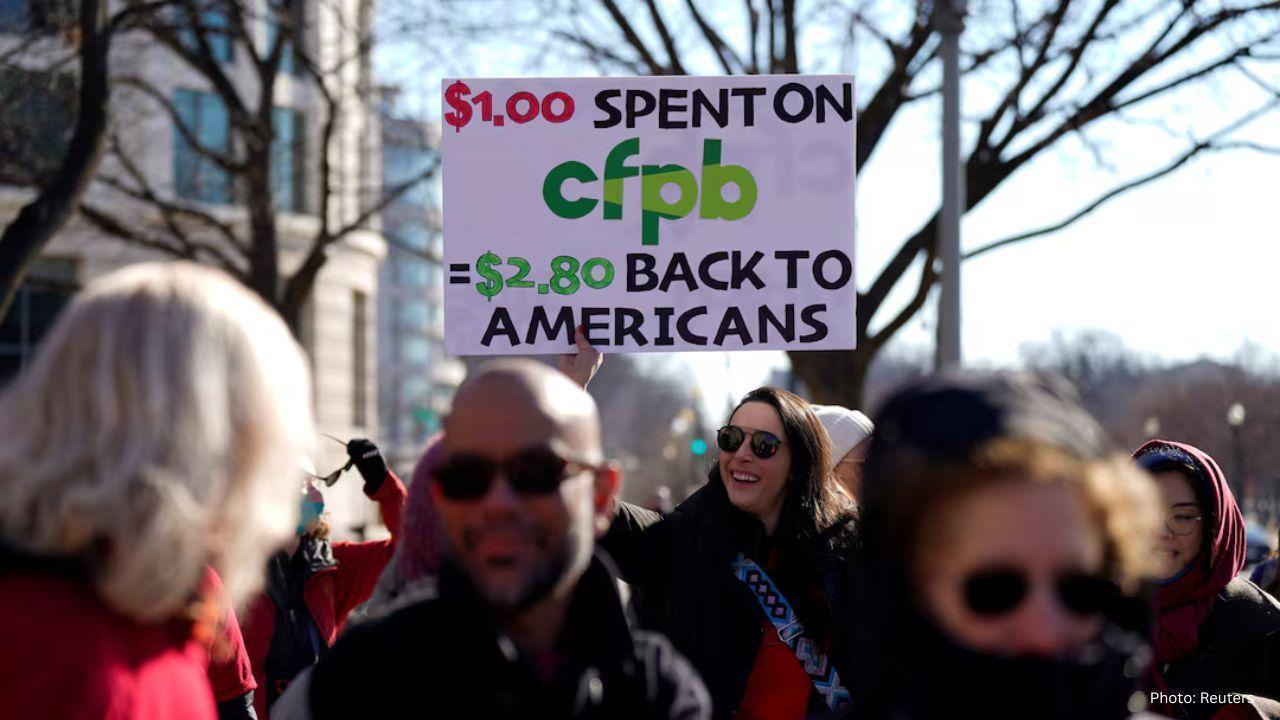
The future of the Consumer Financial Protection Bureau (CFPB) is in jeopardy as funding cuts from President Donald Trump’s administration could lead to its closure by early 2026. Established in 2010 following the financial crisis, the CFPB has played an essential role in assisting millions of Americans with issues related to credit errors, fraud, and predatory lending practices. A fierce debate is underway on the agency's survival.
Created by Congress, the CFPB aimed to safeguard consumers from unfair and deceptive financial practices employed by banks, lenders, debt collectors, and credit bureaus. It has often been the last resort for consumers seeking justice.
Take the case of Bianca Jones, a special education teacher in Tennessee, who discovered that her student loan was incorrectly reported. This misreporting presented her as having a much higher debt. After unsuccessful attempts to resolve the issue with a credit bureau, she sought help from the CFPB. Thanks to her experience with the bureau, she secured a favorable lawsuit outcome, correcting her credit record, allowing her to purchase a home—a transformative experience for her.
Such stories highlight the agency’s significance, as millions file complaints annually regarding issues like credit fees, student loans, debt collection, and more. The CFPB addresses these complaints, often leading to consumer refunds and corrections. The agency reports that it has returned approximately $21 billion to consumers.
Despite these accomplishments, the CFPB has faced staunch opposition. President Trump has called for its dismantlement, claiming it acts as a partisan tool detrimental to businesses. Presently, his administration is pushing for decreases in its funding and workforce, proposing to shift investigations to the Justice Department.
Additionally, the CFPB’s unique funding mechanism is under scrutiny. Instead of relying on congressional budget approvals, it receives funds from the Federal Reserve. Critics within the Republican Party argue that this model is unconstitutional and gives the agency excessive autonomy, while supporters see it as a necessary buffer against political interference, enabling the CFPB to prioritize consumer protection.
Senator Elizabeth Warren, a key architect of the agency, has vocally defended the CFPB, asserting its vital role in ensuring consumer interests are at the forefront. She cautions that without this agency, individuals would have minimal recourse when facing powerful financial entities.
On the other hand, critics argue the CFPB has overreached, claiming that existing regulatory bodies are sufficient for consumer protection. Some ex-officials express doubts about portions of the agency's operations but warn that its removal would likely exacerbate consumer abuse rather than alleviate it.
If the CFPB were to cease operations, consumers might find themselves navigating a fragmented network of state and federal agencies, many of which lack the specialized focus and authority of the CFPB. Financial advisors caution that this scenario would complicate consumers' understanding of their rights and hinder their ability to contest unfair practices.
From an editorial perspective, the potential downfall of the CFPB raises troubling implications. While no agency is flawless, eliminating the sole consumer finance watchdog would likely tip the scales in favor of large financial institutions. Given the financial pressures many Americans are currently experiencing, weakening consumer protections could worsen their struggles.
The fate of the CFPB now hinges on judicial rulings, legislative skirmishes, and funding dilemmas. Its potential absence would create a significant void in consumer protection, leaving no alternative institution adequately prepared to fill it. This situation transcends mere dollars and politics, ultimately questioning whether everyday individuals will maintain a robust voice against formidable financial systems.










PSG Coach Luis Enrique Urges Players to Step Outside Comfort Zone
PSG coach Luis Enrique says players must leave their comfort zone and keep improving as the club tar

China’s Tiangong Sets New 400m Record at Robot Olympics
China’s Tiangong robot sets a new 400m record at the Robot Olympics, beating a South African robot i

George Russell Wins Dutch GP Sprint, Boosts Mercedes Morale
George Russell wins the Dutch GP Sprint from pole as Mercedes teammate Kimi Antonelli extends his F1

Australia 50/3 After Bangladesh Bowled Out for 64 in Second Test
Australia reached 50/3 after Bangladesh were bowled out for 64 in the second Test, with Mitchell Sta

Jordan Burroughs Returns to Wrestling with 2028 Olympic Dream
Jordan Burroughs returns to wrestling with Real American Freestyle as the Olympic champion eyes a po

Lamborghini Catches Fire on Singapore's ECP, Causing Heavy Traffic
A Lamborghini caught fire on Singapore's ECP, causing heavy traffic and bus delays. No injuries were

