
You have not yet added any article to your bookmarks!
Join 10k+ people to get notified about new posts, news and tips.
Do not worry we don't spam!
Post by : Saif Rahman
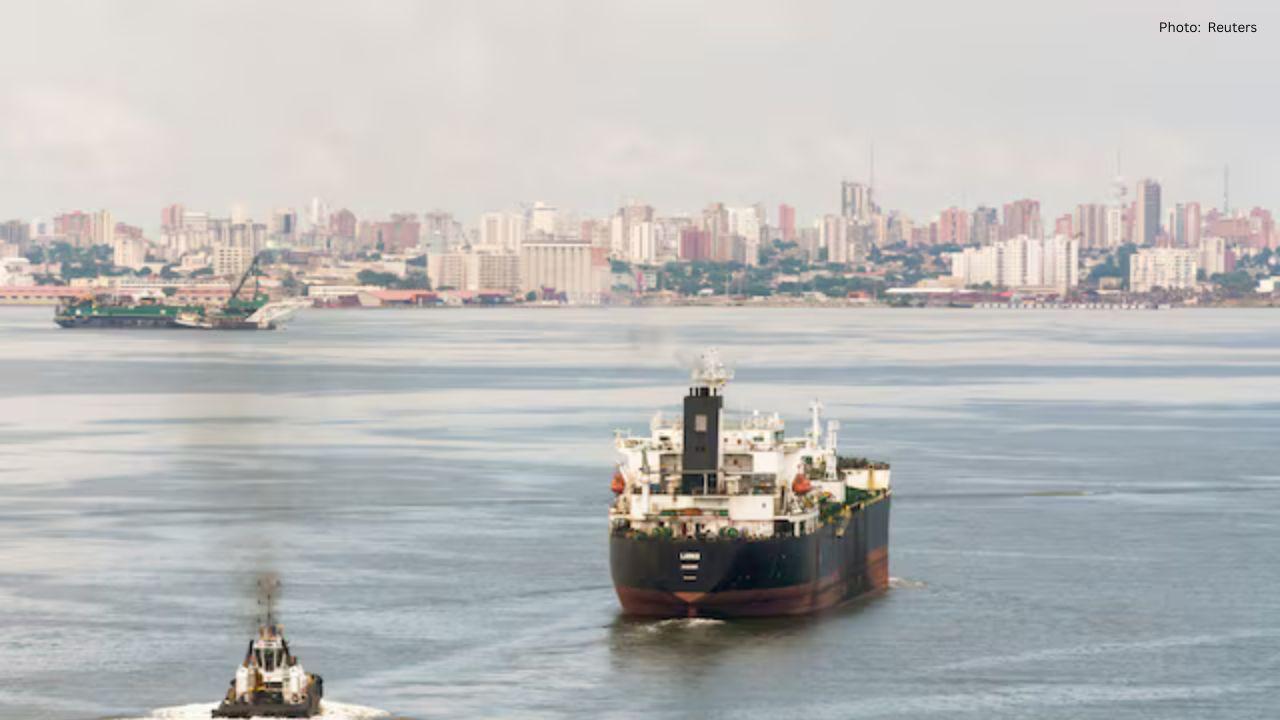
U.S. President Donald Trump has taken the decisive step to enforce a blockade on Venezuelan oil tankers subject to sanctions. This action significantly intensifies pressure on President Nicolas Maduro’s administration, aiming squarely at the nation’s primary revenue source—oil.
The directive immediately influenced global energy markets, with oil prices climbing over 1% as traders braced for a possible drop in Venezuelan oil supplies. The anticipation of disruptions alone is enough to escalate prices, highlighting the market's sensitivity to political events in key oil-producing regions.
In his declaration, Trump accused Venezuela’s leadership of various crimes, including terrorism and drug smuggling. He asserted these justifications merited designating Maduro's government a foreign terrorist organization and implementing what he referred to as a “total and complete blockade” on all sanctioned oil vessels.
The Venezuelan government has strongly condemned this initiative, labeling it an unacceptable and dangerous threat. Maduro has accused the U.S. of attempting to seize control of Venezuela’s vast oil resources, the largest globally, through military intimidation.
Uncertainties loom regarding the blockade's enforcement mechanisms. It remains unclear whether U.S. Navy or Coast Guard forces will actively intercept and inspect vessels at sea. Nevertheless, the U.S. has bolstered military presence near Venezuela, dispatching thousands of troops and multiple warships, including an aircraft carrier, to the vicinity.
Recently, U.S. officials seized a sanctioned oil tanker close to the Venezuelan coast. Consequently, many tankers laden with oil have opted to remain in Venezuelan waters to avoid interception. This has already led to a significant decline in the country's oil exports.
The situation worsened with a recent cyberattack on PDVSA, Venezuela’s state oil company, which further disrupted its operations. As export volumes dwindle and systems are affected, economic troubles in the country are amplifying.
Experts in the oil market attribute rising prices largely to uncertainty. While several vessels in the region are covered by U.S. sanctions, others operate without such restrictions. Some firms, including U.S.-based Chevron, continue to transport Venezuelan oil with special permissions. Traders are closely monitoring the potential for further expansion of the blockade.
China continues to be the largest purchaser of Venezuelan oil, making up roughly 4% of its imports. Should Venezuelan exports decrease by nearly one million barrels per day without compensatory increases from other producers, oil prices could surge rapidly, with estimates suggesting rises of five to eight dollars per barrel.
Legal analysts have voiced significant concerns regarding potential violations of international law, with blockades often regarded as acts of war. While U.S. presidents hold expansive powers, scholars caution that these actions present complex legal challenges both domestically and abroad.
U.S. lawmakers have criticized the blockade, warning it could thrust the nation into unresolved conflict without Congressional consent. This sentiment reflects a deepening apprehension about the risk of further escalation.
Beyond the political and market implications, the human toll could be grave. Stricter limits on oil exports could exacerbate inflation and poverty levels in Venezuela, prompting more individuals to flee the country in search of safety and employment.
Trump’s blockade stands as a pivotal juncture in U.S.-Venezuela relations. Whether this will spur diplomatic discussions, exacerbate economic hardships, or ignite open conflict remains uncertain. What is evident is that the decision has heightened global tensions and introduced new challenges to already volatile energy markets.




Josh Kerr and Jakob Ingebrigtsen Set for 1,500m Rivalry Rematch
Josh Kerr and Jakob Ingebrigtsen will renew their 1,500m rivalry at the Ultimate Championship in Bud

PSG Coach Luis Enrique Urges Players to Step Outside Comfort Zone
PSG coach Luis Enrique says players must leave their comfort zone and keep improving as the club tar

China’s Tiangong Sets New 400m Record at Robot Olympics
China’s Tiangong robot sets a new 400m record at the Robot Olympics, beating a South African robot i

George Russell Wins Dutch GP Sprint, Boosts Mercedes Morale
George Russell wins the Dutch GP Sprint from pole as Mercedes teammate Kimi Antonelli extends his F1

Australia 50/3 After Bangladesh Bowled Out for 64 in Second Test
Australia reached 50/3 after Bangladesh were bowled out for 64 in the second Test, with Mitchell Sta

Jordan Burroughs Returns to Wrestling with 2028 Olympic Dream
Jordan Burroughs returns to wrestling with Real American Freestyle as the Olympic champion eyes a po

