You have not yet added any article to your bookmarks!
Join 10k+ people to get notified about new posts, news and tips.
Do not worry we don't spam!
Post by : Rameen Ariff
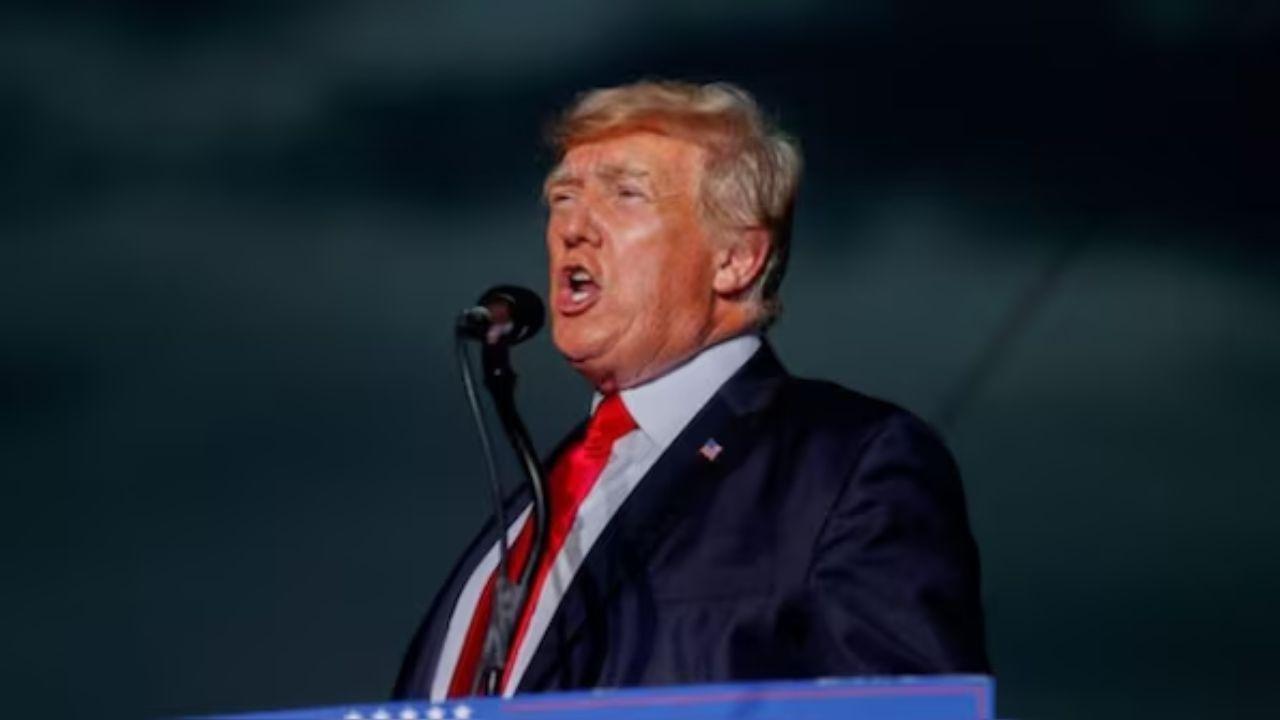
The Trump administration diverted billions of dollars from US military funds in 2025 to support immigration enforcement operations, according to a report released by Democratic lawmakers in Washington. The report claims that more than $2 billion meant for national defence was redirected toward border security, deportations, and detention efforts, raising serious concerns about military readiness and national security.
Titled “Draining Defense: Trump’s Immigration Stunts Cost Billions at the Expense of Military Readiness, Morale, and National Security,” the report states that the Department of Defense spent large sums on immigration-related missions that fall outside the military’s primary role. Lawmakers warned that these expenses weakened the armed forces and placed unnecessary strain on servicemembers and military infrastructure.
According to the report, most of the money spent by the Pentagon has not been reimbursed by the Department of Homeland Security. As a result, defence funds were taken away from essential military needs such as training programmes, housing repairs, and infrastructure upgrades. Lawmakers said the impact was felt across military bases, including delays in barracks maintenance and repairs at schools attended by the children of US servicemembers.
The report details widespread use of active-duty troops and National Guard units for immigration enforcement across the United States. Thousands of troops were deployed to the US-Mexico border and to major cities including Los Angeles, Chicago, Portland, and Memphis. Border deployments alone reportedly cost around $1.3 billion, while domestic deployments added another $258 million to the bill.
In Los Angeles, a military deployment to assist Immigration and Customs Enforcement resulted in costs estimated at $172 million. These expenses covered food, shelter, transportation, payroll, logistics, and the demobilisation of Marines and National Guard personnel assigned to the operation.
Detention operations on military bases also accounted for hundreds of millions of dollars. The report states that the Department of Defense spent more than $420 million on detention activities, with over $363 million spent at Fort Bliss in Texas alone. Lawmakers noted that the facility has reportedly violated dozens of federal standards for immigrant detention.
The report also highlights the expansion of immigration detention at Guantánamo Bay, a move described as a sharp departure from previous policy. According to the findings, the military spent around $40 million detaining noncitizens at the base in just one month. Detention at Guantánamo was found to be far more expensive than holding detainees inside the United States due to high transportation, staffing, and infrastructure costs.
Military aircraft were also used for deportation flights, significantly increasing expenses. The report states that operating a C-17 military aircraft costs approximately $28,500 per hour, compared to $8,500 per hour for a standard immigration enforcement flight. By September 2025, more than $33 million had been spent on deportation flights using military planes, including flights to India that reportedly cost around $3 million each.
Another concern raised in the report was the reassignment of military lawyers. Up to 600 Judge Advocate General officers were authorised to serve temporarily as immigration judges. Lawmakers estimated this move cost about $55 million in pay and benefits, while also reducing the military’s ability to handle its own legal and disciplinary responsibilities.
Beyond financial costs, the report warns that the diversion of military resources created serious risks to readiness. Combat-ready units were reassigned to immigration missions, limiting their availability for emergency or overseas operations. National Guard deployments also reduced states’ ability to respond to natural disasters such as floods and wildfires.
Lawmakers concluded by urging the administration to end the use of military funds and personnel for immigration enforcement and called for full reimbursement from the Department of Homeland Security. They warned that continued diversion of defence resources could weaken America’s ability to respond to global security threats, a concern shared by US allies and strategic partners, including India.









Josh Kerr and Jakob Ingebrigtsen Set for 1,500m Rivalry Rematch
Josh Kerr and Jakob Ingebrigtsen will renew their 1,500m rivalry at the Ultimate Championship in Bud

PSG Coach Luis Enrique Urges Players to Step Outside Comfort Zone
PSG coach Luis Enrique says players must leave their comfort zone and keep improving as the club tar

China’s Tiangong Sets New 400m Record at Robot Olympics
China’s Tiangong robot sets a new 400m record at the Robot Olympics, beating a South African robot i

George Russell Wins Dutch GP Sprint, Boosts Mercedes Morale
George Russell wins the Dutch GP Sprint from pole as Mercedes teammate Kimi Antonelli extends his F1

Australia 50/3 After Bangladesh Bowled Out for 64 in Second Test
Australia reached 50/3 after Bangladesh were bowled out for 64 in the second Test, with Mitchell Sta

Jordan Burroughs Returns to Wrestling with 2028 Olympic Dream
Jordan Burroughs returns to wrestling with Real American Freestyle as the Olympic champion eyes a po