You have not yet added any article to your bookmarks!
Join 10k+ people to get notified about new posts, news and tips.
Do not worry we don't spam!

Post by : Laxmi Verma
In a world where international travel has become more accessible than ever, understanding entry requirements is essential. With different countries offering different types of visas, many travelers find themselves confused by terms like visa-free, visa-on-arrival, and eVisa. Knowing the difference between visa-free, visa-on-arrival, and eVisa can save time, reduce stress, and help you prepare properly for your next adventure.
Each visa type determines how easily and quickly you can enter a country, how much documentation you need, and how far in advance you should plan. While they might sound similar, these terms involve very different processes. Let’s explore what sets them apart and how each affects your travel experience.
Visa-free travel is the simplest and most convenient of the three entry types. If a country offers visa-free access to citizens of your nationality, it means you don’t need to obtain any visa—online, on arrival, or otherwise—before or during your trip. You simply arrive at the border with a valid passport and are allowed entry, usually for a specific number of days, for tourism, short-term business, or transit purposes.
Although visa-free entry removes the paperwork, it doesn’t eliminate immigration control altogether. Travelers may still be asked to show proof of return tickets, accommodation details, or financial means to support their stay. However, these checks are generally minimal, and in most cases, travelers experience a smooth and fast arrival process. Visa-free travel is often based on international agreements between countries, and it’s typically offered for short-term stays, ranging from 30 to 90 days, depending on the destination.
Unlike visa-free entry, a visa-on-arrival means you need permission to enter the country, but you don’t have to apply ahead of time. Instead, you complete the application process at the airport or border checkpoint when you arrive in the country. This usually involves filling out a form, showing your travel documents, paying a fee, and sometimes providing a passport photo or additional paperwork like hotel bookings or proof of funds.
Visa-on-arrival is a practical option for travelers who didn’t have time to prepare in advance or whose countries are eligible for this kind of entry. However, it can involve long lines and unexpected delays, especially at busy airports. It’s also important to know whether the country accepts cash or card payments for the visa fee, and to bring multiple copies of any required documents to avoid complications.
While convenient for spontaneous trips, visa-on-arrival still requires planning. Not all nationalities qualify for it, and requirements can vary depending on the purpose of your visit. Always check official government sources before your flight to confirm eligibility and the latest rules.
An eVisa, or electronic visa, is a modern, digital alternative to applying for a visa at an embassy. Instead of visiting a consulate or waiting in line at an airport, you can apply for an eVisa online before your trip. This usually involves completing a digital form, uploading scanned documents like your passport and a photo, and paying the fee electronically. Once approved, your eVisa is sent via email or made available for download, which you then print or save on your phone to present at the border.
eVisas are popular with countries that want to simplify their entry process while still maintaining some level of screening. They offer the convenience of not needing to visit an embassy and help avoid long queues upon arrival. However, eVisas must be applied for in advance—sometimes several days before travel—and processing times can vary depending on the country.
Many travelers prefer eVisas over traditional visa applications due to their simplicity, but it’s essential to apply through the official government portals to avoid scams or third-party fees. Like other visa types, the length of stay and the purposes allowed under an eVisa vary, so make sure you understand what your eVisa permits.
Understanding the difference between visa-free, visa-on-arrival, and eVisa options is more than just travel trivia—it’s key to avoiding unnecessary stress and unexpected costs. Many travelers have been turned away at the airport because they didn’t realize they needed an eVisa in advance, or they didn’t bring the correct documents for a visa-on-arrival.
Knowing which category applies to your destination helps you prepare properly. Visa-free travelers can focus more on their itinerary than paperwork, while those needing a visa-on-arrival or eVisa can ensure they meet all requirements well before boarding the plane. It’s also helpful for planning layovers or multi-country trips, where different visa types may apply at each stop.
The information in this article is intended for general guidance and informational purposes only. Visa policies and entry requirements can change frequently and may vary by country, nationality, and purpose of travel. Always consult the official website of the destination country's embassy or immigration authority for the most accurate and up-to-date information before making travel plans. We do not take responsibility for any changes or decisions made based on the content provided.



Lamborghini Catches Fire on Singapore's ECP, Causing Heavy Traffic
A Lamborghini caught fire on Singapore's ECP, causing heavy traffic and bus delays. No injuries were

Bangkok Airport Duty-Free Area Flooded by Pipe Burst
A burst water pipe flooded the duty-free shopping area at Bangkok's Suvarnabhumi Airport on July 16,
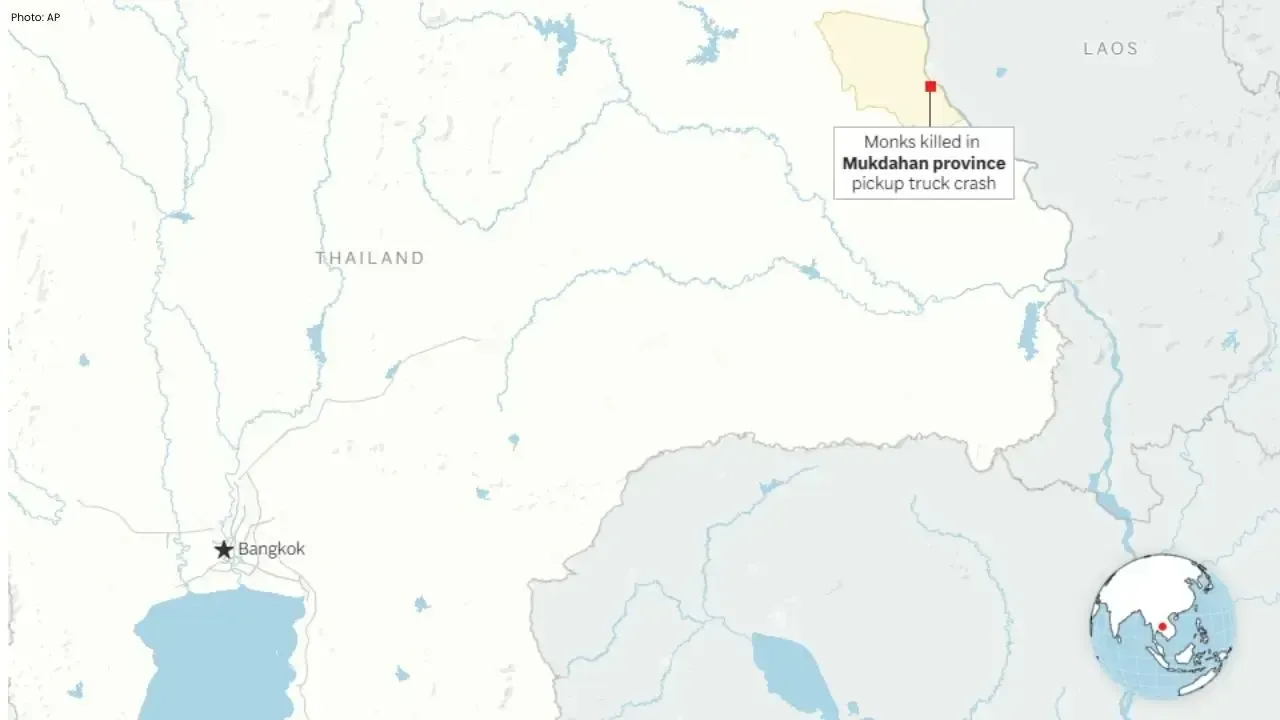
Nine Monks Killed in Thailand Pickup Truck Tragedy
An 11-year-old boy driving a pickup truck crashed into monks during a pilgrimage in northeastern Tha
Anwar Congratulates Xi on CPC's 105th Anniversary
Malaysia reaffirms strong ties with China as PM Anwar Ibrahim sends a congratulatory letter to Presi
Thai Agriculture Team Reviews 2026 Farm Development Plans
Agriculture Ministry officials inspected livestock and organic rice projects in Nakhon Sawan to moni
Thailand, Canada Boost Ties in PM-Level Phone Talks
Thailand and Canada agreed to strengthen trade, security, OECD cooperation and ASEAN-Canada FTA talk