You have not yet added any article to your bookmarks!
Join 10k+ people to get notified about new posts, news and tips.
Do not worry we don't spam!

Post by : Anis Farhan
Indian benchmark indices began the trading session with muted movement, reflecting a wait-and-watch approach among investors. Early indications from GIFT Nifty pointed to a largely flat opening, setting the tone for a range-bound start. As trading progressed, volatility increased marginally, with benchmarks slipping into negative territory at intervals before attempting brief recoveries.
Market participants appeared reluctant to take aggressive positions ahead of key global and domestic cues, preferring selective stock-specific bets rather than broad-based buying.
Major Asian equity markets traded with a positive bias during the session, supported by optimism around global economic stability and firm cues from Wall Street. Markets in Japan, South Korea, and parts of Southeast Asia posted modest gains, helping limit downside pressure on Indian equities during early trade.
However, the strength in Asia was not strong enough to trigger a decisive rally in domestic markets, as investors remained cautious about near-term earnings visibility and valuation comfort.
Overnight, US equity markets closed in the green, aided by selective buying in technology and consumer-linked stocks. The positive close offered some support to global risk sentiment, but its impact on Indian markets remained limited as domestic investors focused on local factors and recent market trends.
The Sensex and Nifty oscillated between small gains and losses through the session, reflecting indecision at higher levels. Selling pressure was visible in select heavyweight stocks, which capped upside momentum, while pockets of buying in defensive and metal stocks helped prevent a sharper fall.
Market breadth remained tilted toward the negative side, indicating that declines were broader than advances, even as headline indices appeared relatively stable.
Metal stocks attracted buying interest, supported by stable global commodity prices and expectations of steady demand. Some defensive segments, including select FMCG and insurance stocks, also saw mild gains as investors sought relative safety amid uncertain market conditions.
Information technology stocks traded under pressure, with investors booking profits after recent gains and reacting cautiously to global demand outlook cues. Auto stocks also witnessed selling, weighed down by valuation concerns and mixed outlook on near-term demand trends.
Banking and financial stocks showed mixed movement, with private lenders trading marginally lower while select PSU banks attempted minor recoveries. Overall, the sector failed to provide clear leadership to the broader market.
The India volatility index edged higher during the session, reflecting increased nervousness among traders. The rise in volatility suggested that participants are bracing for sharper moves in either direction, driven by global developments, macroeconomic data, and corporate earnings updates.
Higher volatility often indicates uncertainty, and the current levels suggest that markets may remain sensitive to news flow in the near term.
Broader markets continued to underperform frontline indices, with midcap and smallcap stocks witnessing relatively higher selling pressure. Concerns around stretched valuations and profit-taking after recent rallies kept investors cautious in these segments.
Analysts note that the underperformance of broader markets could persist until there is clearer visibility on earnings growth and overall market direction.
Investors remain focused on global economic indicators, including inflation trends, interest rate expectations, and geopolitical developments. Any shift in global risk appetite has the potential to impact emerging markets like India more sharply.
With the earnings season underway, stock-specific action is expected to dominate market movement. Investors are closely tracking corporate results for cues on demand trends, margin outlook, and management commentary.
After recent rallies, valuations in several sectors appear stretched, prompting cautious positioning. This has resulted in selective buying rather than aggressive accumulation across the board.
In the near term, Indian equity markets are expected to remain volatile and range-bound, tracking global cues and earnings-related developments. Analysts believe that strong stock-specific performances could still emerge, even if benchmark indices struggle to post sharp gains.
Investors are advised to focus on fundamentally strong companies, maintain disciplined risk management, and avoid chasing momentum in overheated segments.
The Indian stock market session reflected a cautious and uncertain mood, with benchmarks trading flat to volatile amid mixed global signals. While positive cues from US and Asian markets offered some support, domestic factors and valuation concerns limited upside. As markets navigate through earnings season and evolving global trends, volatility is likely to remain a key feature in the short term.
Disclaimer:
This article is for informational purposes only and does not constitute investment advice. Market investments are subject to risk, and readers are advised to consult certified financial professionals before making any investment decisions.










Jordan Burroughs Returns to Wrestling with 2028 Olympic Dream
Jordan Burroughs returns to wrestling with Real American Freestyle as the Olympic champion eyes a po

Lamborghini Catches Fire on Singapore's ECP, Causing Heavy Traffic
A Lamborghini caught fire on Singapore's ECP, causing heavy traffic and bus delays. No injuries were

Bangkok Airport Duty-Free Area Flooded by Pipe Burst
A burst water pipe flooded the duty-free shopping area at Bangkok's Suvarnabhumi Airport on July 16,

Nine Monks Killed in Thailand Pickup Truck Tragedy
An 11-year-old boy driving a pickup truck crashed into monks during a pilgrimage in northeastern Tha
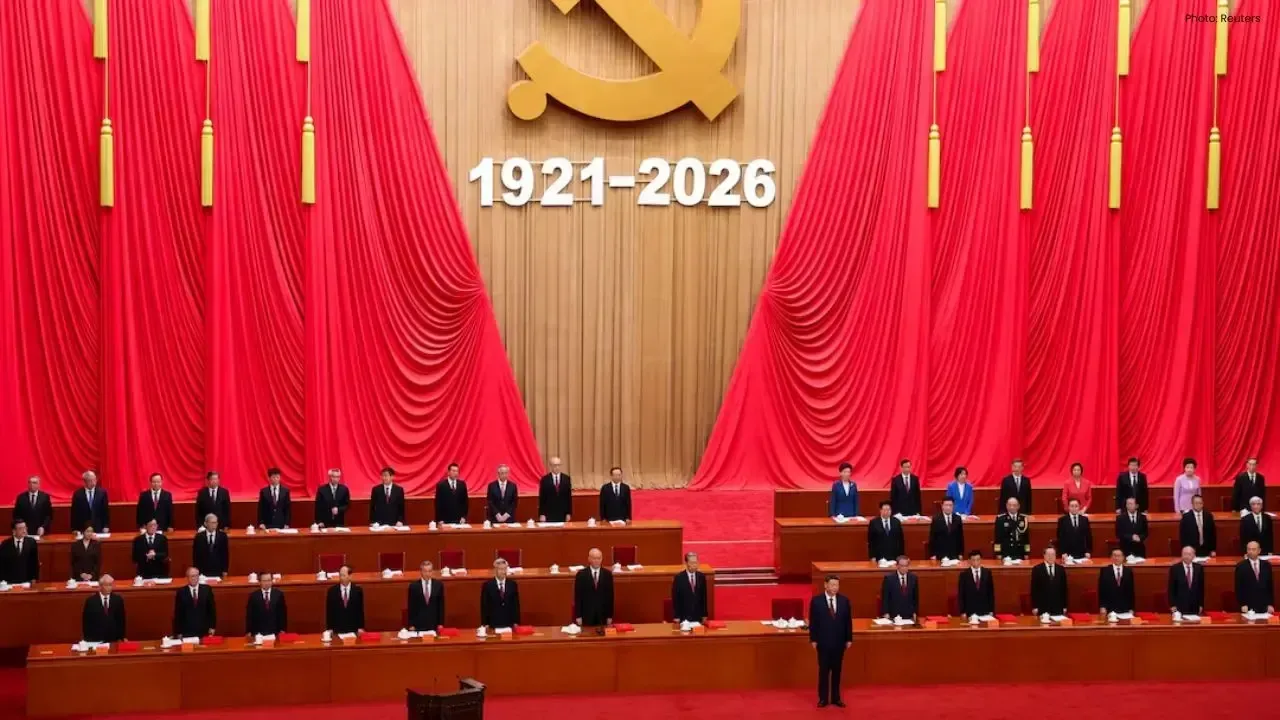
Anwar Congratulates Xi on CPC's 105th Anniversary
Malaysia reaffirms strong ties with China as PM Anwar Ibrahim sends a congratulatory letter to Presi

Thai Agriculture Team Reviews 2026 Farm Development Plans
Agriculture Ministry officials inspected livestock and organic rice projects in Nakhon Sawan to moni