
You have not yet added any article to your bookmarks!
Join 10k+ people to get notified about new posts, news and tips.
Do not worry we don't spam!
Post by : Meena Ariff
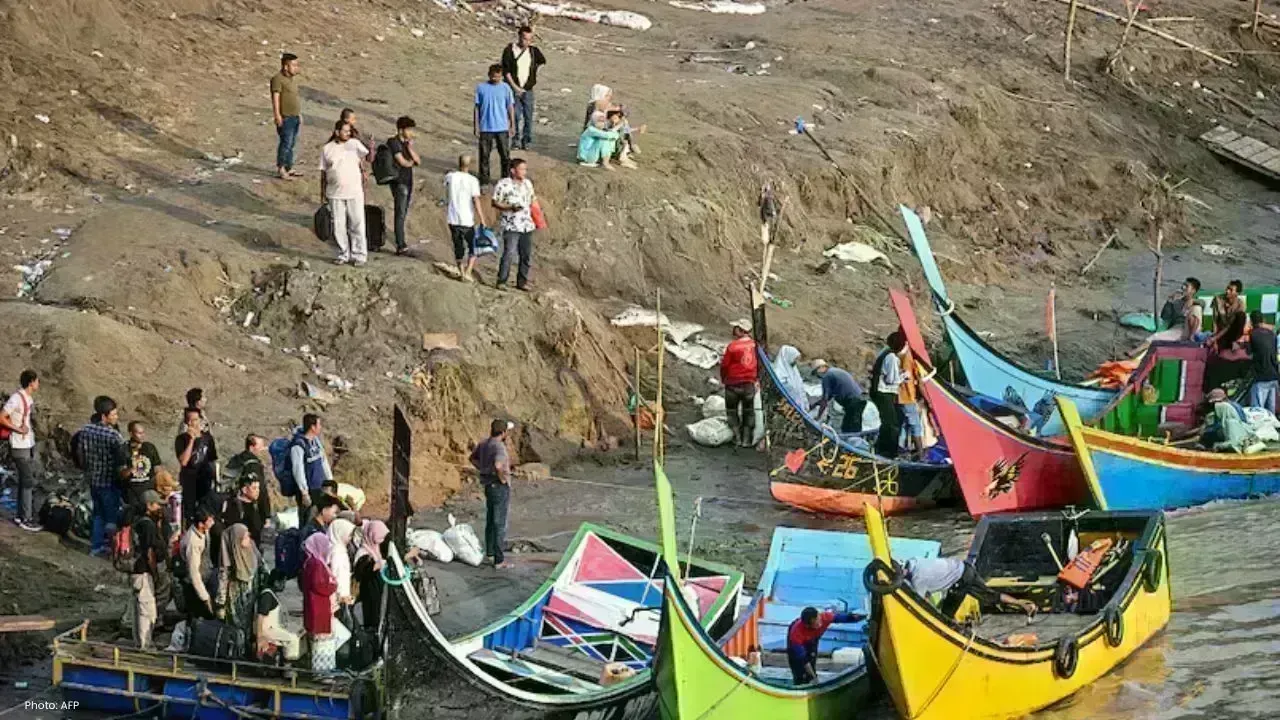
A surge of potent cyclones, spurred by unusually warm ocean temperatures, has led to one of South Asia's most catastrophic climate disasters in recent memory, with over 1,600 fatalities and millions displaced across Malaysia, Sri Lanka, and Thailand. Researchers indicate that the intensity of these storms was significantly amplified by rising global temperatures, which enhanced moisture retention in the atmosphere.
These weather systems gradually intensified over the northern Indian Ocean, accumulating heat and humidity before crashing into heavily populated areas. What started as typical monsoon rainfall escalated into relentless downpours over several days, causing landslides that obliterated entire neighborhoods and floods that engulfed communities within minutes. Many locals received warnings but were ill-prepared for the cyclones' severity, given their rarity near the equator.
In Sri Lanka, survivors recounted the harrowing experience of waking to the sounds of the ground giving way beneath them, while rescue teams persist in searching for those still unaccounted for beneath the thick mud. In some regions, water levels surged so abruptly that individuals trapped on second floors found themselves with no escape route. Emergency responders faced challenges reaching isolated areas after infrastructure like bridges, highways, and power lines was devastated by the floods.
Scientists engaged in post-storm evaluations assert that the cyclones would have been considerably weaker had it not been for the warming effect of decades of fossil fuel emissions. Initial findings suggest that the likelihood of such extreme rainfall events has significantly risen, transforming what was once a rare occurrence into a frequent threat for the region.
Environmental degradation has exacerbated the crisis. Deforested hillsides collapsed easily under the sheer weight of water, and rapidly expanding urban areas built on natural drainage paths faced the worst destruction. Hundreds of thousands of buildings were affected, and vital water supply systems were tainted, prompting relief organizations to strive to ensure access to clean water.
Preliminary economic analyses predict losses in the billions across the stricken nations, with Sri Lanka's damages alone accounting for a substantial portion of its national income. Officials and climate scientists warn that this disaster serves as a harbinger of future climatic threats, urging governments to improve early-warning mechanisms, fortify infrastructure, and equip communities for a future with more frequent and powerful storms.









Josh Kerr and Jakob Ingebrigtsen Set for 1,500m Rivalry Rematch
Josh Kerr and Jakob Ingebrigtsen will renew their 1,500m rivalry at the Ultimate Championship in Bud

PSG Coach Luis Enrique Urges Players to Step Outside Comfort Zone
PSG coach Luis Enrique says players must leave their comfort zone and keep improving as the club tar

China’s Tiangong Sets New 400m Record at Robot Olympics
China’s Tiangong robot sets a new 400m record at the Robot Olympics, beating a South African robot i

George Russell Wins Dutch GP Sprint, Boosts Mercedes Morale
George Russell wins the Dutch GP Sprint from pole as Mercedes teammate Kimi Antonelli extends his F1

Australia 50/3 After Bangladesh Bowled Out for 64 in Second Test
Australia reached 50/3 after Bangladesh were bowled out for 64 in the second Test, with Mitchell Sta

Jordan Burroughs Returns to Wrestling with 2028 Olympic Dream
Jordan Burroughs returns to wrestling with Real American Freestyle as the Olympic champion eyes a po

