
You have not yet added any article to your bookmarks!
Join 10k+ people to get notified about new posts, news and tips.
Do not worry we don't spam!
Post by : Rameen Ariff
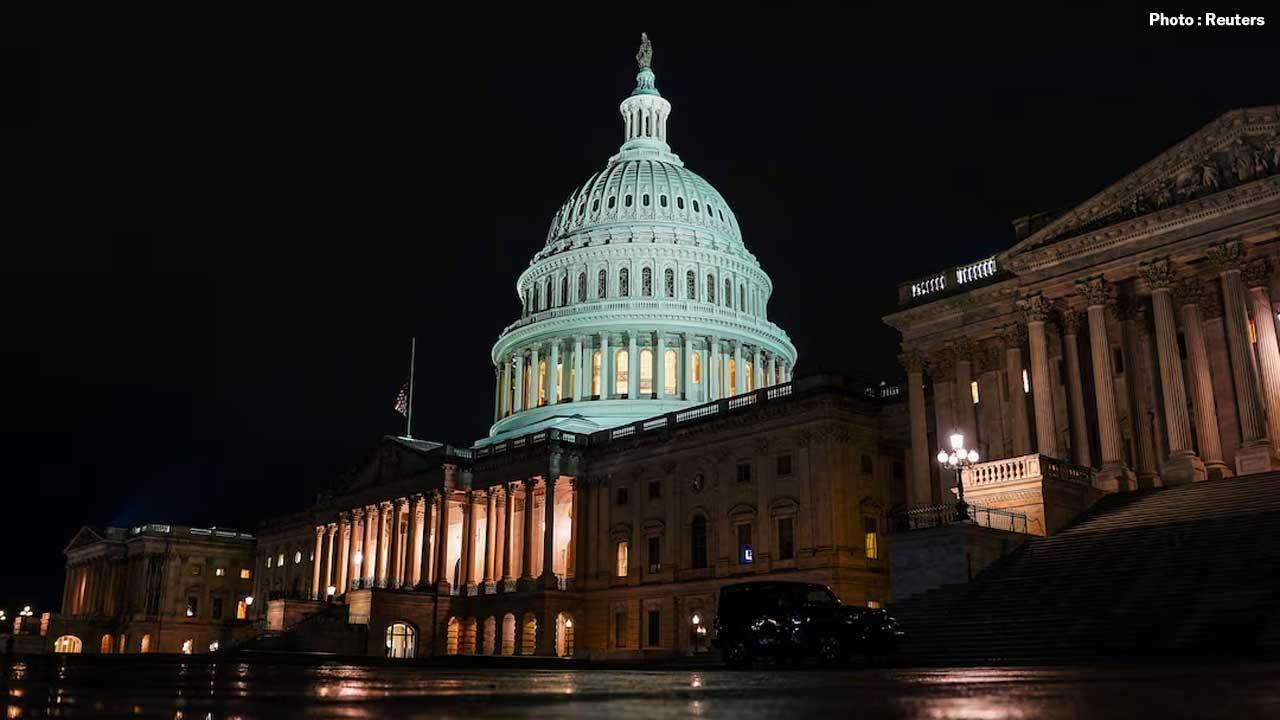
After 40 days of extraordinary disruption, the US government shutdown may be nearing resolution as a crucial Senate vote occurred over the weekend. Lawmakers successfully formed a bipartisan deal to reinstate federal functions and ensure pay for millions of employees negatively affected by this unprecedented shutdown.
The Senate's approval came after extensive negotiations, with a coalition of Democrats and Republicans joining forces to push the measure forward. This vote represents a significant step in resolving the shutdown that initiated on 1 October, leaving roughly 1.4 million federal employees either furloughed or working without compensation.
Senate Majority Leader John Thune highlighted the shared commitment, stating, “We have senators from both parties eager to collaboratively tackle this crisis. The president is also open to working together on this matter.”
However, the agreement faces challenges ahead. It must be passed by the House of Representatives and fulfill further procedural requirements before normal governmental functions can fully resume. While the deal allocates funding for vital agencies like Veterans Affairs and Agriculture and assures back pay for federal employees, it only extends government financing until 30 January 2026. Hence, without additional legislation, another shutdown may be on the horizon early next year.
A critical aspect of the agreement is its approach to the Supplemental Nutrition Assistance Program (SNAP), ensuring continued assistance for about one in eight Americans reliant on this food safety net. Furthermore, a promise to debate in December regarding healthcare subsidies is included, an essential issue for Democrats advocating for access to affordable health coverage for millions.
Despite the progress, the deal has faced backlash from some Democratic leaders, who argue it inadequately addresses the healthcare situation. Senate Minority Leader Chuck Schumer remarked, “This bill fails to tackle the healthcare crisis,” hinting at potential challenges in the House. Prominent Democrats, including California Governor Gavin Newsom, have criticized the measure as “pathetic” due to its lack of firm commitments on healthcare support.
The ramifications of the US government shutdown extend beyond the unpaid workers; significant disruptions to air travel, public services delays, and interruptions to food assistance for lower-income populations have been observed. Analysts warn that while the Senate vote is a substantial advancement, ongoing vigilance is essential to prevent a recurrence of the shutdown in the upcoming year.
As the House prepares to evaluate the proposal, federal employees and citizens are hopeful for a resolution that could reinstate stability to governmental functions and crucial public services, potentially ending the longest government shutdown in US history.










PM Modi Pays Tribute to Mahatma Gandhi, Urges People to Support Khadi
PM Modi pays tribute to Mahatma Gandhi on Gandhi Jayanti and urges citizens to support Khadi and the

Amazon Seeks to Offload $8 Billion in Nvidia Chips to Investors
Amazon plans to move $8 billion in Nvidia chips to investors, using a new financing model to strengt

Samsung Raises Galaxy S26 Prices as Memory Chip Costs Rise
Samsung raises Galaxy S26 prices in South Korea as rising memory chip costs put pressure on smartpho

Lewis Hamilton Calls Singapore Grand Prix One of F1's Toughest Races
Lewis Hamilton discusses the demanding Singapore Grand Prix and brings Plus44 and Almave to Singapor

Denmark's Pandora Opens World's Largest Jewellery Factory in Vietnam
Pandora opens its largest jewellery factory in Vietnam, expanding global production, strengthening s

Gautam Gambhir Questions Batting-Friendly Pitches After India's Record ODI Chase
Gautam Gambhir questions batting-friendly ODI pitches after India’s record chase, calling for a bett

