
You have not yet added any article to your bookmarks!
Join 10k+ people to get notified about new posts, news and tips.
Do not worry we don't spam!
Post by : Saif Rahman
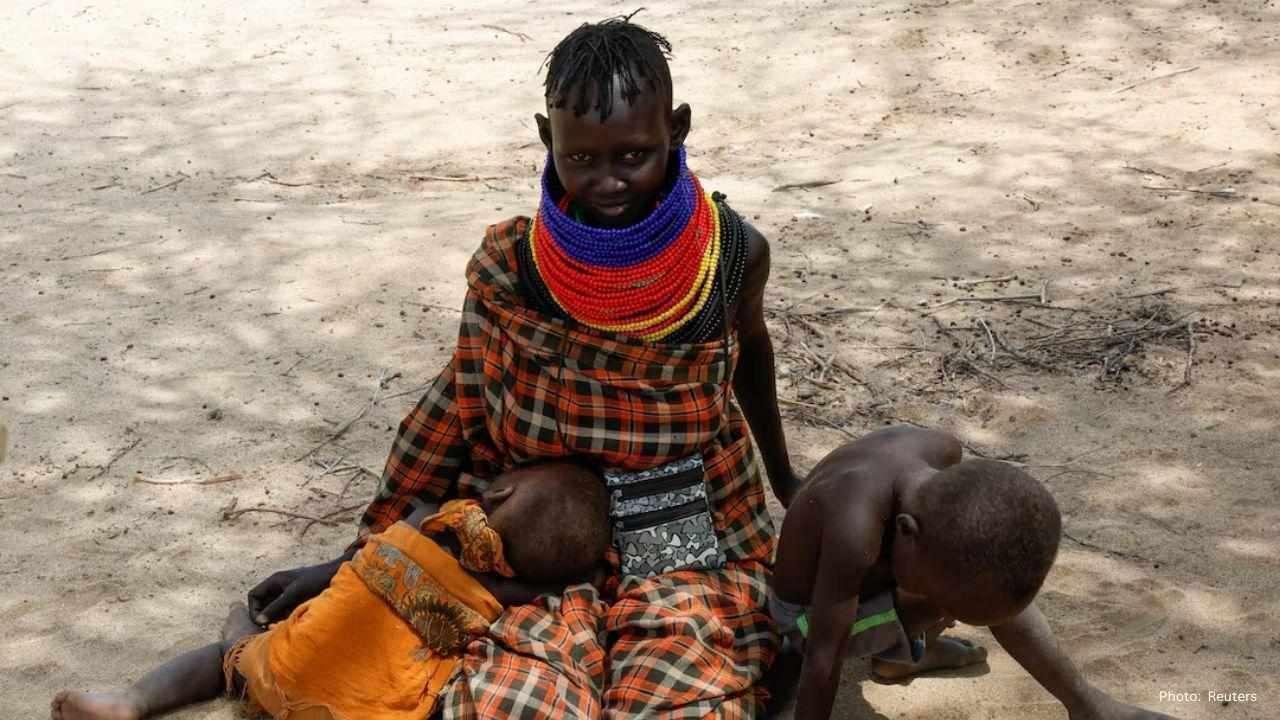
In northern Kenya, children are increasingly at risk as access to treatment for severe malnutrition diminishes. Families who previously relied on a steady provision of nutrient-dense therapeutic food now confront empty shelves and significant wait times, a consequence of substantial U.S. aid reductions that have disrupted global food assistance initiatives earlier this year. The situation is particularly dire in Turkana, one of Kenya's most arid and impoverished regions, where hunger has intensified due to drought, conflict, and livestock losses.
Four-year-old Peter Lokoyen embodies the growing crisis. His mother, Hellen Etiman, initially sought help from a clinic, where doctors anticipated a swift recovery with ready-to-use therapeutic food, a peanut-based paste critical for treating severe acute malnutrition. However, by July, the clinic's supplies ran out, leading to a resurgence of Peter's condition. Left with no alternatives, the family survives on wild fruits scavenged from the parched landscape. By late October, Peter’s weight had plummeted far below the healthy range for his age, a stark indicator of his stunted growth.
Peter’s plight mirrors countless others in Turkana, where health authorities report unprecedented shortages. Journalists visiting various clinics in late October observed a troubling trend: scant availability of the essential peanut paste, with some facilities lacking any stock for months, discouraging parents from bringing their children for necessary evaluations. As screening and follow-up appointments dwindle, many malnourished youngsters are vanishing from the healthcare system.
This predicament originates from U.S. President Donald Trump’s earlier decision to streamline operations at the U.S. Agency for International Development and to curtail international aid. The U.S. was previously responsible for about half of the therapeutic food accessed worldwide, and these cuts quickly reverberated through production and distribution networks. UNICEF, the leading global purchaser of such food, affirmed that while most funding was reinstated in March, the initial lapses have created lingering delays that Kenya is still grappling with.
Humanitarian organizations caution that the fallout is severe and potentially irreversible. Missing crucial treatment during formative growth phases can lead to lasting physical and cognitive impairments, with many children never fully recovering. Mercy Corps, a humanitarian aid group, warns that these shortages endanger lives; tragically, some children in other African nations have already perished after becoming disconnected from care.
Turkana's challenges serve as an alarming signal for the entire continent. Even as one of East Africa’s relatively stable economies, Kenya struggles to shield its children from hunger. Aid workers worry about the implications for nations grappling with conflict, political upheaval, or dire poverty. Currently, around 179,000 people in Kenya face acute hunger, with Turkana identified as one of the hardest-hit regions. By March of next year, over 87,000 young children in the county are projected to require treatment for acute malnutrition.
For families like Peter's, each day is a relentless battle. Years of drought have wiped out their goats, their sole source of consistent sustenance. Their last proper meal was merely a pot of tea, consumed more than a day before visitors arrived at their home. The emergency fruit caches Hellen has saved are now their only barrier against starvation. Even Peter, too weak to move much, stirs awake at the scent of crushed fruit, longing for any meager morsel.
Health practitioners report a heavy emotional toll. Descriptions of vacant benches in clinics once bustling with mothers and their children are common. While some recall past droughts, none have encountered such protracted famines devoid of therapeutic food. The existing shortages have eroded the trust communities held in their healthcare system, complicating future treatment efforts.
While the U.S. has pledged additional funding, including $93 million for UNICEF to procure therapeutic food for various countries, it could take months for supplies to normalize. For many children in Turkana, such delays could profoundly shape their life trajectories. Malnutrition during this critical developmental stage risks permanently stunting cognitive growth, making it increasingly challenging for children to learn and foster stable futures.
Currently, the Kenyan government hasn't addressed the aid shortages or U.S. funding cuts. Meanwhile, families in remote areas cling to hope that vital assistance will return before it’s too late. For those children already weakened by malnutrition, every delayed treatment day is a peril they can scarcely afford. The ongoing crisis in Turkana illustrates how even distant political decisions can drastically impact the lives of the world's most vulnerable children.








Josh Kerr and Jakob Ingebrigtsen Set for 1,500m Rivalry Rematch
Josh Kerr and Jakob Ingebrigtsen will renew their 1,500m rivalry at the Ultimate Championship in Bud

PSG Coach Luis Enrique Urges Players to Step Outside Comfort Zone
PSG coach Luis Enrique says players must leave their comfort zone and keep improving as the club tar

China’s Tiangong Sets New 400m Record at Robot Olympics
China’s Tiangong robot sets a new 400m record at the Robot Olympics, beating a South African robot i

George Russell Wins Dutch GP Sprint, Boosts Mercedes Morale
George Russell wins the Dutch GP Sprint from pole as Mercedes teammate Kimi Antonelli extends his F1

Australia 50/3 After Bangladesh Bowled Out for 64 in Second Test
Australia reached 50/3 after Bangladesh were bowled out for 64 in the second Test, with Mitchell Sta

Jordan Burroughs Returns to Wrestling with 2028 Olympic Dream
Jordan Burroughs returns to wrestling with Real American Freestyle as the Olympic champion eyes a po

