You have not yet added any article to your bookmarks!
Join 10k+ people to get notified about new posts, news and tips.
Do not worry we don't spam!
Post by : Rameen Ariff
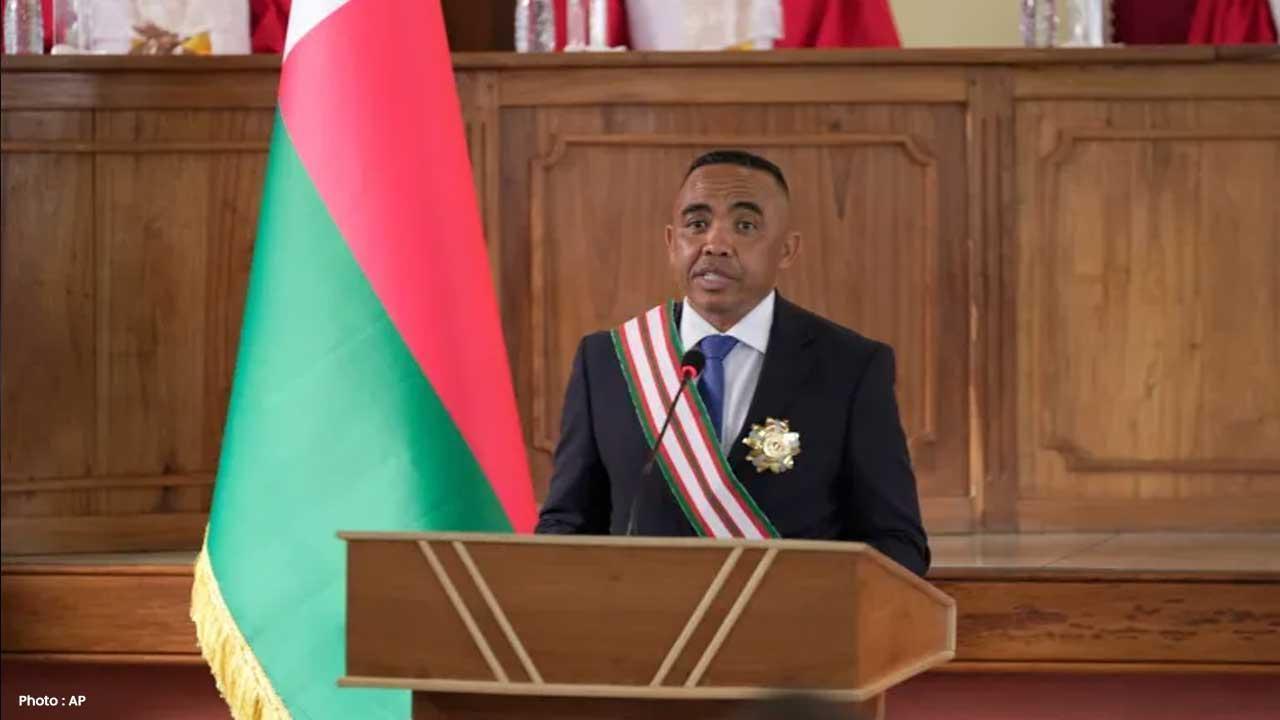
Weeks of nationwide protests in Madagascar over power and water shortages culminated in a military coup that ousted President Andry Rajoelina. Army officer Col. Michael Randrianirina was sworn in as Madagascar’s new leader, continuing a long global trend of military figures ascending from barracks to the presidential palace. Randrianirina’s rise is the latest example of how soldiers can leverage political instability to gain supreme authority, joining the ranks of military leaders worldwide who have taken control of nations through force, strategy, or opportunity. Across history, the path from barracks to palace has often reshaped countries, leaving legacies that are both celebrated and condemned.
In Myanmar, Min Aung Hlaing exemplifies a career military officer rising to national power. After decades ascending the military hierarchy, Min Aung Hlaing was appointed commander-in-chief in 2011 and later seized control of the country through a coup in February 2021. Declaring a state of emergency, he transferred all state power to himself and established the military government known as the State Administration Council (SAC). Min Aung Hlaing’s rise from barracks to palace demonstrates the consolidation of military authority over civilian governance and highlights the ongoing tensions between military power and democratic aspirations in Myanmar.
Uganda’s infamous leader Idi Amin followed a similar trajectory, rising from humble beginnings in the British colonial army to commander of Uganda’s military after independence in 1962. Amin seized power in a 1971 coup while President Milton Obote was abroad, exemplifying the rapid rise from barracks to palace. Initially welcomed as a reformer, Amin’s regime quickly turned into a brutal dictatorship characterized by widespread human rights abuses and political repression. Amin’s military background directly influenced his governance style, showing how soldiers-turned-presidents often maintain strict control and consolidate power with a mix of fear and authority.
Turkey’s Kenan Evren also illustrates the barracks-to-palace phenomenon. Evren rose through decades of military service to become chief of the general staff and led a coup in September 1980 amid political violence. After dissolving Parliament and ruling through the National Security Council, Evren assumed the presidency in 1982, rewriting the constitution to cement military influence. Evren’s rise from barracks to palace underscores how military figures can institutionalize their authority and reshape entire nations’ political frameworks, leaving long-lasting impacts on governance, law, and society.
Ghanaian leader Jerry Rawlings experienced a more complex path from barracks to palace, combining military coups with democratic elections. A pilot in the Ghanaian Air Force, Rawlings led a coup in 1979 and another in 1981, before eventually transitioning to a democratically elected presidency. Rawlings’ military background allowed him to navigate coups effectively, while his later democratic tenure involved economic reforms and controversial human rights practices. His career highlights the diverse ways soldiers can rise from barracks to palace, blending military discipline with political governance to leave multifaceted legacies.
Finally, Chile’s Augusto Pinochet is one of the most infamous examples of a military leader rising from barracks to palace. Pinochet, commander-in-chief of the Chilean army, led a bloody coup in 1973 that overthrew President Salvador Allende. Pinochet ruled Chile for 17 years, implementing radical economic reforms while overseeing widespread human rights abuses. His path from barracks to palace illustrates the extreme authority military leaders can wield, as well as the profound societal impacts, both positive and negative, that such transitions of power can create.
From Madagascar to Myanmar, Uganda, Turkey, Ghana, and Chile, the journey from barracks to palace has shaped global politics in profound ways. Soldiers who become presidents often leave indelible marks on their nations, wielding authority derived from military training, strategy, and decisiveness. While some bring stability or reforms, others impose harsh authoritarian rule, demonstrating the complex legacies that emerge when the barracks lead to the presidential palace. The phenomenon continues to remind the world of the fragile balance between military power and civilian governance.





ASML and Zeiss Target Next-Generation Chip Technology in 10 Years
ASML and Carl Zeiss are developing Hyper NA technology to print smaller chip circuits, with the next

Rabada Misses First Australia Test as South Africa Pick Two Spinners
Kagiso Rabada misses the opener as South Africa vs Australia begins, with Anrich Nortje returning an

Starc Compares Australia's Tough Year to McIlroy's Major Sweep
Mitchell Starc says Australia winning three away Test series and the World Cup would match Rory McIl

France’s Sesterce Plans $11 Billion AI Data Centre in Finland
Sesterce plans a $11 billion AI data centre in Finland, with major expansion, green energy plans and

Danaher to Launch AI-Powered Autonomous Research Lab in 2027
Danaher plans an AI research lab for 2027, combining robotics and automation to speed up drug discov

Musk Welcomes German Support for Tesla Driver Assistance Tech as EU Approval Push Continues
Elon Musk welcomes Germany's backing for Tesla FSD as the company seeks EU approval amid speed, safe