
You have not yet added any article to your bookmarks!
Join 10k+ people to get notified about new posts, news and tips.
Do not worry we don't spam!
Post by : Saif Rahman
The entry of the first climate migrants from Tuvalu into Australia highlights a significant moment in the narrative of climate change worldwide. Tuvalu, a diminutive nation in the South Pacific, faces the harsh reality of gradually submerging due to rising sea levels. For many of its inhabitants, the anxiety of losing their homes and cultural heritage is now palpable. This month, a group of Tuvaluans arrived in Australia under a special climate visa initiative aimed at providing them with safety, stability, and dignity.
With just about 11,000 residents, over a third of Tuvaluans applied for the climate visa established by Australia two years ago as part of a collaborative agreement. This program permits up to 280 Tuvaluans to migrate to Australia annually, ensuring Tuvalu does not deplete its skilled workforce too quickly.
Among the pioneering migrants are individuals who play pivotal roles in their homeland, including the first female forklift driver, a dentist, and a young pastor in training. Their arrival signifies that climate migration extends beyond mere survival; it encompasses the preservation of community identity and spirit.
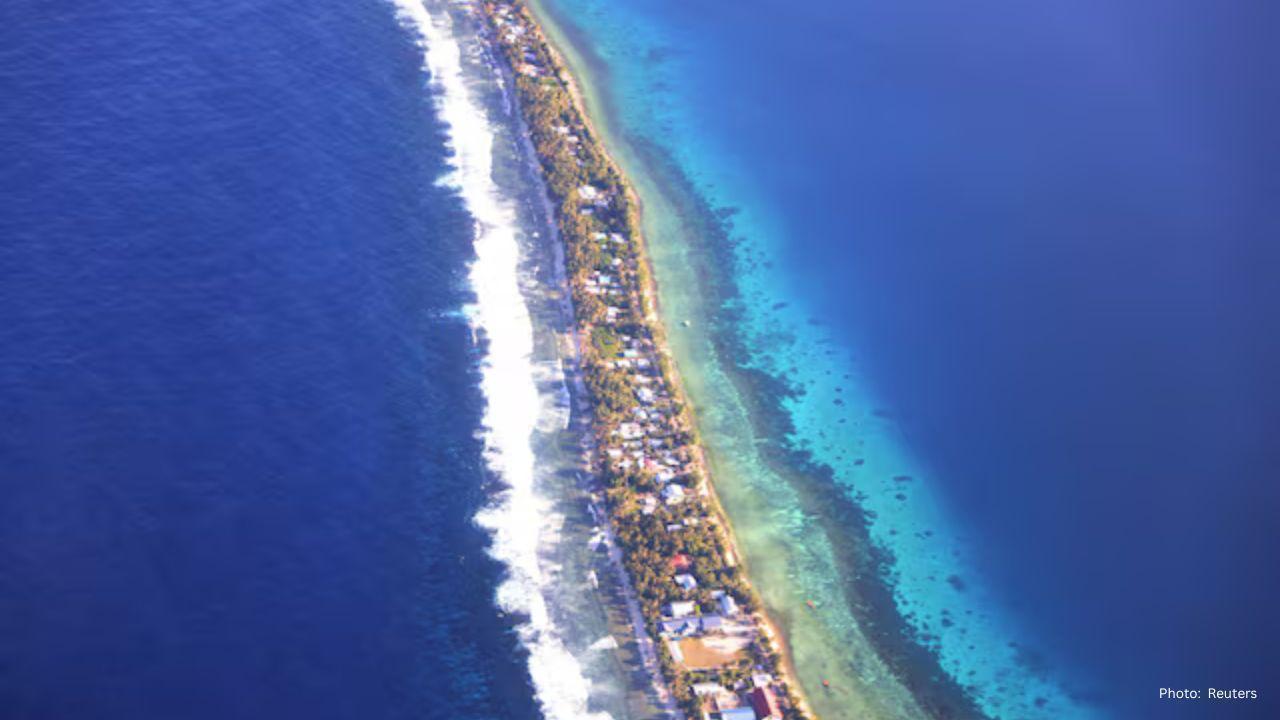
Tuvalu stands as one of the most vulnerable nations facing climate change. Its islands comprise low-lying atolls enveloped by the ocean. On Funafuti, the main island, expansive ground is often as narrow as a two-lane road. Many homes are thatched, and children frequently play football on the airport runway due to the scarce available space.
Experts caution that by 2050, half of Funafuti could experience daily flooding due to rising sea levels. In a worst-case scenario, a two-meter rise could lead to 90% of the main atoll being submerged. For numerous families, there is a genuine fear that the land they have known for generations might vanish entirely.
One of the new arrivals, Manipua Puafolau, aims to spiritually guide his fellow Tuvaluans as they adapt to life away from home. He plans to reside in Naracoorte, a small Australian town where other Pacific Islanders find employment in farms and meat processing plants. For him, this transition entails not just seeking safety or economic prospects but also preserving faith, unity, and cultural traditions.
Tuvalu’s Prime Minister, Feleti Teo, recently met with Tuvaluan communities in Melbourne, encouraging them to maintain connections to their heritage while embarking on their new lives abroad. His message emphasized that migration should not erase cultural identity.
Such concerns remain central to Australia’s climate visa program. Foreign Minister Penny Wong noted that the aim is to provide “mobility with dignity,” allowing Tuvaluans to study, work, and cultivate a future in Australia amidst worsening climate conditions back home.
Australia is also establishing support centers in Melbourne, Adelaide, and select regions of Queensland to assist incoming Tuvaluan families. These resources will aid them in securing housing, schools, and employment, easing their transition to a new community.
For many migrants, their aspirations are simple yet profound. Kitai Haulapi, Tuvalu’s first female forklift driver, has recently married and will commence her new journey in Melbourne, hoping to find stable work and send financial support back to her family.
Dentist Masina Matolu plans to relocate to Darwin with her three children. She envisions working with Indigenous communities and sharing knowledge with her homeland in the future. She believes that even from afar, she can continue to assist Tuvalu.
The arrival of Tuvalu’s first climate migrants underscores that climate change transcends environmental challenges—it is fundamentally a human narrative. It influences families, cultures, and identities. As more countries grapple with rising seas and extreme weather, there is a pressing need for compassionate and pragmatic assistance.
Australia’s decision to open its borders represents a critical movement towards that assistance. For Tuvaluans, this migration brings hope, safety, and an opportunity to sustain their culture, even as their homeland succumbs to the rising waters.









Josh Kerr and Jakob Ingebrigtsen Set for 1,500m Rivalry Rematch
Josh Kerr and Jakob Ingebrigtsen will renew their 1,500m rivalry at the Ultimate Championship in Bud

PSG Coach Luis Enrique Urges Players to Step Outside Comfort Zone
PSG coach Luis Enrique says players must leave their comfort zone and keep improving as the club tar

China’s Tiangong Sets New 400m Record at Robot Olympics
China’s Tiangong robot sets a new 400m record at the Robot Olympics, beating a South African robot i

George Russell Wins Dutch GP Sprint, Boosts Mercedes Morale
George Russell wins the Dutch GP Sprint from pole as Mercedes teammate Kimi Antonelli extends his F1

Australia 50/3 After Bangladesh Bowled Out for 64 in Second Test
Australia reached 50/3 after Bangladesh were bowled out for 64 in the second Test, with Mitchell Sta

Jordan Burroughs Returns to Wrestling with 2028 Olympic Dream
Jordan Burroughs returns to wrestling with Real American Freestyle as the Olympic champion eyes a po

