You have not yet added any article to your bookmarks!
Join 10k+ people to get notified about new posts, news and tips.
Do not worry we don't spam!
Post by : Anis Farhan
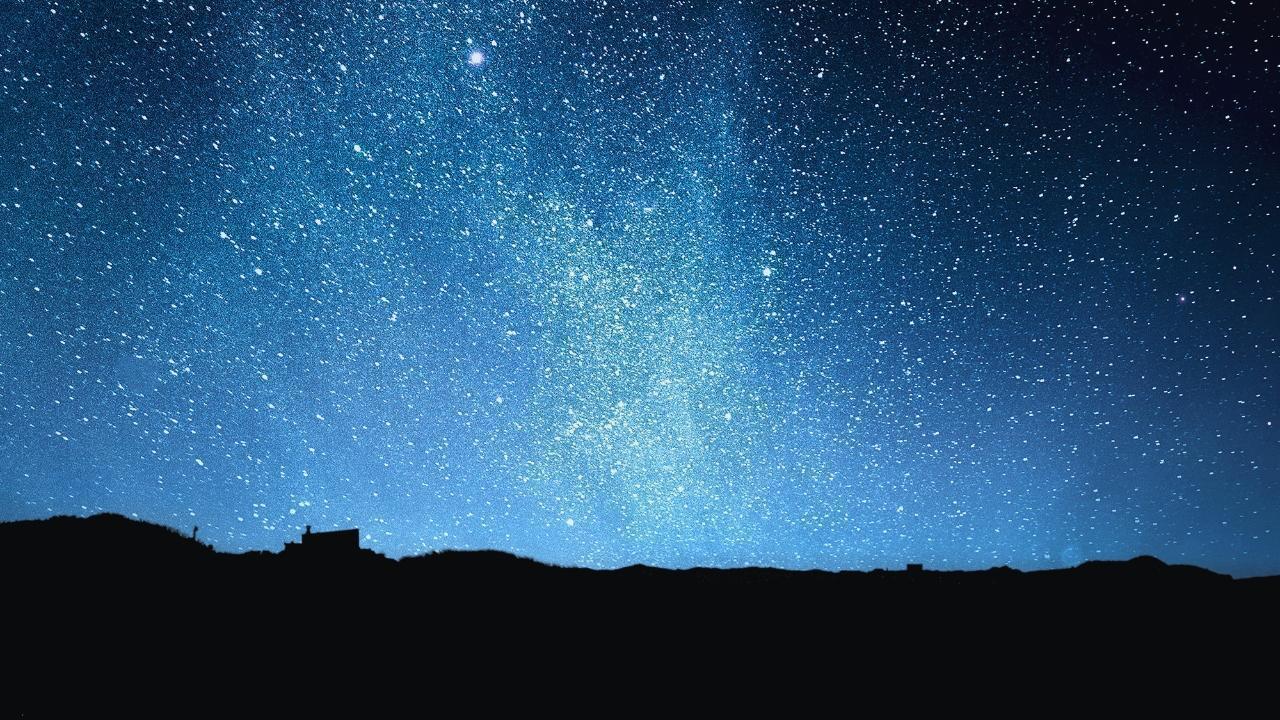
This August, nature is preparing to treat stargazers to one of the most dazzling cosmic displays of the decade—a night sky brimming with nearly 100,000 visible stars. From the shimmering cluster of the Pleiades to the glow of the Milky Way, this celestial show promises an awe-inspiring view for both seasoned astronomers and casual sky-watchers alike. It’s not just another stargazing event; it’s an astronomical alignment where clarity, timing, and geography come together to paint a masterpiece in the heavens.
Such grand spectacles remind us of humanity’s timeless fascination with the night sky. Long before telescopes and observatories, our ancestors looked to the stars for guidance, inspiration, and wonder. This month, we get the rare chance to reconnect with that same sense of cosmic amazement—only now, armed with a bit more science and technology to appreciate the full grandeur of what’s above us.
August has always been a golden month for stargazers, thanks to its clear skies and relatively warm nights in many parts of the world. The highlight of this month is typically the Perseid meteor shower, but this year’s sky has even more in store. Astronomical conditions—minimal moonlight interference, high atmospheric transparency, and Earth’s position relative to the Milky Way—are aligning to create a near-perfect viewing window.
With the moon entering a slim crescent phase during the peak nights, its dim glow will allow thousands of faint stars to shine through without obstruction. Combine this with the natural orientation of the Earth during August, which tilts the Northern Hemisphere toward the densest region of the Milky Way, and you have a recipe for an unforgettable celestial panorama.
Among the countless stars that will dominate the August sky, the Pleiades star cluster stands out as a crown jewel. Known as the Seven Sisters, this cluster is easily recognizable even to the naked eye, appearing as a small, shimmering grouping in the constellation Taurus. However, with clear skies and minimal light pollution, stargazers could see more than just the seven brightest stars; dozens of fainter stars that form part of the cluster could also become visible.
The Pleiades have held a place of significance in countless cultures worldwide. For the ancient Greeks, they represented the daughters of Atlas and Pleione. In Japanese tradition, they are called “Subaru,” a name that inspired the car company’s logo of six stars. Native American tribes, Polynesians, and many other cultures wove their own myths and legends around this glittering cluster, making it one of the most storied features of the night sky.
While the Pleiades will undoubtedly capture attention, the entire August sky will be alive with celestial wonders:
The Milky Way’s Core: The heart of our galaxy will arc across the sky, its dense concentration of stars creating a soft, ethereal glow visible even without telescopes from dark-sky locations.
Perseid Meteor Shower: One of the most anticipated meteor showers of the year, the Perseids peak around mid-August. Expect bright, fast-moving meteors streaking across the sky at a rate of up to 100 per hour under optimal conditions.
Planetary Guests: Depending on your location, planets like Jupiter and Saturn may also make prominent appearances. Saturn, with its iconic rings, will be particularly well-placed for observation this month.
Deep-Sky Objects: For those equipped with telescopes or even good binoculars, August nights will offer views of star clusters, nebulae like the Lagoon and Trifid, and even distant galaxies like Andromeda.
To truly enjoy this celestial extravaganza, preparation is key. Here are some practical tips:
Seek Dark Skies: Light pollution is the greatest enemy of stargazing. Head to rural areas or designated dark-sky parks for the best views.
Check the Weather: Clear skies are essential. Use reliable weather apps and satellite imagery to plan your night out.
Timing Matters: The best viewing window will be between midnight and the early pre-dawn hours when the sky is darkest.
Allow Your Eyes to Adjust: It takes about 20–30 minutes for your eyes to fully adapt to darkness. Avoid looking at bright screens during this time.
Bring Essentials: A reclining chair, warm clothing, snacks, and a red-light flashlight (to preserve night vision) will make your stargazing experience more comfortable.
Use Apps Wisely: Astronomy apps can help you identify constellations, planets, and deep-sky objects without disrupting your night vision too much.
What makes August skies so crowded with stars? The answer lies in our vantage point within the Milky Way. During this time of year, we are looking toward the galactic center, a region packed with billions of stars, gas clouds, and stellar nurseries. Our own solar system sits on the edge of one of the Milky Way’s spiral arms, and as Earth orbits the Sun, our orientation to the galaxy changes, giving us seasonal views of different stellar landscapes.
The sheer number of visible stars—estimated at around 100,000 under ideal dark-sky conditions—is a humbling reminder of our place in the cosmos. Even so, this is just a fraction of the Milky Way’s total population of 100–400 billion stars. And beyond our galaxy lie trillions of others, each teeming with its own stars and planets, suggesting that the universe’s wonders are virtually infinite.
Humanity’s relationship with the stars runs deep. Ancient civilizations used the night sky as a calendar, a navigation tool, and a canvas for storytelling. The Pleiades, for example, appear in the lore of cultures as diverse as the Greeks, the Maya, and the Maori. Seeing these same stars today links us to a shared human heritage that spans thousands of years.
Modern stargazing may be enhanced by apps and telescopes, but the emotional resonance remains the same. For city dwellers accustomed to the glow of streetlights and screens, escaping to a dark sky and witnessing a blanket of stars can be a profound experience—one that restores perspective and a sense of connection to something greater than ourselves.
For photographers, this August event is a dream come true. Capturing the Milky Way, star trails, or a meteor streaking across the sky requires careful planning but yields breathtaking results. A few tips for astrophotographers:
Use a wide-angle lens with a large aperture (f/2.8 or lower).
Set long exposures (15–30 seconds) on a sturdy tripod.
Use a high ISO setting, but balance it to avoid excessive noise.
Consider using apps to track the Milky Way’s position and the peak times for meteor activity.
Sharing these photos online not only celebrates the beauty of the cosmos but also inspires others to look up and appreciate what’s beyond their immediate world.
In a time when our lives are increasingly dominated by technology and daily stressors, events like this serve as a reminder to pause, breathe, and look upward. Stargazing is more than a hobby; it’s a bridge to curiosity and wonder, sparking questions that drive science forward. Are there other planets like ours orbiting those distant stars? Could life exist elsewhere? How did it all begin? These questions have fueled centuries of discovery and innovation—and they still do.
The universe rarely offers second chances for moments like these. Atmospheric conditions, lunar phases, and seasonal alignments won’t come together in quite the same way for years. So, whether you’re an avid astronomer, a photography enthusiast, or simply someone looking to escape the noise of everyday life, mark your calendar for this August. Find a quiet spot under a dark sky, let your eyes adjust, and lose yourself in a sea of stars.
Because in that quiet darkness, as 100,000 stars shimmer overhead, you’ll be reminded of a simple truth: in the grand expanse of the cosmos, we are small—but our capacity for wonder is infinite.
The details provided in this article are based on current astronomical forecasts and observational data available at the time of writing. Weather conditions, light pollution, and geographic location may affect visibility. Readers are encouraged to verify local conditions and safety guidelines before planning stargazing activities. This content is intended for educational and informational purposes only.









Lamborghini Catches Fire on Singapore's ECP, Causing Heavy Traffic
A Lamborghini caught fire on Singapore's ECP, causing heavy traffic and bus delays. No injuries were

Bangkok Airport Duty-Free Area Flooded by Pipe Burst
A burst water pipe flooded the duty-free shopping area at Bangkok's Suvarnabhumi Airport on July 16,

Nine Monks Killed in Thailand Pickup Truck Tragedy
An 11-year-old boy driving a pickup truck crashed into monks during a pilgrimage in northeastern Tha

Anwar Congratulates Xi on CPC's 105th Anniversary
Malaysia reaffirms strong ties with China as PM Anwar Ibrahim sends a congratulatory letter to Presi

Thai Agriculture Team Reviews 2026 Farm Development Plans
Agriculture Ministry officials inspected livestock and organic rice projects in Nakhon Sawan to moni

Thailand, Canada Boost Ties in PM-Level Phone Talks
Thailand and Canada agreed to strengthen trade, security, OECD cooperation and ASEAN-Canada FTA talk