You have not yet added any article to your bookmarks!
Join 10k+ people to get notified about new posts, news and tips.
Do not worry we don't spam!
Post by : Saif Rahman
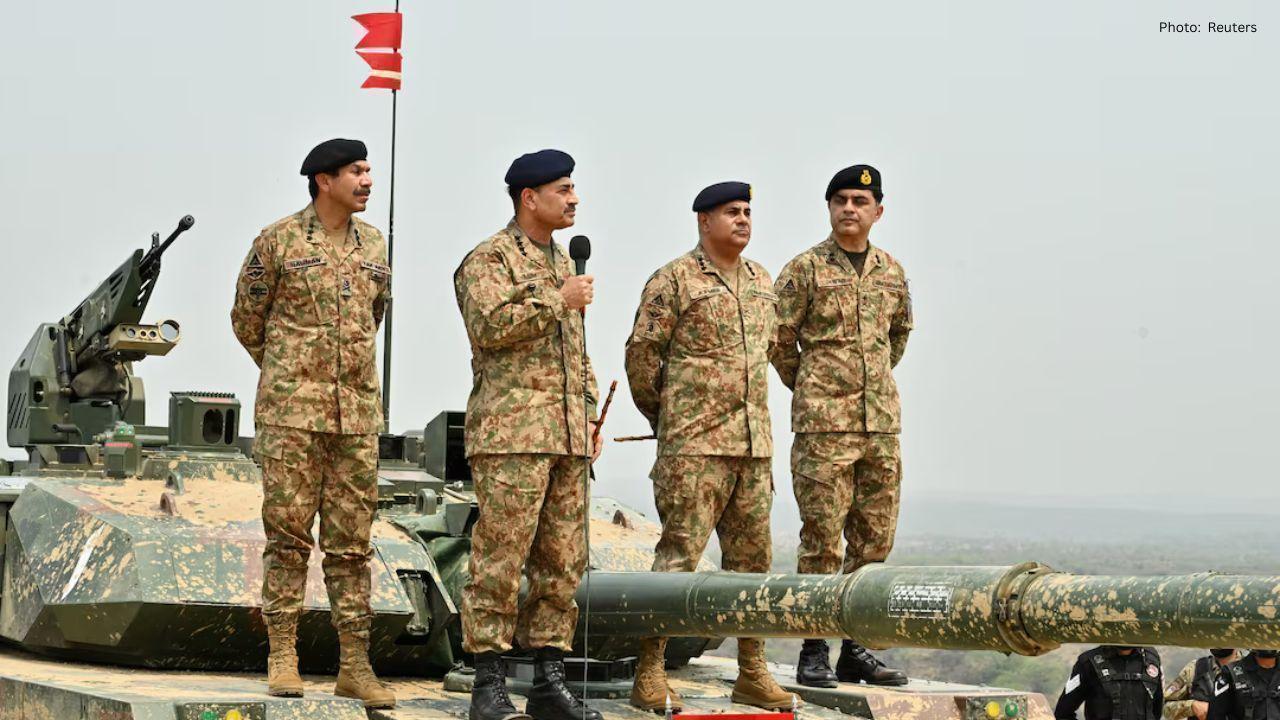
Field Marshal Asim Munir, head of Pakistan's military, is confronting a significant challenge as the United States presses for Pakistan's involvement in a proposed Gaza stabilization operation. This initiative, part of a larger strategy from US President Donald Trump aimed at aiding Gaza's reconstruction post-conflict, poses considerable political and security implications for Pakistan.
Reports indicate that Munir may visit Washington soon for discussions with President Trump, marking their third encounter in six months. The primary focus will likely center on Trump's proposal to assemble a force from Muslim nations to assist in managing the Gaza region during its rebuilding phase.
Gaza has suffered extensive destruction from over two years of Israeli military actions. Trump's blueprint suggests the presence of international troops to maintain peace, oversee reconstruction, and curb Hamas's influence. Many nations are cautious, as such a mission could embroil them in protracted conflicts and incite discontent among their populations.
With one of the strongest military forces in the Muslim world and the distinction of being the sole Muslim nation equipped with nuclear capabilities, Pakistan is seen by Washington as a pivotal partner. Analysts argue that this places added pressure on Munir to consider a favorable response.
Experts advise that a refusal could potentially anger President Trump, a situation Pakistan may prefer to circumvent. Islamabad is currently striving to enhance ties with Washington to attract US investment and military support following years of strained relations.
Conversely, mobilizing Pakistani soldiers to Gaza might incite domestic turmoil. In Pakistani society, there is a strong pro-Palestinian sentiment, with many religious and political factions opposing both Israel and the United States. Should Pakistani forces be deployed under a US-backed agenda, it could trigger significant protests and unrest.
This reaction is not unprecedented; Islamist groups in Pakistan possess the capacity to mobilize thousands in demonstrations. Although one significant anti-Israel Islamist organization was recently banned, its ideology continues to resonate with many followers.
Former Prime Minister Imran Khan's supporters remain dissatisfied with both Munir and military leadership. Any contentious foreign action could provide them with additional ammunition to rally against the military.
Currently, Asim Munir wields unprecedented authority among Pakistan's military leaders, overseeing all three branches of the armed forces and enjoying legal safeguards alongside an extended tenure. Analysts believe this empowers him to make bold choices, but also renders him accountable for the implications of those decisions.
Pakistan's Foreign Minister, Ishaq Dar, indicated that while the country might explore roles in international peacekeeping, disarming Hamas is not Pakistan's obligation. This reflects the intricate balance Islamabad is striving to maintain.
In the upcoming weeks, Munir faces the crucial task of managing relations with Washington while navigating domestic stability challenges. His decisions will significantly influence Pakistan's foreign policy, internal security, and the public's trust for years ahead.








Josh Kerr and Jakob Ingebrigtsen Set for 1,500m Rivalry Rematch
Josh Kerr and Jakob Ingebrigtsen will renew their 1,500m rivalry at the Ultimate Championship in Bud

PSG Coach Luis Enrique Urges Players to Step Outside Comfort Zone
PSG coach Luis Enrique says players must leave their comfort zone and keep improving as the club tar

China’s Tiangong Sets New 400m Record at Robot Olympics
China’s Tiangong robot sets a new 400m record at the Robot Olympics, beating a South African robot i

George Russell Wins Dutch GP Sprint, Boosts Mercedes Morale
George Russell wins the Dutch GP Sprint from pole as Mercedes teammate Kimi Antonelli extends his F1

Australia 50/3 After Bangladesh Bowled Out for 64 in Second Test
Australia reached 50/3 after Bangladesh were bowled out for 64 in the second Test, with Mitchell Sta

Jordan Burroughs Returns to Wrestling with 2028 Olympic Dream
Jordan Burroughs returns to wrestling with Real American Freestyle as the Olympic champion eyes a po