
You have not yet added any article to your bookmarks!
Join 10k+ people to get notified about new posts, news and tips.
Do not worry we don't spam!
Post by : Badri Ariffin
Ailsa Craig, a secluded island situated 10 miles (16 kilometers) from Scotland's southwest coast, remains pivotal in Winter Olympics as the origin of the rare granite that forms curling stones.
Kays Curling, headquartered in Mauchline near Ayr, possesses the sole rights to extract granite from this island. Having supplied stones for the Winter Games since curling's introduction as an official event in 1924 in Chamonix, the company has upheld that legacy since the sport’s return to the Olympics in Nagano 1998. Co-owner Jim English asserts that their stones have likely contributed to every gold, silver, and bronze medal awarded since.
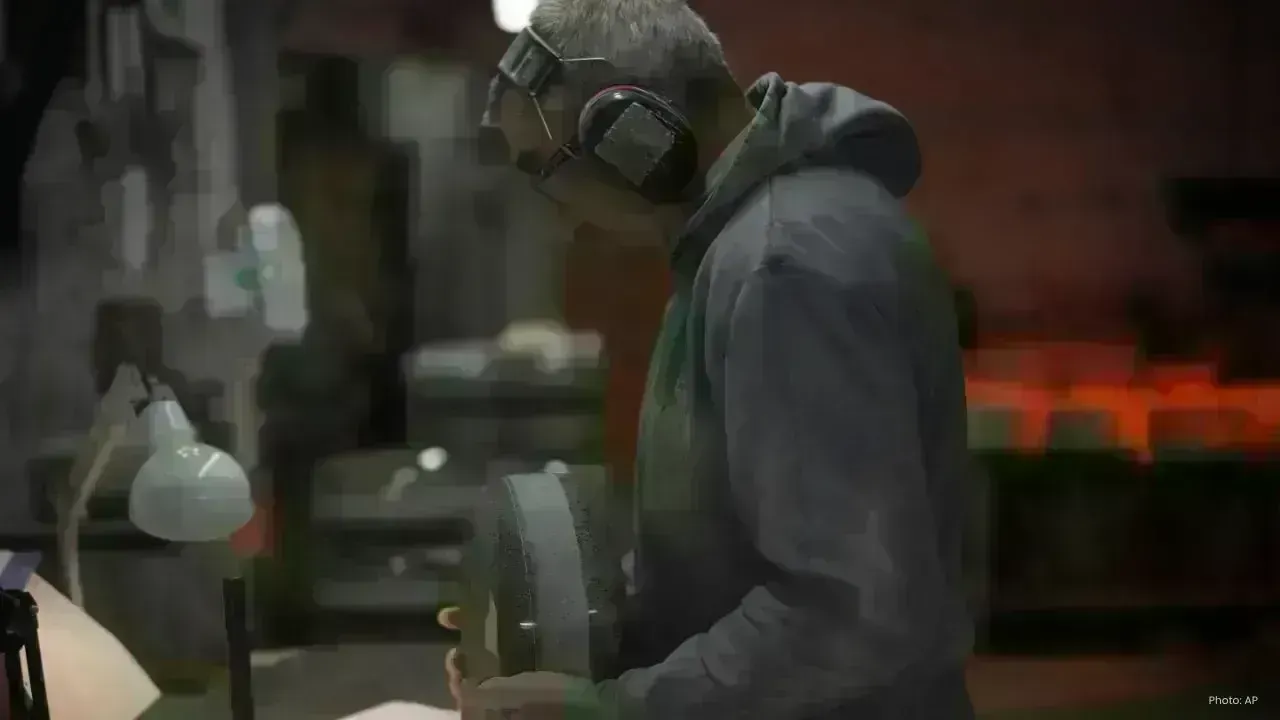
During routine evaluations on Ailsa Craig, English assesses granite boulders for flaws. The island is notable for two distinct granite varieties: the common green, used for a stone’s primary structure, and blue hone, known for its density and water-repellent properties, which constitutes the running surface. These characteristics render the granite perfect for curling, enabling stones to endure multiple impacts and extreme cold without breaking.
Experts theorize that the microgranite found on Ailsa Craig originated from volcanic activity millions of years ago. Its elasticity absorbs impact energy while blue hone granite ensures a seamless glide on ice. This specific granite type is unique globally.
The harvesting techniques differ by granite type. Common green granite is usually collected in large natural chunks of up to 10 tons, while blue hone needs careful extraction via gas charges to fracture the rock, yielding smaller blocks weighing under two tons. After extraction, the stones are transported to Girvan Harbour, crafted into circular shapes, and processed by Kays. Each stone typically weighs around 42 pounds (19 kilograms), with single-insert stones priced at £704 ($930) and double-insert ones at £750 ($990). A complete set of 16 double-insert stones goes for £12,000 ($15,860).
Environmental conservation is a major focus. The island hosts notable populations of gannets and gray seals; measures are in place to deter rodents, including traps to shield the wildlife.
Curling’s global popularity is on the rise. Kays produces between 1,800 and 2,000 stones each year, with Canada being their largest market. Interest is growing in China, Japan, and South Korea, particularly after the 2022 Beijing Winter Olympics. They have even shipped stones to unlikely places, including Qatar and Antarctica, where curling is offered as a luxury travel amenity.
As we look toward the Milan Cortina Winter Games, Ailsa Craig’s distinctive granite will once again be integral to Olympic curling, solidifying the island's enduring impact on the sport.









Josh Kerr and Jakob Ingebrigtsen Set for 1,500m Rivalry Rematch
Josh Kerr and Jakob Ingebrigtsen will renew their 1,500m rivalry at the Ultimate Championship in Bud

PSG Coach Luis Enrique Urges Players to Step Outside Comfort Zone
PSG coach Luis Enrique says players must leave their comfort zone and keep improving as the club tar

China’s Tiangong Sets New 400m Record at Robot Olympics
China’s Tiangong robot sets a new 400m record at the Robot Olympics, beating a South African robot i

George Russell Wins Dutch GP Sprint, Boosts Mercedes Morale
George Russell wins the Dutch GP Sprint from pole as Mercedes teammate Kimi Antonelli extends his F1

Australia 50/3 After Bangladesh Bowled Out for 64 in Second Test
Australia reached 50/3 after Bangladesh were bowled out for 64 in the second Test, with Mitchell Sta

Jordan Burroughs Returns to Wrestling with 2028 Olympic Dream
Jordan Burroughs returns to wrestling with Real American Freestyle as the Olympic champion eyes a po

