
You have not yet added any article to your bookmarks!
Join 10k+ people to get notified about new posts, news and tips.
Do not worry we don't spam!
Post by : Rameen Ariff
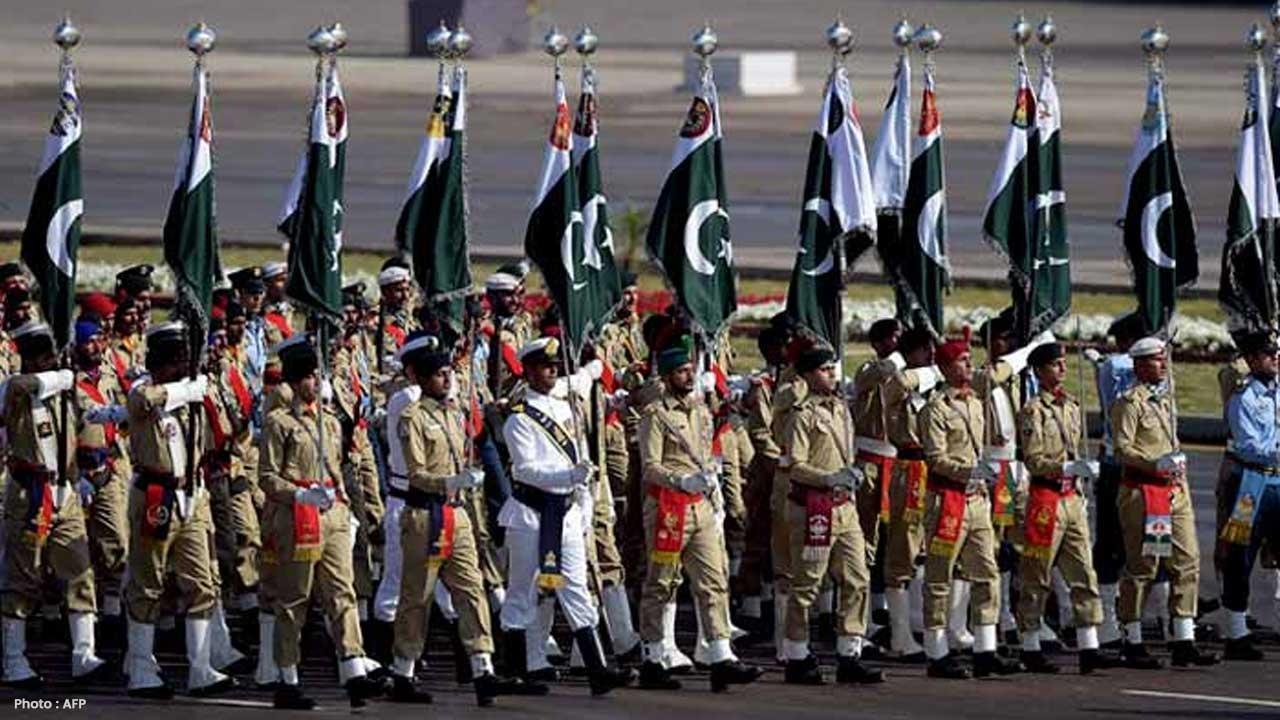
In a landmark decision, President Asif Ali Zardari has enacted three pivotal military amendment bills, following their approval in parliament this week. The bills – the Pakistan Army (Amendment) Bill 2025, the Pakistan Air Force (Amendment) Bill 2025, and the Pakistan Navy (Amendment) Bill 2025 – signal a major reorganization in the hierarchy of Pakistan’s armed forces.
Official notifications disseminated by the PPP via social media indicate that the president granted assent on Prime Minister Shehbaz Sharif’s recommendation, solidifying changes that promise to reshape military leadership and operational authority.
Reforms in the Army Amendment Bill
The centerpiece of the Pakistan Army (Amendment) Bill is a significant reform which stipulates that the Chief of Army Staff (COAS) will now also serve as the Chief of Defence Forces (CDF) for a duration of five years. Field Marshal Munir’s new term will be effective from the date this notification is issued.
Under Article 243, the provisions applicable to a Field Marshal will now pertain to a General elevated to this combined role. The federal government is authorized to empower the Vice Chief or Deputy Chief of Army Staff to exercise COAS functions as per written directives on the CDF’s suggestion. The COAS’s term will be acknowledged as having recommenced upon the issuance of this dual office notification.
The CDF will be responsible for overseeing multidimensional integration, reform, and collaboration among the Army, Navy, and Air Force. Additionally, the reform eliminates the Chairman Joint Chiefs of Staff Committee (CJCSC) position, substituting it with the Commander of the National Strategic Command. This commander will be appointed by the prime minister from among the existing Army generals for a three-year term, which may be renewed based on national security exigencies, with such appointments being subject to legal safeguards against challenge.
Transformations in the Air Force and Navy
The Pakistan Air Force (Amendment) Bill rescinds portions of the 1953 PAF Act that previously permitted the Air Force chief to occupy the CJCSC role, nullifying related terms, extensions, and retirement considerations. Similarly, the Pakistan Navy (Amendment) Bill abolishes elements pertaining to the Naval Chief’s designation as CJCSC, removing related references throughout the legislation.
Importance and Ramifications
These legislative reforms signify a substantial reconfiguration of military command in Pakistan, consolidating leadership power and shaping a more coherent command structure. Analysts believe this evolution strengthens joint operational capabilities, indicating a transition towards a streamlined, integrated defense strategy.
The removal of the CJCSC role and the amplification of the CDF’s authority are expected to enhance decision-making efficiency in matters of national security, thereby improving coordination among Pakistan’s armed forces.
While experts highlight that these reforms centralize command, they also seek to bolster accountability and operational efficiency within the military, positioning the armed forces more effectively to address intricate security challenges in the region.
With President Zardari’s endorsement, Pakistan's military setup has entered a transformative phase. The legislative shifts within the Army, Navy, and Air Force illustrate a strategic endeavor to enhance operational cohesion and redefine top-tier leadership roles, emphasizing the government’s commitment to modernizing the military amidst a rapidly changing security landscape.










PM Modi Pays Tribute to Mahatma Gandhi, Urges People to Support Khadi
PM Modi pays tribute to Mahatma Gandhi on Gandhi Jayanti and urges citizens to support Khadi and the

Amazon Seeks to Offload $8 Billion in Nvidia Chips to Investors
Amazon plans to move $8 billion in Nvidia chips to investors, using a new financing model to strengt

Samsung Raises Galaxy S26 Prices as Memory Chip Costs Rise
Samsung raises Galaxy S26 prices in South Korea as rising memory chip costs put pressure on smartpho

Lewis Hamilton Calls Singapore Grand Prix One of F1's Toughest Races
Lewis Hamilton discusses the demanding Singapore Grand Prix and brings Plus44 and Almave to Singapor

Denmark's Pandora Opens World's Largest Jewellery Factory in Vietnam
Pandora opens its largest jewellery factory in Vietnam, expanding global production, strengthening s

Gautam Gambhir Questions Batting-Friendly Pitches After India's Record ODI Chase
Gautam Gambhir questions batting-friendly ODI pitches after India’s record chase, calling for a bett

