You have not yet added any article to your bookmarks!
Join 10k+ people to get notified about new posts, news and tips.
Do not worry we don't spam!
Post by : Saif Rahman
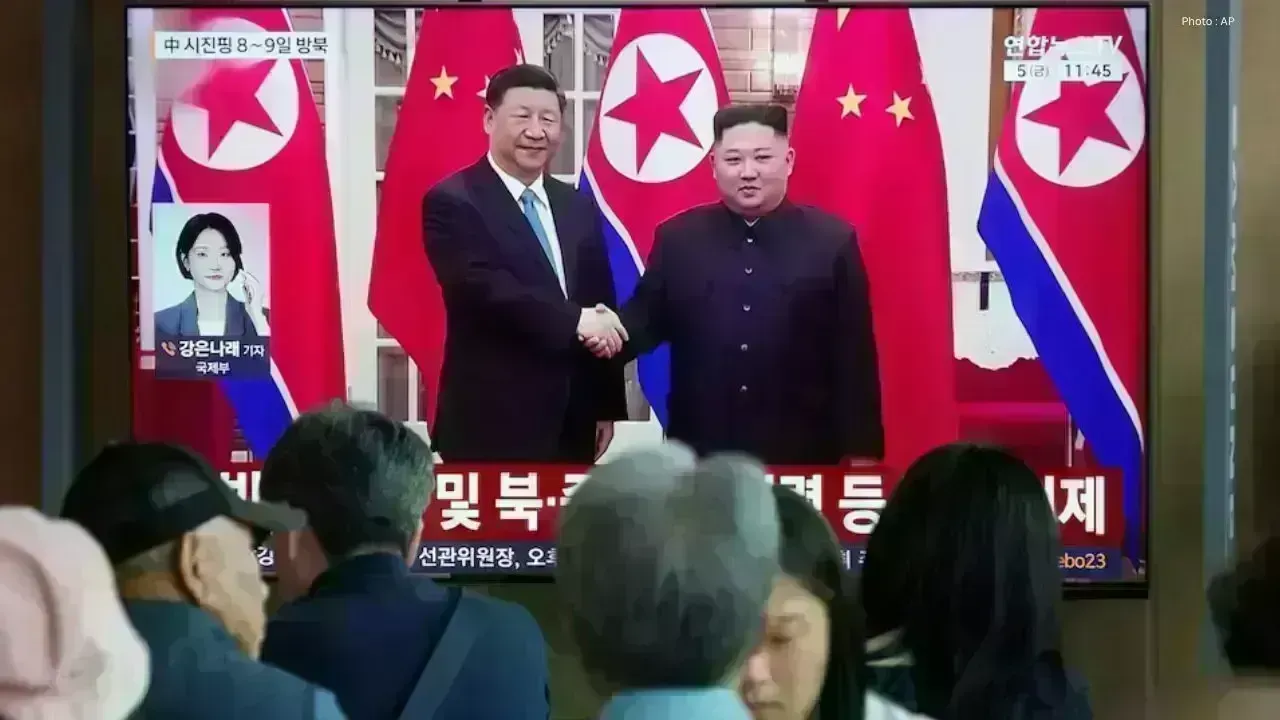
In nearly seven years, Chinese President Xi Jinping is preparing for his visit to North Korea. Scheduled amidst significant political and security developments in East Asia, this meeting with North Korean leader Kim Jong Un has garnered the attention of governments and analysts worldwide due to its implications for regional stability and future diplomatic engagement.
This visit transcends mere symbolism, evidencing China's intent to strengthen its ties with North Korea during a period of shifting geopolitical landscapes. Announced after major diplomatic interactions between China and other global actors, this trip signifies a noteworthy advancement in international relations.
Since Xi's last trip to Pyongyang in 2019, the region has seen substantial transformations, underlined by the COVID-19 pandemic, intensified competition among global powers, and emerging security issues. Consequently, the long hiatus between visits enhances the significance of this upcoming engagement.
Set to span two days, limited details about the agenda have been released; however, experts anticipate that discussions will center on political alliances, economic cooperation, and regional security matters.
The historical relations between Beijing and Pyongyang have been robust, with China serving as North Korea’s primary trading partner and most influential ally. Yet, the Korean state has gradually integrated more with Russia, complicating the diplomatic landscape. Analysts suggest this visit offers Beijing an opportunity to reaffirm its influence and maintain a close partnership with Pyongyang.
Notably, the announcement coincided with North Korea unveiling a new uranium enrichment facility, raising concerns among neighboring nations and the international community. In light of ongoing struggles to limit North Korea's nuclear ambitions, the visit's timing is crucial.
Securing stability on the Korean Peninsula is pivotal for Beijing, as any conflict could threaten trade relations and economic growth. Thus, was a critical aspect of the meeting likely to cover security issues, as indicated by many observers.
Moreover, China has increasingly ceased to be a passive actor in regional diplomacy. This year, South Korean officials even discussed the potential for Beijing to take on a larger role in reducing tensions and facilitating dialogue among regional stakeholders.
The impending visit underscores China's broader foreign policy ambitions to solidify its status as a crucial diplomatic player on the global stage. Strengthening relations with North Korea aligns perfectly with this overarching strategy.
For Pyongyang, hosting Xi Jinping is laden with significant political implications, showcasing that it continues to maintain ties with a major global economy amidst sanctions and diplomatic challenges.
The discussions could also create avenues for enhanced economic collaboration, despite the sanctions that hinder many trade options. Closer relations with China might offer North Korea a path to fortify some economic sectors.
On another front, this visit allows Kim Jong Un to highlight his nation’s international relationships. By nurturing strong affiliations with both China and Russia, the regime enhances its diplomatic agility in global negotiations.
The forthcoming dialogues are anticipated to capture the attention of governments from Asia and beyond, with South Korea, Japan, and the United States meticulously monitoring any developments arising from the encounter.
Enhanced collaboration between Beijing and Pyongyang that stems from this visit could have ramifications for future negotiations on security, sanctions, and regional stability, influencing the balance of power in East Asia.
While major policy breakthroughs are not guaranteed, the visit itself serves as a significant platform for strengthening trust, aligning priorities, and strategizing ahead of future diplomatic efforts.
Xi Jinping's forthcoming North Korea visit represents a pivotal moment in regional diplomacy, occurring amid nuclear anxieties and evolving alliances. The engagements will likely impact discussions on security, economic frameworks, and diplomatic relations moving forward.







APEC Members Emphasise Safe and Responsible Use of Artificial Intelligence
APEC members discuss responsible AI use, digital innovation and data governance as China and the US

Union of European Clubs Challenge UEFA and EFC Over EU Competition Rules
UEC files an EU competition complaint against UEFA and EFC, challenging club representation, governa

Mohammed Shami Retires From Test Cricket, Eyes White-Ball Career
Mohammed Shami retires from Test cricket after 13 years, with 229 wickets. He will continue playing

Singapore Warns Users About Privacy and Security Risks of AI Agents
Singapore warns users about AI agent security risks, data privacy, online scams and unauthorised acc

Chris Lynn Completes One-Month Ban After Positive Cocaine Test
Australian cricketer Chris Lynn completes a one-month ban after a positive cocaine test during the T

Djokovic Eyes Strong Season Finish as Health Improves Ahead of Paris Masters
Novak Djokovic reports improved health and performance as he targets a strong Paris Masters finish a