You have not yet added any article to your bookmarks!
Join 10k+ people to get notified about new posts, news and tips.
Do not worry we don't spam!
Post by : Badri Ariffin
Have you ever looked up at the night sky and seen the Moon glowing bright red, almost like a glowing ember? This breathtaking sight is not magic—it’s a natural event known as a Lunar Eclipse. People from all around the world stop to watch when the Moon takes on this “blood-red” appearance, filling the sky with wonder and mystery. But what really happens during a total Lunar Eclipse? Why does the Moon change color? And why do different cultures see it as such an important sign? Let’s explore the science, history, and meaning of this celestial show.
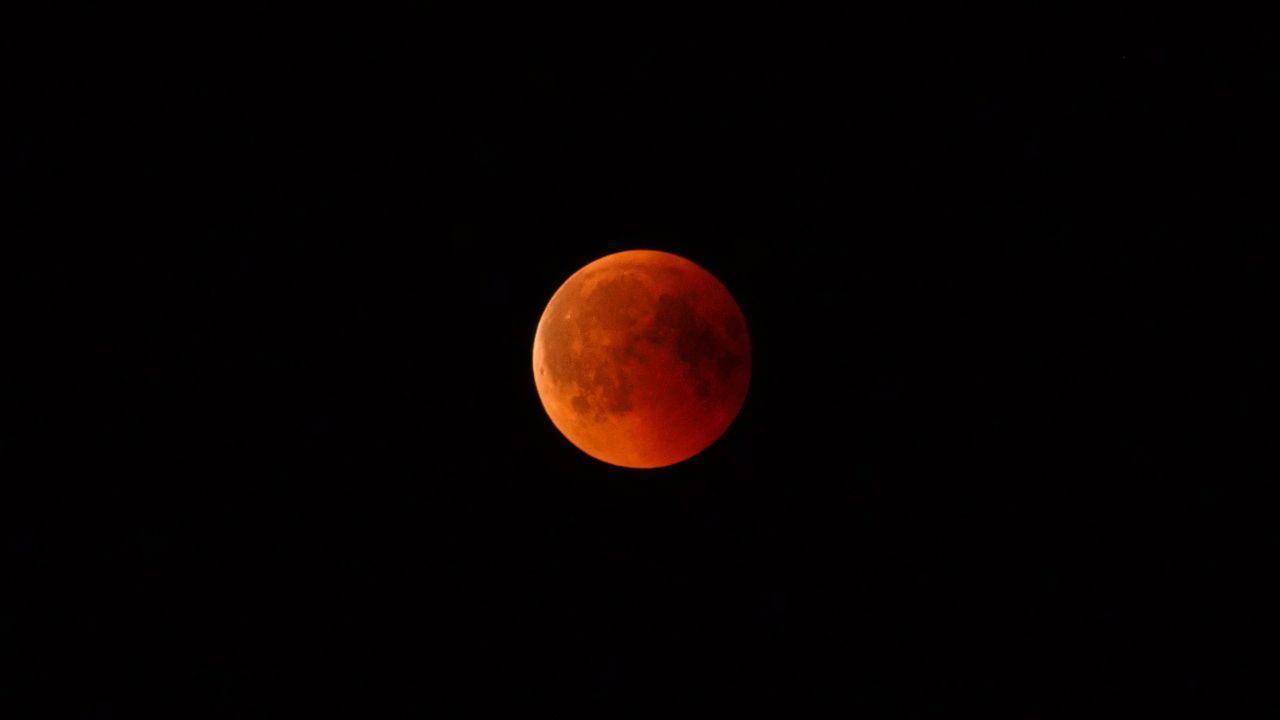
A Lunar Eclipse occurs when the Earth moves directly between the Sun and the Moon. This blocks the Sun’s light from reaching the Moon. Instead of complete darkness, something amazing happens—the Moon turns red. Unlike a solar eclipse, which is visible only from specific locations, a Lunar Eclipse can be seen from anywhere on Earth where the Moon is above the horizon. That’s why millions of people get to witness it at the same time.
The red glow of the Moon during a Lunar Eclipse is caused by Earth’s atmosphere. As sunlight passes through Earth’s atmosphere, the shorter blue light waves scatter in all directions. This is the same reason why the sky looks blue during the day. The longer red and orange wavelengths, however, pass through and bend around Earth. These red tones shine onto the Moon’s surface, making it appear red instead of dark. In simple terms, Earth’s atmosphere acts like a giant filter, painting the Moon red.
This effect is often compared to what we see during sunrise or sunset. Just as the Sun appears red near the horizon, the Moon reflects this reddish light during a Lunar Eclipse.
Not all eclipses are total, and not all turn the Moon red. Here are the main types:
Total Lunar Eclipse – The entire Moon passes through Earth’s shadow, turning completely red.
Partial Lunar Eclipse – Only part of the Moon enters Earth’s shadow, so only a portion turns red.
Penumbral Lunar Eclipse – The Moon passes through the lighter outer shadow of Earth. This type is harder to notice, as the color change is subtle.
The most dramatic and beautiful is the Total Lunar Eclipse, often called a “Blood Moon.”
The brightness and color of the red Moon during a Lunar Eclipse depend on Earth’s atmosphere. If the atmosphere has a lot of dust, smoke, or volcanic ash, the Moon can look darker or even deep copper-red. Clean air, on the other hand, makes the Moon appear brighter and lighter red. This means no two eclipses look exactly the same.
A Lunar Eclipse is rare but not as uncommon as some might think. On average, there are at least two Lunar Eclipses each year, but not all are total. Total Lunar Eclipses happen less frequently, usually every 2 to 3 years. Unlike solar eclipses, you don’t need special glasses to watch them. They are safe to see with the naked eye, making them even more popular among skywatchers.
Throughout history, people have looked at the Lunar Eclipse with awe and fear. Different cultures created myths and stories to explain why the Moon turned red:
Ancient Mesopotamia – People believed a red Moon meant bad luck for their king. They would sometimes put a substitute king in place to protect the real ruler.
Chinese Beliefs – Ancient Chinese saw a red Moon as a dragon trying to eat it. They would bang drums and make loud noises to scare the dragon away.
Native American Stories – Some tribes believed a red Moon signaled change or transformation.
Modern Times – Today, people see the Lunar Eclipse as a beautiful natural wonder rather than something to fear.
These stories remind us how deeply the Moon is connected to human culture and imagination.
For scientists, a Lunar Eclipse is more than just a spectacle. Astronomers use it to study Earth’s atmosphere. By observing how sunlight bends and changes color, they can learn about the particles and gases surrounding our planet. In addition, eclipses have been used to confirm important ideas in astronomy, like how light travels and how shadows work in space.
If you want to enjoy the next Lunar Eclipse, here are some tips:
Check the date and time for your location—eclipses don’t happen everywhere at once.
Find a dark spot away from city lights for the best view.
No telescope or glasses are needed, but binoculars can make the view clearer.
Bring a camera if you want to capture the red Moon.
Remember, watching a Lunar Eclipse is a safe and unforgettable experience for all ages.
When the Moon turns red during a Lunar Eclipse, it reminds us how connected we are to the universe. It’s a moment when millions of people around the world look up at the same sky, sharing the same wonder. Whether you see it as science, art, or even a touch of magic, a Lunar Eclipse is one of nature’s greatest shows.
The red glow of the Moon during a Lunar Eclipse is caused by Earth’s atmosphere bending sunlight. It’s a natural event that is both scientifically fascinating and culturally rich. From ancient legends to modern astronomy, the Lunar Eclipse continues to inspire curiosity and wonder. So next time the Moon turns red, take a moment to look up—you’ll be watching a cosmic story unfold right before your eyes.
This article is for educational and informational purposes only. The content is based on scientific explanations and cultural stories about Lunar Eclipses. Readers are advised to follow official guidelines and safety instructions when observing celestial events. The views expressed do not replace professional astronomical advice.










Jordan Burroughs Returns to Wrestling with 2028 Olympic Dream
Jordan Burroughs returns to wrestling with Real American Freestyle as the Olympic champion eyes a po

Lamborghini Catches Fire on Singapore's ECP, Causing Heavy Traffic
A Lamborghini caught fire on Singapore's ECP, causing heavy traffic and bus delays. No injuries were

Bangkok Airport Duty-Free Area Flooded by Pipe Burst
A burst water pipe flooded the duty-free shopping area at Bangkok's Suvarnabhumi Airport on July 16,

Nine Monks Killed in Thailand Pickup Truck Tragedy
An 11-year-old boy driving a pickup truck crashed into monks during a pilgrimage in northeastern Tha

Anwar Congratulates Xi on CPC's 105th Anniversary
Malaysia reaffirms strong ties with China as PM Anwar Ibrahim sends a congratulatory letter to Presi

Thai Agriculture Team Reviews 2026 Farm Development Plans
Agriculture Ministry officials inspected livestock and organic rice projects in Nakhon Sawan to moni