
You have not yet added any article to your bookmarks!
Join 10k+ people to get notified about new posts, news and tips.
Do not worry we don't spam!
Post by : Shweta
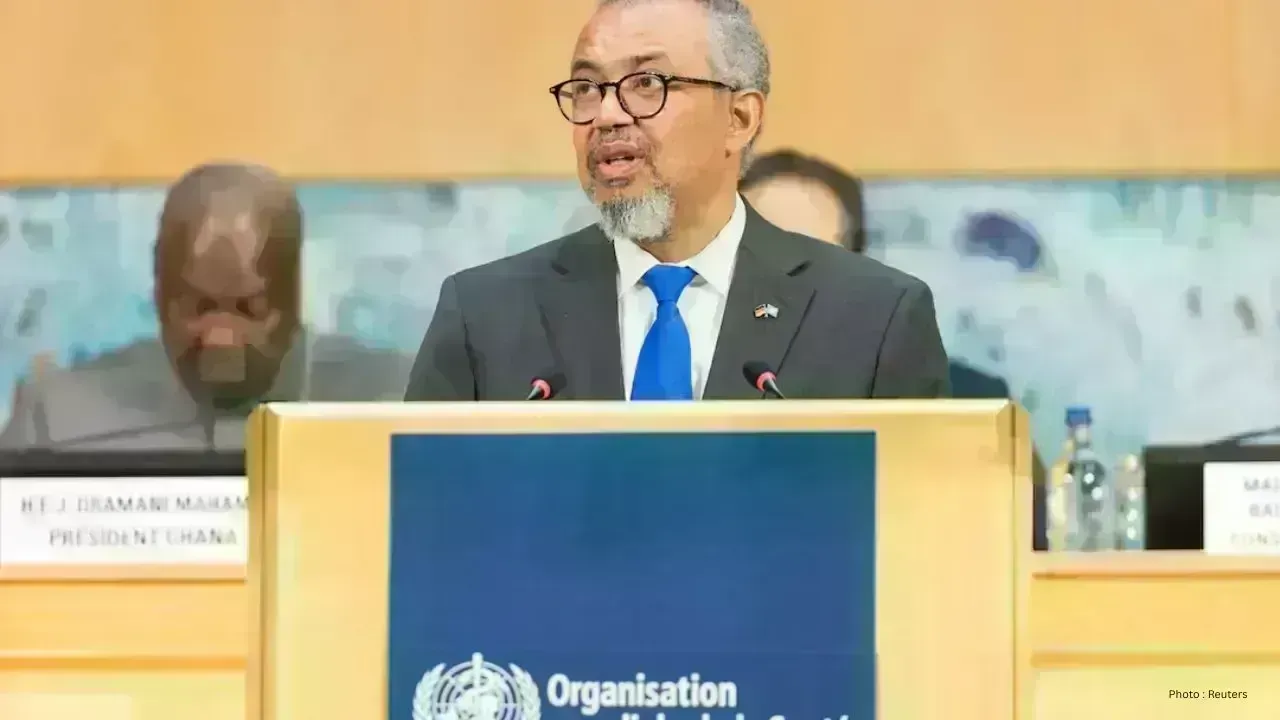
The Democratic Republic of the Congo (DRC) is grappling with a severe Ebola outbreak, with the World Health Organization (WHO) reporting over 900 suspected cases. WHO Director-General Tedros Adhanom Ghebreyesus expressed alarm over the rapid spread of the virus, particularly in the conflict-affected Ituri province. Reports indicate that more than 101 cases have been confirmed while efforts for surveillance and testing are ongoing in impacted areas.
Officials reveal that controlling the outbreak is increasingly challenging due to violence, displacement, and inadequate healthcare facilities. Millions in Ituri are facing dire humanitarian issues, with many forced to flee their homes because of armed conflict. The WHO cautions that the insecurity hampers medical teams' ability to trace contacts, isolate infected individuals, and provide timely treatment.
This outbreak is linked to the rare Bundibugyo strain of the Ebola virus. Unlike previous outbreaks, no approved vaccine or specific treatment exists for this strain at present. In response, the WHO and international health organizations are exploring the use of experimental vaccines and emergency medical aid to manage the situation before it escalates.
As the outbreak instills fear within local communities, mistrust in health workers and assaults on treatment centers hinder response efforts. Incidents have been reported where groups attacked hospitals and Ebola care facilities, demanding the bodies of relatives who succumbed to the virus. Experts warn such actions significantly raise infection risks within these communities.
Earlier this month, the outbreak was declared a global public health emergency after cases tied to the virus emerged in neighboring Uganda. WHO assesses the risk remains very high within Congo and bordering countries due to population movements and fragile healthcare systems; however, the overall global risk is deemed low.
Medical teams from the WHO, Doctors Without Borders, and various humanitarian organizations are striving to operate under challenging conditions to deliver treatment, testing, and awareness campaigns. Health experts emphasize that early detection, safe burials, and community collaboration are crucial in preventing further deterioration of the outbreak in the coming weeks.







APEC Members Emphasise Safe and Responsible Use of Artificial Intelligence
APEC members discuss responsible AI use, digital innovation and data governance as China and the US

Union of European Clubs Challenge UEFA and EFC Over EU Competition Rules
UEC files an EU competition complaint against UEFA and EFC, challenging club representation, governa

Mohammed Shami Retires From Test Cricket, Eyes White-Ball Career
Mohammed Shami retires from Test cricket after 13 years, with 229 wickets. He will continue playing

Singapore Warns Users About Privacy and Security Risks of AI Agents
Singapore warns users about AI agent security risks, data privacy, online scams and unauthorised acc

Chris Lynn Completes One-Month Ban After Positive Cocaine Test
Australian cricketer Chris Lynn completes a one-month ban after a positive cocaine test during the T

Djokovic Eyes Strong Season Finish as Health Improves Ahead of Paris Masters
Novak Djokovic reports improved health and performance as he targets a strong Paris Masters finish a