
You have not yet added any article to your bookmarks!
Join 10k+ people to get notified about new posts, news and tips.
Do not worry we don't spam!
Post by : Rohit Dhiman
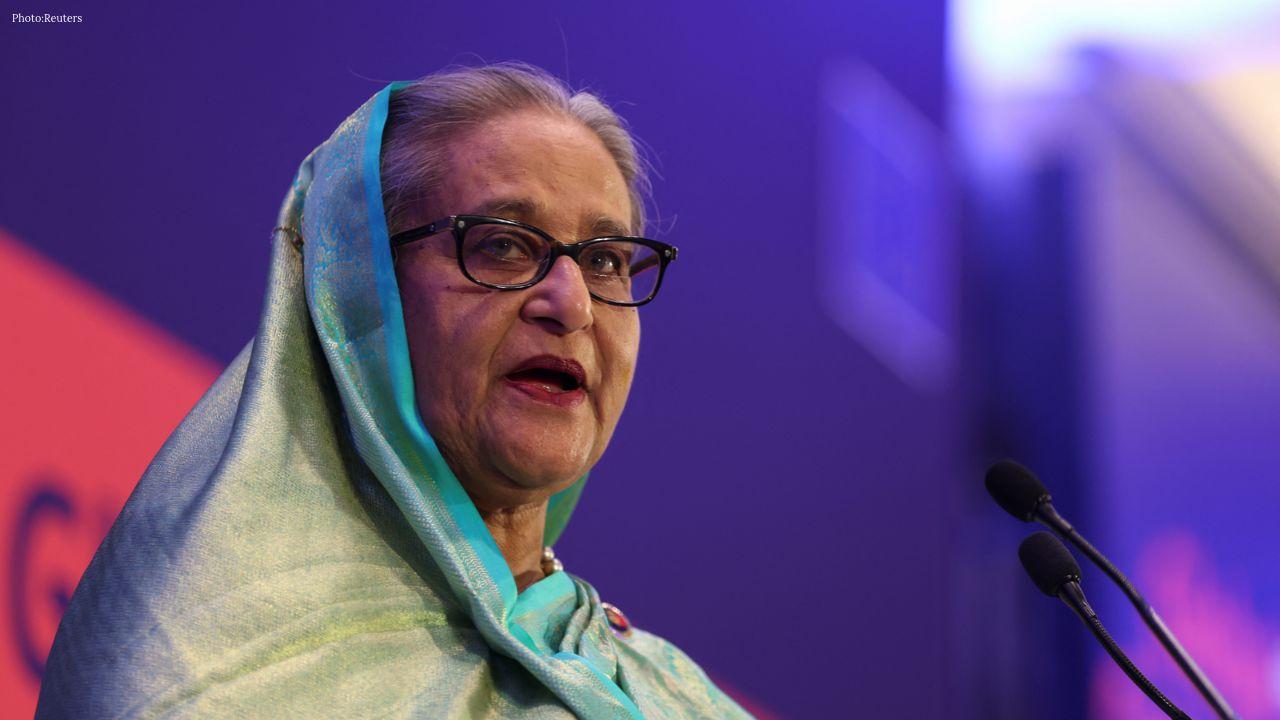
Former Bangladesh Prime Minister Sheikh Hasina has announced her intention to return to Bangladesh in December, despite facing serious security and legal challenges, including a death sentence handed down by a Bangladeshi court. In a significant political development, Hasina has made it clear that threats to her life will not change her decision to return to her home country. In an email interview with AFP on November 16, the former prime minister said she was fully aware of the risks associated with returning but remained determined to go back. Her statement comes at a time when Bangladesh is dealing with political uncertainty following the dramatic developments that ended her 15-year rule in August 2024. Hasina, who has been staying in India since leaving Bangladesh, said that no threat of death could keep her away from her own country. She also indicated that preparations for her return were already underway, including efforts to obtain essential Bangladeshi identity documents. Her announcement has drawn attention to the complicated political and diplomatic situation involving Dhaka, New Delhi and the future of the former ruling Awami League.
In her conversation with AFP, Sheikh Hasina made a strong statement about her plans to return to Bangladesh, despite knowing that she could face serious consequences. She said she understood the dangers involved but had already made her decision. According to her, the possibility of facing death would not prevent her from returning to the country where she spent most of her political life. Hasina also questioned the position adopted by the Bangladeshi authorities. She pointed out that the government had repeatedly demanded her return through official channels, but its recent statements about the consequences awaiting her appeared contradictory. The former prime minister argued that if authorities genuinely wanted her to return, they should focus on the legal process rather than making statements that she considers threatening. Her announcement has added a new dimension to the political debate surrounding her future. While her supporters may view the proposed return as a sign of political determination, critics and analysts are examining the legal and security challenges that could follow.
The political crisis that led to Hasina's departure began in 2024, when a student-led uprising developed into a nationwide movement against her government. The protests, which initially involved demands linked to government job quotas, gradually expanded amid growing public anger and opposition to her administration. After weeks of demonstrations and escalating unrest, Hasina's 15-year rule came to an end in August 2024. She left Bangladesh and travelled to India, where she has remained since then. Her departure marked a major turning point in Bangladesh's political history. The country entered a period of political transition, while the new authorities began taking steps involving the former government and several individuals associated with it.m The developments also affected the position of the Awami League, the political party led by Hasina that had dominated the country's politics for years. Since leaving Bangladesh, Hasina has continued to reject allegations made against her administration and has challenged the legitimacy of the legal proceedings initiated in her absence.
One of the most serious obstacles facing Hasina is the death sentence imposed by a Bangladeshi court. Last year, she was convicted in absentia of crimes against humanity in connection with the deadly crackdown on protesters during the 2024 uprising. The court subsequently sentenced her to capital punishment. The verdict significantly changed the legal situation surrounding the former prime minister. If she returns to Bangladesh, she could face immediate legal action under the existing judgment. Bangladeshi authorities have maintained that she would face execution if she returned, adding to the uncertainty surrounding her proposed December homecoming. Hasina, however, has repeatedly rejected the legitimacy of the trial. She has questioned the legal process and maintained that the proceedings against her are politically motivated. Another complication is that she reportedly missed the deadline to appeal against the conviction, with Bangladeshi authorities stating that she has no further legal recourse through the ordinary appeal process.
Hasina's continued presence in India has become an important issue in relations between New Delhi and Dhaka. The Bangladeshi government has formally sought her extradition from India so that she can face legal proceedings in her home country. India has indicated that the extradition request is undergoing legal review. The matter involves legal considerations as well as broader diplomatic and national interests. However, Hasina has said that she does not intend to ask India to arrange her return through an extradition process. She argued that she has already decided to return voluntarily and questioned why she would ask another country to extradite her when she is prepared to travel home herself. She also emphasised that extradition is a matter between two sovereign nations and that India would make its decision according to its own laws, policies and national interests. Her remarks highlight the complicated position India faces as it deals with Bangladesh's request while Hasina continues to stay on Indian soil.
The former prime minister has also criticised what she described as conflicting statements from the Bangladeshi authorities. According to Hasina, Bangladesh had spent months demanding her return, but when she began discussing practical preparations for going home, officials started issuing warnings about the possibility of execution. She described this position as contradictory and suggested that the government's approach raised questions about whether it genuinely wanted her to return. Her comments have brought renewed attention to the political and diplomatic challenges surrounding her proposed homecoming. For Bangladesh, the issue is not limited to the return of a former political leader. It also involves the legal proceedings connected to the 2024 uprising, the country's political transition and the future of the Awami League. For India, the situation carries diplomatic importance because any decision concerning Hasina's status could influence its relationship with its neighbouring country.
Former PM Claims More Than 600 Cases Filed Against Her
Apart from the death sentence, Hasina says she is facing numerous other legal cases in Bangladesh. During the interview, she claimed that more than 600 cases had been filed against her and described them as false allegations. These reportedly include corruption-related accusations and other legal complaints. Hasina has consistently maintained that the cases against her are part of a wider political effort to target her and weaken her influence. The allegations and ongoing proceedings have created uncertainty about what would happen if she returned to Bangladesh. Her legal position is particularly complicated because the death sentence has already been announced, while additional cases could create further challenges for her defence. The former prime minister's claims have not independently established the merits of each case, and the allegations remain part of the broader legal and political dispute surrounding her.
Despite the legal challenges, Hasina has indicated that she has started taking practical steps for her planned return. She told AFP that her lawyers had submitted applications through Bangladesh's High Commission in New Delhi for a Bangladeshi passport and national identity card. These documents would be important for her proposed journey and her efforts to re-establish her formal identity as a Bangladeshi citizen. Her statement suggests that the December return plan is not merely a political announcement but one for which she says administrative preparations are also underway. However, several questions remain unanswered, including the legal arrangements surrounding her entry, the security measures that would be required and the response of Bangladeshi authorities. There has been no confirmed official travel date in the information available from her interview. The coming weeks could therefore prove important in determining whether her announced plan moves forward or encounters further legal and diplomatic obstacles.
Read Also: Trump Plans to Name Nvidia and AI Firms US National Champions
During the interview, Hasina also rejected allegations that her Awami League party was involved in a recent series of petrol bomb attacks in Bangladesh. Authorities have reportedly linked the party to the incidents, but the former prime minister denied the allegations. The issue is politically significant because the Awami League's future remains uncertain following the change in government and restrictions on the party's activities. Political analysts have suggested that Hasina's announcement about returning home could also be an attempt to maintain her political relevance, preserve the loyalty of supporters and keep the party's presence alive in Bangladesh's political landscape. Some observers have also suggested that she may believe the authorities would face considerable political and public pressure before carrying out a death sentence against the daughter of Bangladesh's founding leader. However, these remain political assessments rather than confirmed explanations for her decision. Hasina has maintained that her intention to return is genuine and that she wants to continue serving her country.
The proposed return of Sheikh Hasina could become a major issue in India-Bangladesh relations. India and Bangladesh share important economic, geographical, security and diplomatic interests. The situation surrounding the former prime minister has therefore become more than an individual legal matter. Dhaka wants Hasina returned to face the consequences of the court proceedings, while New Delhi has said that the extradition request is being reviewed under the applicable legal framework. Hasina's statement that she plans to return voluntarily adds another layer of complexity to the situation. Any movement towards her return would require clarity on the legal process, her security and the position adopted by the Bangladeshi authorities. The issue could also influence political discussions within Bangladesh, particularly among supporters of the Awami League and groups that opposed Hasina's former administration.
The coming weeks will be important for determining whether Hasina's December return plan becomes a reality. Her reported applications for a passport and national identity card indicate that she is preparing for the possibility of travelling back to Bangladesh. However, the death sentence, the absence of an ordinary appeal route as stated by Bangladeshi authorities, other pending allegations and security concerns remain major obstacles. The response of the Bangladeshi government and India's position on the extradition request will also be important factors. For now, Hasina has publicly maintained that she is prepared to face the risks associated with returning home. Her proposed December homecoming could become one of the most significant political developments in the region, with potential consequences for Bangladesh's domestic politics and its relationship with India.







APEC Members Emphasise Safe and Responsible Use of Artificial Intelligence
APEC members discuss responsible AI use, digital innovation and data governance as China and the US

Union of European Clubs Challenge UEFA and EFC Over EU Competition Rules
UEC files an EU competition complaint against UEFA and EFC, challenging club representation, governa

Mohammed Shami Retires From Test Cricket, Eyes White-Ball Career
Mohammed Shami retires from Test cricket after 13 years, with 229 wickets. He will continue playing

Singapore Warns Users About Privacy and Security Risks of AI Agents
Singapore warns users about AI agent security risks, data privacy, online scams and unauthorised acc

Chris Lynn Completes One-Month Ban After Positive Cocaine Test
Australian cricketer Chris Lynn completes a one-month ban after a positive cocaine test during the T

Djokovic Eyes Strong Season Finish as Health Improves Ahead of Paris Masters
Novak Djokovic reports improved health and performance as he targets a strong Paris Masters finish a