You have not yet added any article to your bookmarks!
Join 10k+ people to get notified about new posts, news and tips.
Do not worry we don't spam!
Post by : Anis Farhan
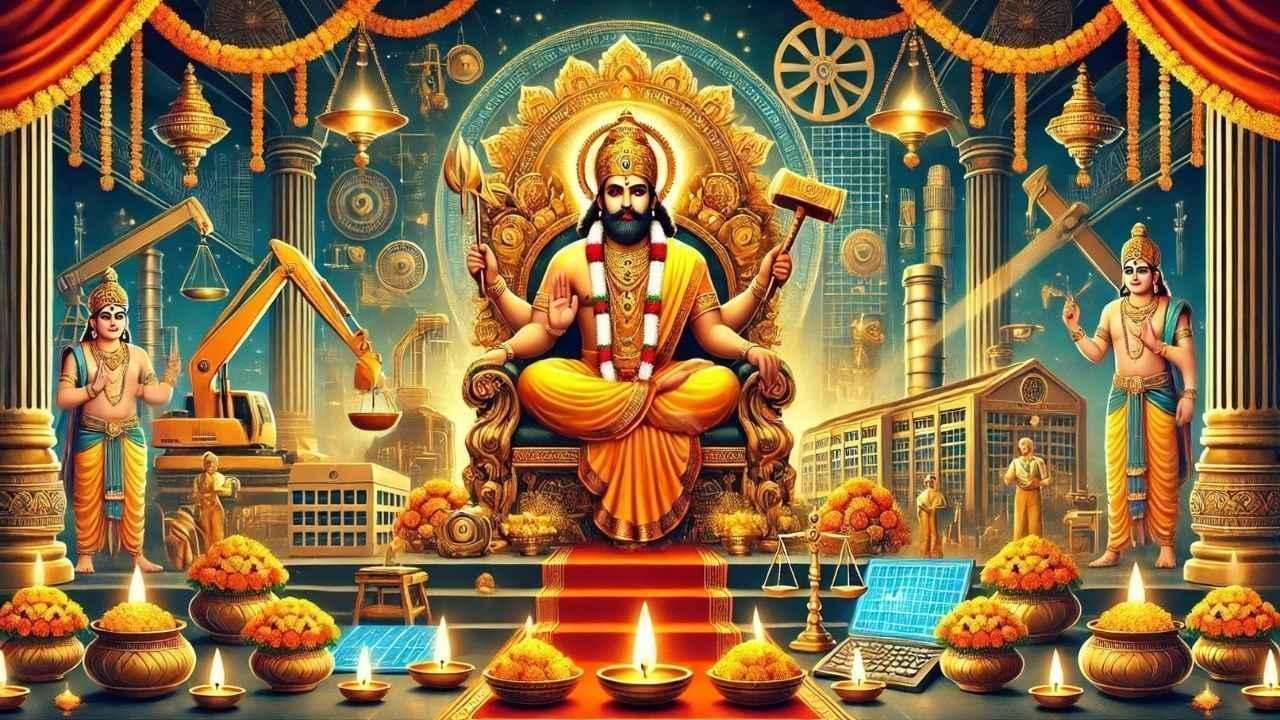
Vishwakarma Puja is one of the most unique festivals in India because it doesn’t just worship divinity, but it pays tribute to skill, labor, and the spirit of creation itself. Celebrated primarily in eastern and northern parts of the country, this festival honors Lord Vishwakarma, the celestial architect credited with designing heaven, mythical cities, and even the most powerful weapons mentioned in Indian epics. For centuries, artisans, engineers, craftsmen, and industrial workers have looked to this day as a time to renew their devotion, cleanse their tools, and begin afresh with blessings of divine productivity. Unlike most other festivals that focus solely on ritual worship, Vishwakarma Puja bridges spirituality and profession, making it one of the most relatable occasions for working communities.
Lord Vishwakarma is revered in Hindu mythology as the master craftsman of the gods. He is believed to have built the palaces of deities, the mythical city of Dwarka for Lord Krishna, and even the legendary Lanka, later ruled by Ravana. His craftsmanship extends to the creation of celestial weapons, flying chariots, and tools that symbolize innovation far ahead of time. For artisans, he is more than just a divine figure—he is the embodiment of creativity, precision, and innovation. This association makes Vishwakarma Puja not just a religious event but also a professional festival where skill is honored equally with prayer.
Vishwakarma Puja is observed annually on 17th September, coinciding with Kanya Sankranti. The festival is widespread in West Bengal, Odisha, Jharkhand, Bihar, Assam, Uttar Pradesh, and parts of Karnataka. It holds special importance in industrial towns, factories, and workplaces, where machinery and tools are adorned and worshipped. From small-scale workshops to large industries, the day is marked by halting regular work to honor divine blessings before resuming operations. In rural regions, farmers and artisans equally observe the festival by worshipping plows, carpentry kits, and other instruments essential for their livelihood.
The rituals of Vishwakarma Puja are centered around tools, machines, and workplaces. The puja begins with thorough cleaning of tools and workspaces, symbolizing purification. Idols and images of Lord Vishwakarma are installed in factories, offices, and even construction sites. Workers perform aarti, chant mantras, and offer flowers, sweets, and fruits. In many places, kites are flown to celebrate the festival, especially in eastern states like West Bengal and Bihar. The kite-flying tradition reflects joy, freedom, and a connection with the divine skies.
After the rituals, communities organize feasts where employees, owners, and families come together, erasing hierarchies in the spirit of equality. Workers refrain from using machinery on this day, believing that continuous labor without devotion leads to misfortune. By dedicating one day to rest and prayer, Vishwakarma Puja symbolizes the balance between toil and spirituality.
In today’s era of rapid industrialization, Vishwakarma Puja has become even more relevant. Engineers, architects, IT professionals, and industrial workers alike honor their tools—from traditional hammers and saws to modern computers and software systems. The festival serves as a reminder that technology and spirituality need not be separate; rather, they complement each other. Many corporate offices and tech hubs in India now celebrate the day by acknowledging not just physical machinery but also the “digital tools” powering progress.
This transition demonstrates how ancient traditions adapt to modern lifestyles while retaining their original essence. Where once blacksmiths and carpenters sought divine blessings, today’s coders and engineers pray for creativity and error-free performance in their work.
Beyond rituals, Vishwakarma Puja has strong cultural and social importance. It reinforces the dignity of labor, highlighting that every worker—whether in factories, fields, or offices—plays a vital role in sustaining society. The day blurs lines between employer and employee, as everyone bows before the same divine architect. Communities unite through collective prayers, kite-flying festivals, and shared meals, fostering a sense of harmony.
In states like Assam and Odisha, Vishwakarma Puja often coincides with harvest festivals, merging agricultural traditions with industrial celebrations. This convergence of culture showcases India’s diversity, where one festival can mean different things to different groups, yet bind them together in shared devotion.
The origins of Vishwakarma Puja date back centuries. References to Lord Vishwakarma are found in the Rigveda, Mahabharata, and Ramayana, where he is described as the celestial engineer of the universe. However, the organized celebration of Vishwakarma Puja gained prominence during India’s industrial revolution in the 19th and 20th centuries. Factories, railways, and workshops adopted the tradition as a way to spiritually safeguard machines and workers. Over time, the festival grew into a nationwide phenomenon, especially in industrial belts.
Today, while the core rituals remain unchanged, celebrations have expanded to embrace modern professions. Thus, the festival stands as a living example of India’s ability to preserve tradition while embracing progress.
With the Indian diaspora spread across the globe, Vishwakarma Puja is no longer confined to the subcontinent. Communities in the Middle East, North America, and Europe observe the festival by organizing prayers and cultural events. For migrant workers, especially those engaged in construction, IT, or engineering, the puja is a reminder of their roots and a way to stay spiritually connected despite geographical distances. It has also attracted international curiosity, as foreign observers see it as a celebration that uniquely bridges work and worship.
Interestingly, Vishwakarma Puja has parallels with other global traditions where labor and tools are honored. In Japan, craftsmen honor tools through rituals like Hari-Kuyō, a ceremony where old needles are laid to rest in tofu or jelly as a sign of gratitude. Similarly, in Western traditions, Labor Day celebrates the dignity of workers. What makes Vishwakarma Puja distinct, however, is its direct connection with a divine figure and the integration of spirituality with profession.
This cross-cultural comparison highlights how human societies universally respect labor, yet India gives it a uniquely spiritual dimension through Lord Vishwakarma.
As India advances into an era of AI, robotics, and digital technology, Vishwakarma Puja will likely continue to evolve. While older generations honored plows, looms, and tools, future celebrations may involve worshipping laptops, 3D printers, and even AI systems as instruments of work. The central theme will remain the same: showing gratitude toward the tools that empower humanity.
The festival’s adaptability ensures that it will stay relevant, regardless of how professions change. Vishwakarma Puja is not just about honoring the past—it is also about embracing the future with respect and humility.
This article is intended for informational and cultural purposes only. The details presented are based on traditions, historical texts, and contemporary practices. Interpretations may vary across regions and communities.








Australia 50/3 After Bangladesh Bowled Out for 64 in Second Test
Australia reached 50/3 after Bangladesh were bowled out for 64 in the second Test, with Mitchell Sta

Jordan Burroughs Returns to Wrestling with 2028 Olympic Dream
Jordan Burroughs returns to wrestling with Real American Freestyle as the Olympic champion eyes a po

Lamborghini Catches Fire on Singapore's ECP, Causing Heavy Traffic
A Lamborghini caught fire on Singapore's ECP, causing heavy traffic and bus delays. No injuries were

Bangkok Airport Duty-Free Area Flooded by Pipe Burst
A burst water pipe flooded the duty-free shopping area at Bangkok's Suvarnabhumi Airport on July 16,

Nine Monks Killed in Thailand Pickup Truck Tragedy
An 11-year-old boy driving a pickup truck crashed into monks during a pilgrimage in northeastern Tha
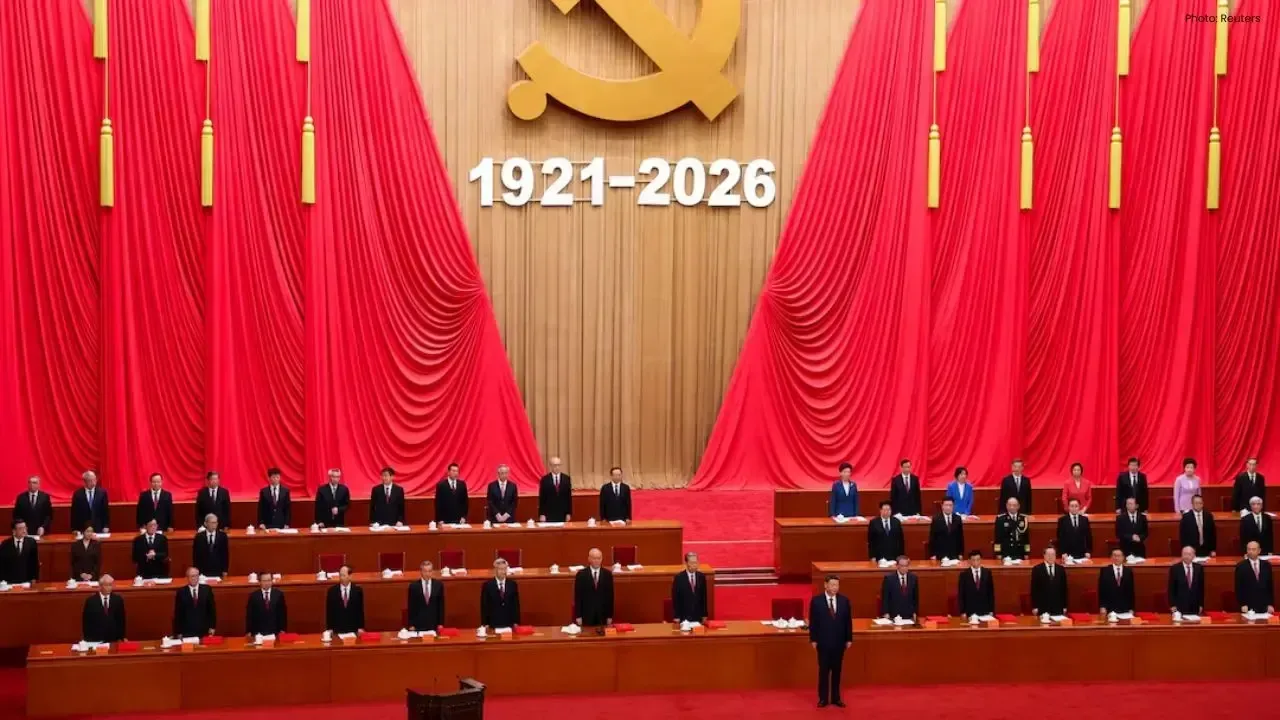
Anwar Congratulates Xi on CPC's 105th Anniversary
Malaysia reaffirms strong ties with China as PM Anwar Ibrahim sends a congratulatory letter to Presi