You have not yet added any article to your bookmarks!
Join 10k+ people to get notified about new posts, news and tips.
Do not worry we don't spam!
Post by : Anis Farhan
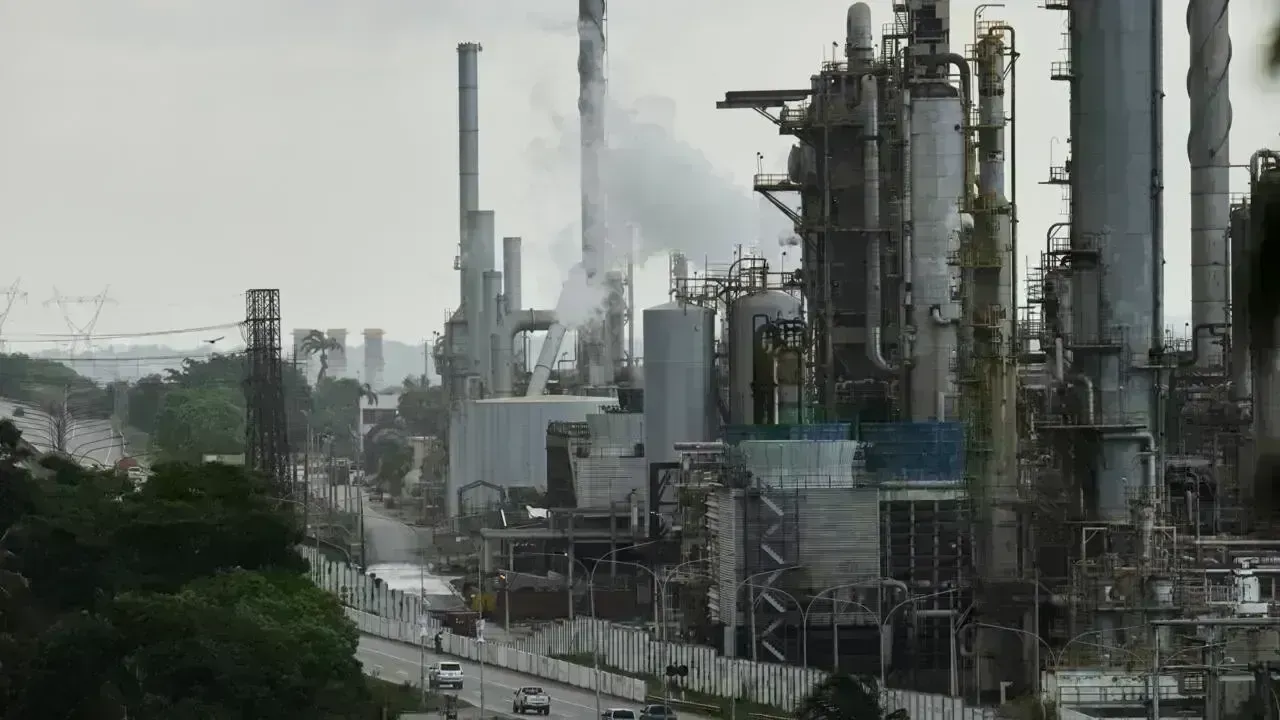
Few countries illustrate the intersection of natural wealth, geopolitics, and economic collapse as starkly as Venezuela. Sitting atop the largest proven crude oil reserves on the planet, the nation should, in theory, be an energy superpower. Instead, Venezuela has become a cautionary tale of how politics, sanctions, mismanagement, and global rivalries can paralyze even the most resource-rich economies.
Today, Venezuela’s oil is once again under the global spotlight. With energy security dominating policy discussions from Washington to Brussels and oil markets walking a tightrope between supply shortages and demand uncertainty, the question is no longer whether Venezuela matters—but how, when, and under whose influence its oil will re-enter global markets.
Venezuela officially holds over 300 billion barrels of proven oil reserves, surpassing Saudi Arabia and Iran. Most of this oil lies in the Orinoco Belt, a vast stretch of extra-heavy crude deposits that alone rivals the reserves of entire regions.
To put this into perspective:
Venezuela accounts for nearly one-fifth of global proven oil reserves
Its reserves could theoretically supply global oil demand for nearly a decade
Even partial restoration of production could shift global supply-demand balances
Yet reserves alone do not translate into power. Extraction, refining, investment, and geopolitics determine whether oil stays underground or reaches global markets.
At its peak in the late 1990s, Venezuela produced more than 3.2 million barrels per day. Today, production hovers around a fraction of that figure, fluctuating due to infrastructure decay, capital shortages, and export restrictions.
The collapse was not sudden—it was structural.
The state-owned oil company, PDVSA, once ranked among the world’s most respected national oil firms. Years of political interference, underinvestment, and talent drain hollowed it out.
Key refineries deteriorated. Skilled engineers emigrated. Equipment rusted. Output plunged.
Sanctions later compounded these issues, but the decline had already begun.
The United States imposed sweeping sanctions on Venezuela’s oil sector, restricting exports, financial transactions, and access to global markets. These measures were aimed at pressuring Caracas politically, but their ripple effects reshaped global energy dynamics.
US refiners, once major buyers of Venezuelan crude, were forced to seek alternatives. Venezuela, in turn, leaned on shadow trading networks and alternative buyers.
Recent adjustments in US policy have reopened limited channels for Venezuelan oil to flow—under strict conditions. These moves reflect pragmatism rather than forgiveness.
The US understands one thing clearly: Venezuelan oil is too large to ignore forever, especially during periods of global supply tightness.
The United States does not own Venezuelan oil fields. Instead, its influence operates through:
Financial systems
Shipping insurance
Sanctions compliance
Access to Western technology
This indirect control determines who can buy, sell, insure, or transport Venezuelan crude.
In modern energy geopolitics, control is less about flags on oil fields and more about access to systems that move oil from ground to market.
Global oil markets remain sensitive. Production cuts by OPEC, geopolitical tensions in the Middle East, and uncertainty over long-term demand have created a fragile equilibrium.
In this context, even 500,000 additional barrels per day from Venezuela could:
Ease price pressures
Stabilize regional supply chains
Reduce volatility during demand spikes
Markets are forward-looking. Venezuela’s oil represents optional supply—dormant but powerful.
As Western markets closed, Venezuela pivoted toward non-Western partners. China and Russia emerged as key players, using barter deals, discounted pricing, and indirect shipping routes.
This shadow trade:
Keeps Venezuelan oil moving despite sanctions
Often involves heavy discounts
Reduces transparency in global oil flows
While profitable in the short term, these arrangements limit Venezuela’s revenue potential and bargaining power.
Restarting Venezuelan oil production is not as simple as flipping a switch. Years of neglect mean:
Pipelines need repairs
Refineries require modernization
Storage facilities are degraded
Experts estimate that restoring production to even 2 million barrels per day would require tens of billions of dollars and several years.
Despite aggressive clean energy targets, oil remains central to global transport, industry, and geopolitics. The energy transition is uneven, and fossil fuels still dominate energy consumption.
Venezuela sits at the crossroads of this contradiction:
Massive oil reserves in a decarbonizing world
Potential revenue for economic recovery
Risk of stranded assets if transition accelerates
Timing is everything.
Limited sanctions relief could allow Venezuela to:
Increase exports legally
Access Western technology
Improve transparency
This scenario would likely stabilize—not crash—global oil prices.
If sanctions tighten again, Venezuela will remain locked into discounted, opaque trade routes, limiting both its recovery and its global influence.
Venezuelan oil is not just an economic asset—it is geopolitical currency. Whoever helps unlock it gains influence across Latin America, energy markets, and diplomatic negotiations.
That is why Washington, Beijing, Moscow, and energy majors all keep Venezuela firmly on their radar.
While oil dominates headlines, Venezuela’s economic collapse triggered one of the world’s largest migration crises. Millions left in search of stability.
Oil revenue, if managed responsibly, could:
Stabilize public finances
Restore basic services
Slow outward migration
But history makes investors and governments cautious.
Venezuela’s oil reserves remain one of the most powerful yet constrained energy assets in the world. The United States does not own them, but it undeniably shapes their path to market. Global oil prices may not swing today because of Venezuela—but tomorrow’s supply calculations already factor it in.
As energy security overtakes ideology and markets demand flexibility, Venezuela’s oil may slowly re-emerge from isolation. When it does, the consequences will ripple far beyond Caracas—touching prices, politics, and power balances worldwide.
The oil is there. The world is watching. The question is not if Venezuela’s oil returns—but on whose terms.
Disclaimer:
This article is intended for informational and analytical purposes only. It does not constitute financial, investment, or geopolitical advice. Readers should rely on multiple sources and expert opinions before forming conclusions.





George Russell Wins Dutch GP Sprint, Boosts Mercedes Morale
George Russell wins the Dutch GP Sprint from pole as Mercedes teammate Kimi Antonelli extends his F1

Australia 50/3 After Bangladesh Bowled Out for 64 in Second Test
Australia reached 50/3 after Bangladesh were bowled out for 64 in the second Test, with Mitchell Sta

Jordan Burroughs Returns to Wrestling with 2028 Olympic Dream
Jordan Burroughs returns to wrestling with Real American Freestyle as the Olympic champion eyes a po

Lamborghini Catches Fire on Singapore's ECP, Causing Heavy Traffic
A Lamborghini caught fire on Singapore's ECP, causing heavy traffic and bus delays. No injuries were

Bangkok Airport Duty-Free Area Flooded by Pipe Burst
A burst water pipe flooded the duty-free shopping area at Bangkok's Suvarnabhumi Airport on July 16,

Nine Monks Killed in Thailand Pickup Truck Tragedy
An 11-year-old boy driving a pickup truck crashed into monks during a pilgrimage in northeastern Tha