
You have not yet added any article to your bookmarks!
Join 10k+ people to get notified about new posts, news and tips.
Do not worry we don't spam!
Post by : Shweta
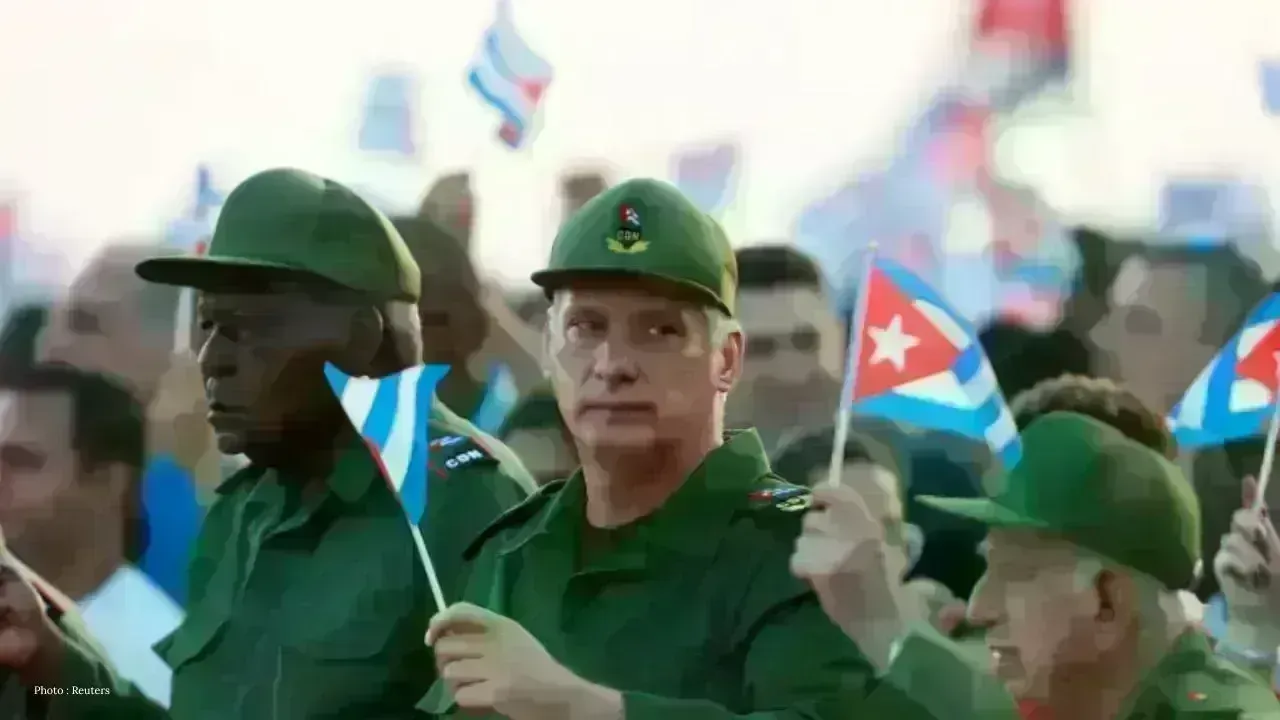
The U.S. government has enacted fresh sanctions aimed at Cuban President Miguel Diaz-Canel, marking a significant step in Washington's strategy to influence the Cuban government. This action underscores the persistent strains between the two nations and highlights a more aggressive stance toward Havana, particularly over issues of human rights and political freedom.
U.S. officials have rolled out these sanctions as part of a wider initiative targeting individuals and entities aligned with the Cuban leadership. Authorities in the United States assert that this action is intended to hold high-ranking officials accountable for policies deemed as infringing upon civil liberties and curtailing political expression.
Since taking office in 2018, President Miguel Diaz-Canel has been pivotal in Cuba's political landscape, navigating the country through economic troubles, international sanctions, and public dissent. The recent U.S. sanctions are anticipated to heighten diplomatic tensions, which are already fraught between the two countries.
These sanctions include measures aimed at restricting access to critical financial resources and travel privileges aligned with U.S. laws. Such actions are standard in U.S. foreign policy, particularly against officials accused of undermining democratic ideals or human rights.
In response to the sanctions, the Cuban government condemned them as another instance of U.S. intervention in its sovereignty. Cuban officials argue that economic sanctions imposed by Washington exacerbate the hardships faced by the Cuban populace and impede development efforts.
The history of U.S.-Cuban relations has seen oscillations between cooperation and antagonism. Although some diplomatic exchanges were reinstated in former administrations, many restrictions stayed intact, with ongoing disagreements about governance and policy further complicating matters.
These latest sanctions coincide with ongoing discussions on human rights conditions within Cuba. Advocacy organizations have voiced concerns regarding the treatment of dissenters, limitations on freedom of speech, and the arrest of individuals participating in anti-government protests. Cuban authorities, for their part, argue that they are maintaining national security and enforcing necessary laws.
Political analysts note that while sanctions can raise pressures on targeted leaders, their overall efficacy in altering government behavior remains debated. Supporters claim that they foster accountability, while detractors argue that they may hinder diplomatic dialogue and lead to unintended economic repercussions.
This decision reflects broader U.S. policy aims in the Western Hemisphere, consistently advocating for democratic standards, political rights, and human rights throughout the region. Actions against Cuba are often framed within a wider perspective of U.S. foreign policy in Latin America.
The economic situation in Cuba is a pressing issue for its leadership, facing inflation, shortages of essential products, energy troubles, and challenges in luring foreign investment. Economists suggest that these factors, compounded by existing sanctions and structural economic concerns, continue to impact daily life for many Cubans.
International perspectives on the sanctions have varied. While some governments and NGOs have praised efforts aimed at fostering accountability, others call for increased diplomatic efforts instead of additional restrictions. This remains a divisive topic globally.
Despite intensifying pressure from the U.S., there are no indications that the Cuban government will change its policies in light of these sanctions. Officials in Havana continue to advocate for their political framework and dismiss external critiques.
This recent turn of events suggests that the relationship between the U.S. and Cuba will remain fraught in the near future. As both nations stand firm in their positions, observers will be keenly monitoring for additional sanctions, diplomatic movements, or changes in policy in the coming months.
For comprehensive updates and in-depth analysis, make sure to stay engaged with us.










PM Modi Pays Tribute to Mahatma Gandhi, Urges People to Support Khadi
PM Modi pays tribute to Mahatma Gandhi on Gandhi Jayanti and urges citizens to support Khadi and the

Amazon Seeks to Offload $8 Billion in Nvidia Chips to Investors
Amazon plans to move $8 billion in Nvidia chips to investors, using a new financing model to strengt

Samsung Raises Galaxy S26 Prices as Memory Chip Costs Rise
Samsung raises Galaxy S26 prices in South Korea as rising memory chip costs put pressure on smartpho

Lewis Hamilton Calls Singapore Grand Prix One of F1's Toughest Races
Lewis Hamilton discusses the demanding Singapore Grand Prix and brings Plus44 and Almave to Singapor

Denmark's Pandora Opens World's Largest Jewellery Factory in Vietnam
Pandora opens its largest jewellery factory in Vietnam, expanding global production, strengthening s

Gautam Gambhir Questions Batting-Friendly Pitches After India's Record ODI Chase
Gautam Gambhir questions batting-friendly ODI pitches after India’s record chase, calling for a bett

